

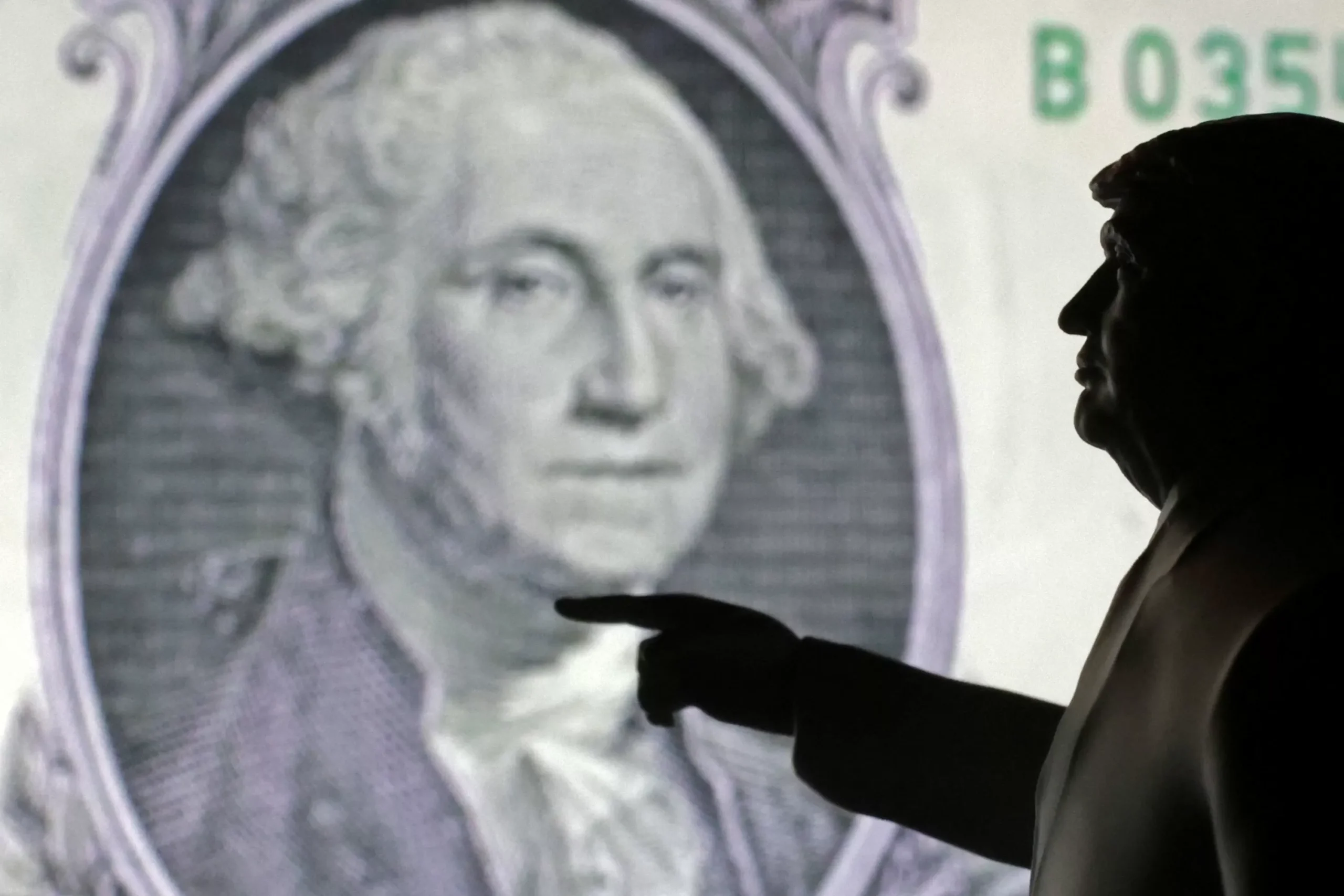

With President Donald Trump’s tariffs causing turmoil in the U.S. economy, there is now a growing worry about the future of the dollar as the world’s top currency. The dollar has long been the cornerstone of the global financial system, but with the current uncertainty, many are questioning how long it can maintain its dominant position. In this article, we will explore the potential impacts of Trump’s tariffs on the dollar and how it could affect the rest of the world.
Firstly, let’s take a closer look at the tariffs themselves. The Trump administration has imposed tariffs on a range of goods, particularly from China and Europe, as part of their efforts to reduce the U.S. trade deficit and protect American industries. While the intention is understandable, the implementation has been met with criticism and backlash from both domestic and international stakeholders. This has led to an escalation in tensions between the U.S. and its trading partners, creating a ripple effect throughout the global economy.
So, what does this mean for the dollar? As the U.S. imposes tariffs on imported goods, it creates a barrier for international trade, making it more expensive for businesses to import materials and products. This, in turn, leads to higher prices for consumers and reduces their purchasing power. With lower consumer spending, businesses may also suffer, leading to a decline in economic growth and potentially a weaker dollar.
Moreover, the tariffs have sparked retaliation from other countries, such as China and the European Union, who have imposed their own tariffs on U.S. goods. This has further dampened global trade and weakened the dollar’s position in the global market. As the trade war escalates, investors will lose confidence in the dollar, causing it to weaken and potentially leading to a shift towards other currencies.
Another factor to consider is the potential impact on the U.S. Federal Reserve’s monetary policy. With the economy facing uncertainty and possible inflation due to higher prices, the Federal Reserve may have to raise interest rates to control inflation. This, in turn, would make the dollar more attractive to foreign investors, but at the same time, it could also harm the U.S. economy and damage its exports.
Now, let us consider how this could affect the rest of the world. The dollar has long been seen as a symbol of stability and strength, which is why many countries use it as a reserve currency. However, with the current trade tensions, some countries are now looking at other options, such as the Chinese yuan, as an alternative reserve currency. This shift could have a significant impact on the global monetary system and potentially lead to a decline in the dollar’s dominance.
Despite these concerns, it is important to note that the dollar is still the world’s most widely used and trusted currency. Its stability and liquidity make it a preferred choice for international trade and investment. Furthermore, the U.S. economy is still strong, with low unemployment rates and steady growth. The dollar’s dominance is not solely dependent on its use as a reserve currency, but also on the strength of the U.S. economy and its financial institutions.
In conclusion, while there are valid concerns about the dollar’s future as the dominant global currency, it is important not to panic and overreact. The trade tensions and tariffs may have a short-term impact on the dollar’s strength, but it is unlikely to lead to its downfall. The U.S. government and the Federal Reserve have the ability to intervene and stabilize the economy if needed. As for the rest of the world, it is crucial for countries to work together and find solutions to mitigate the effects of the trade wars. With perseverance and cooperation, the dollar will continue to hold its position as the top global currency, and the U.S. economy will continue to prosper.