

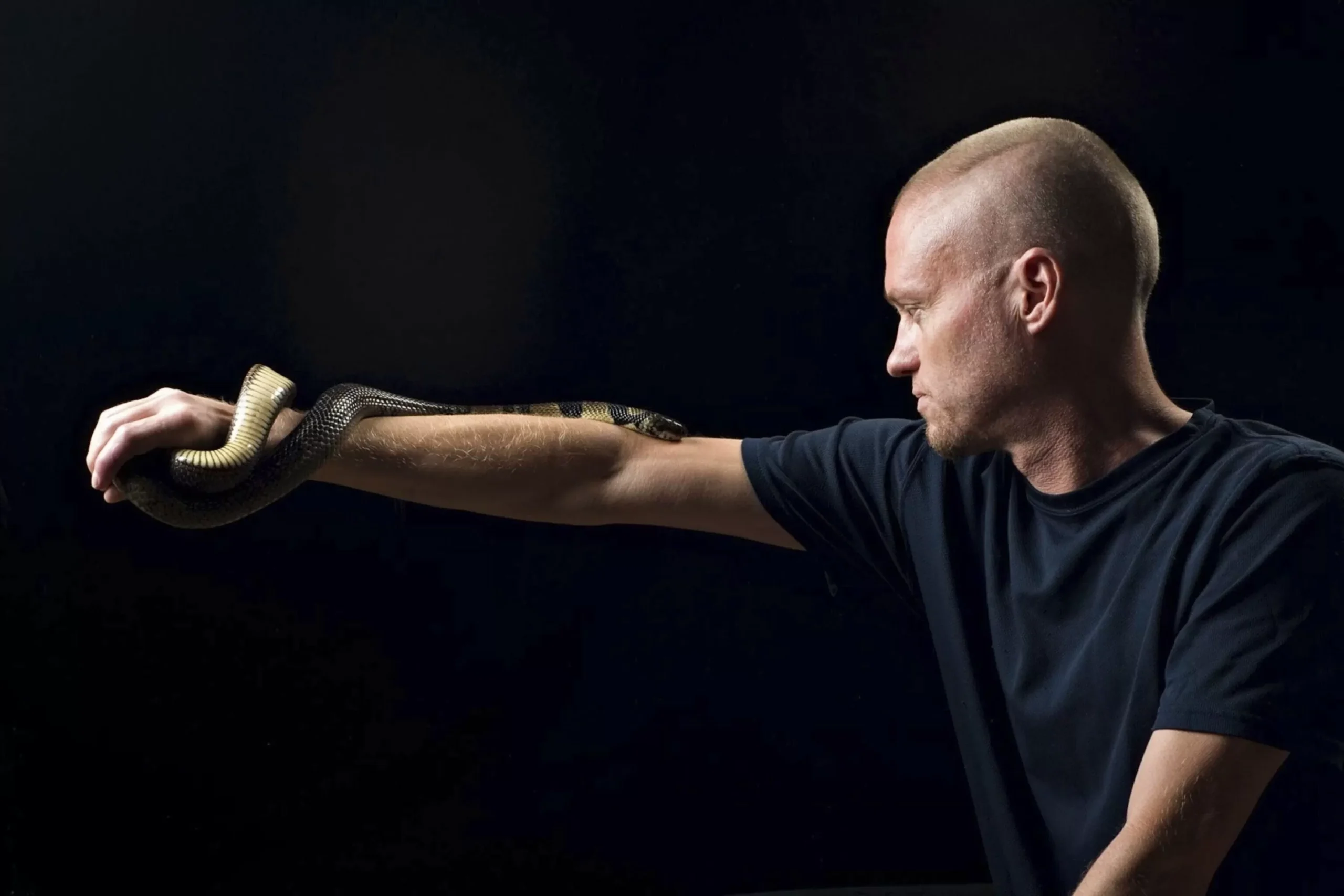

Tim Friede has always had a fascination with snakes. But unlike most people, his fascination goes beyond just admiring these slithering creatures from a safe distance. Friede has been bitten by snakes hundreds of times – and often on purpose. But his seemingly reckless behavior is not without purpose. In fact, it has caught the attention of scientists who are now studying his blood to create a better treatment for snake bites.
Friede, a 45-year-old from Wisconsin, has been bitten by some of the world’s deadliest snakes, including cobras, vipers, and rattlesnakes. He has even been bitten by the notorious black mamba, known for its highly toxic venom. But instead of seeking immediate medical attention, Friede has been self-administering small doses of snake venom for the past 16 years. This practice, known as “venom immunotherapy,” involves gradually exposing oneself to small amounts of venom in order to build up immunity.
At first glance, Friede’s actions may seem reckless and dangerous. But for him, it is a calculated risk in pursuit of a greater cause. He believes that by exposing himself to different types of snake venom, he can build up immunity and eventually become immune to all types of snake bites. And with each bite, he documents his symptoms and the amount of venom he has been exposed to, providing valuable data for scientists.
Friede’s obsession with snake venom began after he witnessed a friend die from a snake bite. He was determined to find a way to protect himself and others from the deadly effects of snake venom. He started by studying the venom of different snake species and eventually began injecting himself with small amounts of venom. Over time, he has built up an impressive immunity to many types of snake venom, with little to no side effects.
But Friede’s self-experimentation has not gone unnoticed. Scientists from the Liverpool School of Tropical Medicine and the University of Wisconsin have taken an interest in his unique immunity. They have been studying his blood and the antibodies it contains, with the hope of creating a universal antivenom that can treat all types of snake bites.
Traditionally, antivenom is created by injecting animals, such as horses or sheep, with small amounts of venom and then harvesting their antibodies. However, this process is time-consuming and can lead to adverse reactions in some patients. Friede’s blood, on the other hand, contains a diverse range of antibodies that have been naturally produced through his exposure to different types of venom.
The research team has already identified several promising antibodies in Friede’s blood that could potentially be used to create a universal antivenom. They are now working on isolating and synthesizing these antibodies in a lab, which could lead to a more effective and efficient treatment for snake bites.
Friede’s selfless dedication to his cause has not only caught the attention of scientists but has also inspired others to support his mission. He has received numerous donations from snake enthusiasts and has even set up a crowdfunding campaign to help fund his research.
But for Friede, it’s not about the money or the fame. He is driven by a deep desire to make a difference and save lives. He believes that his unique immunity could be the key to creating a universal antivenom that could potentially save thousands of lives every year.
The World Health Organization estimates that snake bites kill between 81,000 and 138,000 people every year, with many more suffering from permanent disabilities. And with the rise in snake bites due to climate change and human encroachment into snake habitats, the need for a universal antivenom has never been greater.
Thanks to Tim Friede’s bravery and determination, we may be one step closer to finding a solution to this global health issue. His selfless actions and willingness to put himself in harm’s way for the greater good are truly admirable. And as scientists continue to study his blood and work towards creating a universal antivenom, we can only hope that one day, snake bites will no longer be a deadly threat to humans.