

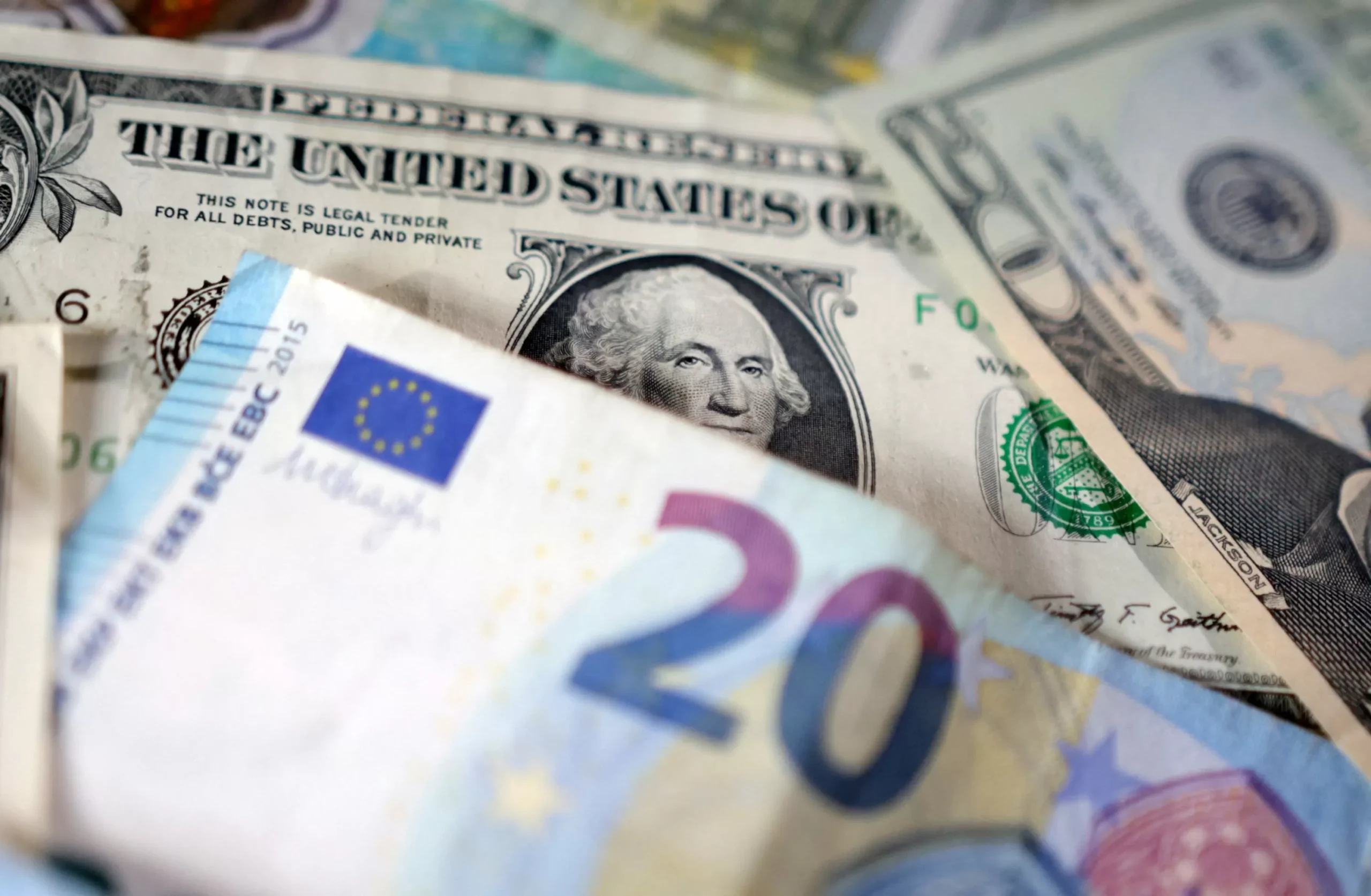

Stocks and the U.S. dollar took a tumble on Monday after credit rating agency Moody’s made a late Friday decision to downgrade the U.S.’ last gold standard sovereign bond rating. This news has caused concern and uncertainty in the financial markets, leading to a decline in stock prices and the value of the U.S. dollar.
The decision by Moody’s to strip the U.S. of its gold standard sovereign bond rating has come as a shock to many investors and analysts. This rating is a measure of a country’s creditworthiness and is used by investors to determine the level of risk associated with investing in a particular country. A downgrade in this rating can have significant implications for the country’s economy and its currency.
The U.S. has held a gold standard sovereign bond rating for decades, which has been a symbol of its strong and stable economy. This rating has been a source of pride for the country and has attracted foreign investment, helping to boost the economy and create jobs. However, the recent decision by Moody’s has raised concerns about the strength of the U.S. economy and its ability to meet its financial obligations.
The downgrade by Moody’s is a result of the ongoing trade war between the U.S. and China, which has had a significant impact on the global economy. The trade tensions between these two economic powerhouses have caused uncertainty and volatility in the financial markets, with investors unsure of the long-term implications. This has led to a decrease in investor confidence, resulting in a decline in stock prices and the value of the U.S. dollar.
The downgrade has also sparked fears of a potential recession in the U.S. economy. A lower credit rating could make it more expensive for the U.S. government to borrow money, which could lead to a decrease in government spending. This could have a ripple effect on the economy, causing a slowdown in growth and potentially leading to a recession.
However, it is important to note that the U.S. economy is still strong and resilient. The country has a diverse and robust economy, with a strong manufacturing sector, a thriving service industry, and a highly skilled workforce. The U.S. also has a history of bouncing back from economic challenges, and there is no doubt that it will overcome this latest hurdle.
In fact, this could be an opportunity for investors to take advantage of the dip in stock prices and invest in the U.S. market. With the economy showing signs of growth and the Federal Reserve indicating that interest rates will remain low, now may be a good time to invest in U.S. stocks. This could potentially lead to significant gains in the long term as the economy recovers and the stock market rebounds.
The U.S. government has also taken steps to address the trade tensions with China and has recently reached a phase one trade deal. This could help to ease some of the uncertainty in the markets and boost investor confidence. It is also important to remember that the U.S. remains the world’s largest economy and a major player in the global market. This gives it a strong position to weather any economic challenges that may come its way.
In conclusion, while the downgrade of the U.S.’ last gold standard sovereign bond rating may have caused some short-term turbulence in the financial markets, the country’s economy remains strong and resilient. This is a temporary setback, and with the right measures in place, the U.S. will overcome this challenge and continue to thrive. As an investor, it is important to look at the bigger picture and not be swayed by short-term fluctuations. The U.S. market still presents opportunities for growth and should not be overlooked. Let us remain positive and have faith in the strength of the U.S. economy.