

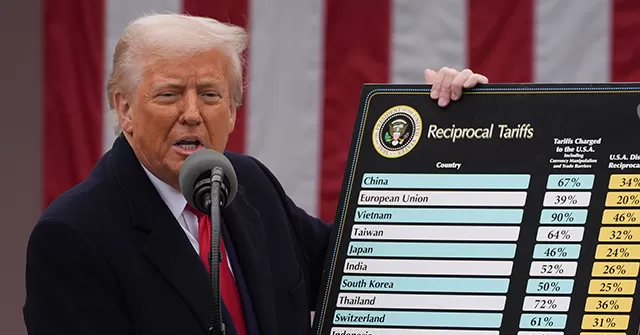

Tariffs have often been seen as a controversial and complex topic, but they have recently taken on a new role in shaping the American economy. While they have long been used as tools of trade, a new generation of economic nationalists are utilizing tariffs as instruments of tax reform. And with this shift, they have the potential to not only boost economic growth, but also serve as a new foundation for American prosperity.
In the past, tariffs were primarily seen as a means of regulating trade and protecting domestic industries. However, they were largely ignored as a means of generating revenue for the government. But in today’s world, where globalization and free trade are the norm, many American businesses are feeling the impact of increased competition and outsourcing. This has led some to question the effectiveness of free trade and look for alternatives, with tariffs emerging as a prominent solution.
One of the key players in the modern debate over tariffs is the group of economic nationalists, who believe that a strong domestic economy is key to national prosperity. Led by figures like President Donald Trump and media outlet Breitbart, these economic nationalists argue that tariffs can help level the playing field for American businesses and workers. By imposing tariffs on foreign imports, they aim to make American goods more competitive in the global market and support domestic industries.
But the use of tariffs as tax reform goes beyond simply providing protection to American industries. It also serves as a way to generate revenue for the government. Unlike other forms of taxation, such as income or sales tax, tariffs are a direct tax on imported goods. This has the potential to create a stable and sustainable source of revenue for the government, which is especially crucial in times of economic uncertainty.
Furthermore, tariffs can be used as a strategic tool to incentivize other countries to play by the rules of fair trade. By imposing tariffs on countries that engage in unfair trade practices, such as intellectual property theft or currency manipulation, the United States can compel them to change their ways. This not only benefits American businesses, but also creates a fairer and more transparent global trade environment.
It is no surprise that the potential of tariffs as a multifaceted solution has gained traction among the American public. According to a recent study by the Pew Research Center, 56% of Americans believe that tariffs on imports from China will be good for our economy. This sentiment is echoed by Senator Josh Hawley, a leading voice of the new American populists, who argues that tariffs can “punish unaccountable elites in China, and protect jobs and wages for working Americans.”
But the benefits of tariffs go beyond economic growth. They also have the potential to create new job opportunities for American workers. When foreign imports are subject to tariffs, it incentivizes businesses to bring production back to the United States. This not only leads to job growth, but also decreases the country’s reliance on foreign goods.
Not everyone, however, believes that tariffs are a solution to America’s economic challenges. Critics argue that imposing tariffs could spark retaliatory actions from other countries, leading to a trade war that could harm the global economy. They also point out that tariffs can increase the cost of living for American consumers, especially for goods that are heavily reliant on imports.
Despite these concerns, the use of tariffs as a form of tax reform has gained significant support. And with recent developments such as the US-China trade war, the potential of tariffs as a means of reshaping the American economy has come into sharp focus. It is clear that tariffs are a powerful tool that can be wielded strategically to achieve national growth and prosperity.
In conclusion, tariffs are not just instruments of trade, but they have emerged as a vital element in the broader economic landscape. The new generation of economic nationalists sees tariffs as a means to achieve their vision of a revitalized American economy. The potential to generate revenue for the government, create jobs, and foster fair trade practices make tariffs a multifaceted solution to the country’s economic challenges. With the right approach, tariffs can be used effectively to pave the way for a more prosperous future for all Americans.