

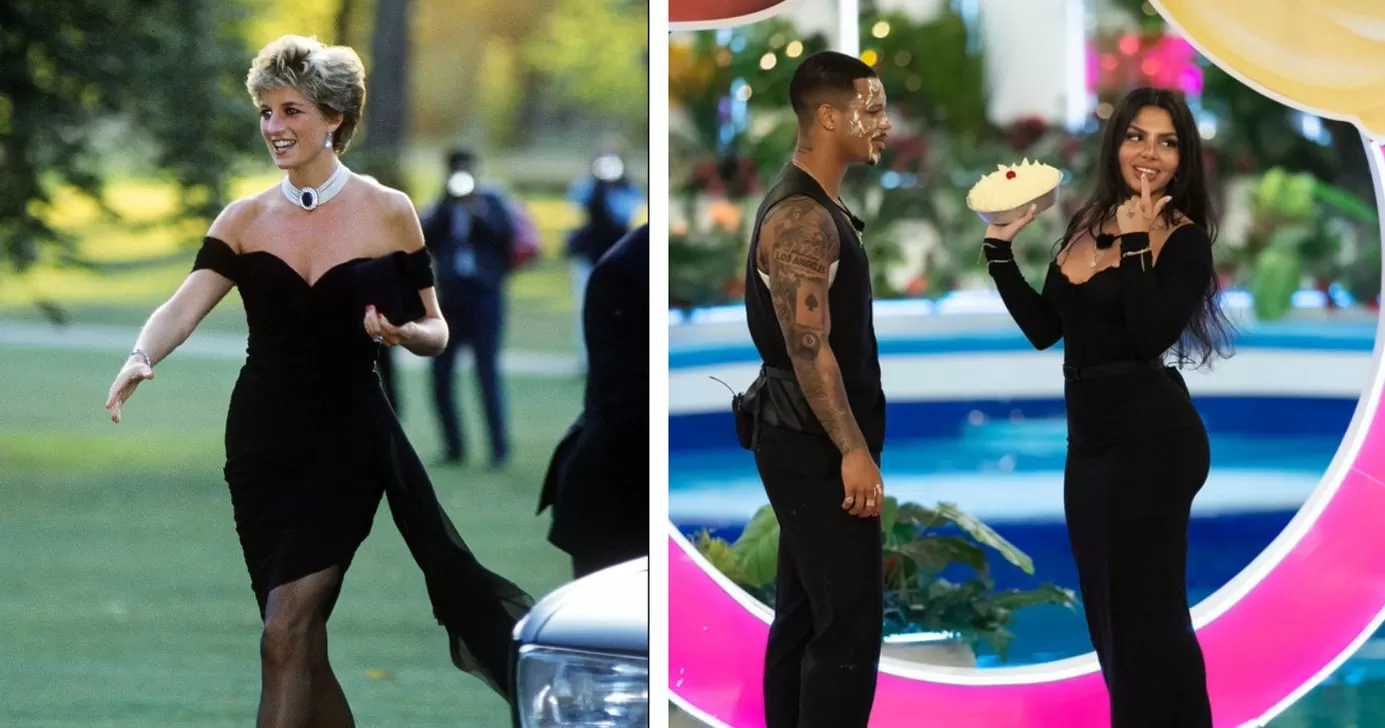

The revenge dress has been a staple in the fashion world for decades, symbolizing a woman’s strength and resilience in the aftermath of heartache and betrayal. From Princess Diana to Mariah Carey to Huda Mustafa, women have used fashion as a tool to make a statement and empower themselves in the face of adversity.
We’ve seen it all – a bold off-shoulder minidress worn by Princess Diana when Prince Charles went public with his affair, Mariah Carey in a hip-high slit after leaving a tumultuous marriage, and most recently, Huda Mustafa in a black mini lace cutout frock after being dumped by Jeremiah Brown on “Love Island USA.” These iconic revenge dress moments have captured the attention of the public and remain at the forefront of our minds.
Inspired by the daring black mini worn by the Princess of Wales in the 1990s, the modern revenge dress is fashion at its most communicative. It’s a bold, fitted silhouette in a striking red or black shade. It boasts plunging necklines, conspicuous cutouts, high splits, and open backs – a sartorial representation of a comeback story.
However, despite the enduring legacy of the revenge dress, I always felt uneasy about it. How vengeful is a sultry dress anyway? A better act of revenge would be, well, cheating back, as Chloe Bailey sings. The concept of “revenge dressing” also frames a woman’s wardrobe and appearance as her primary weapons of power. What about revenge accomplishments? Revenge art? Revenge careers? Why is it that – after a woman’s been wronged – the statement that really makes an impact revolves around how she looks?
I also wasn’t sold on the idea of dressing with the offending party in mind. Fashion is such a personal, intimate act for me; I get dressed based on my mood, my desires, and my social calendar for the week. I don’t want that process to be hijacked by someone else, let alone someone who caused me harm.
But then, I experienced it firsthand, and I learned that there is something empowering about the revenge dress. It speaks to the confidence of a woman who knows that her value goes far beyond how she was treated. In my case, it was three years ago, pre-pandemic, when I found myself on the verge of a breakup. We had been in sync, with amazing chemistry and a bright future ahead of us. But when I signed into his Netflix account, I saw a newly-created profile with another woman’s name – someone he had allegedly only helped with a broken water pipe. As our relationship quickly unraveled, I was left feeling belligerent and crushed. And the New Year’s Eve party I had already accepted an invitation to was now hanging in the balance.
At that moment, I was not in the mood to dress up and be around people. But then I reconsidered; after all, I usually enjoyed a night of revelry, and I refused to let him take that away from me. I landed on a dress that perfectly encapsulated my mood – a sequin micro mini with exaggerated sleeves and a plunging neckline. It was just the boost I needed to feel like myself again, and it felt like a silent but powerful act of revenge.
My story is not unique. It’s the same energy that Tina Turner exuded when she stepped out in a skin-tight leather gown after leaving her abusive marriage in 1986. Her hair was in a blonde spiky mullet, her body clad in a daring Azzedine Alaïa dress with four cutouts down the side. Becky G also radiated a similar confidence as she posed in a black lace dress at the iHeartRadio Music Awards – on the same day her fiancé addressed cheating rumors. And more recently, Huda Mustafa stunned in a series of curve-hugging dresses after her match (Brown) traded her for a new bombshell on national television. Dressing for revenge is less about retaliation and more about a bold declaration of self-love. It’s putting on a brave face and a tight cutout dress – and letting the world know that what happened to you didn’t break you and will not define you.
So let’s stop doubting the power of the revenge dress and instead celebrate it as a symbol of female empowerment. It’s a statement that says, “I am more than what you did to me.” Keep