

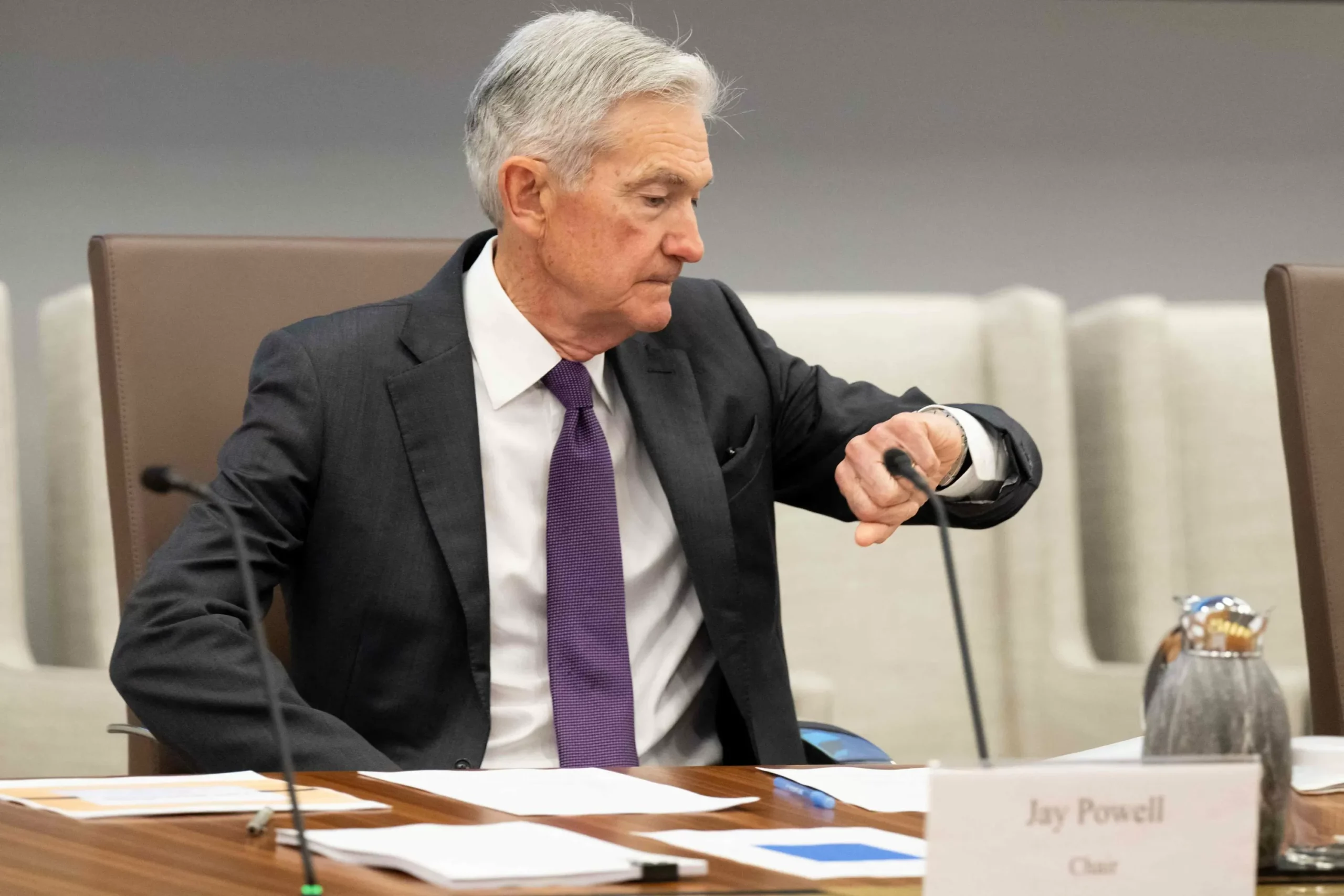

Recent national and global surveys of business executives have highlighted the ongoing challenge faced by the U.S. Federal Reserve (Fed) in balancing between slowing economic growth and rising inflation. As the central bank of the United States, the Fed plays a crucial role in maintaining the stability and growth of the country’s economy. However, recent data and reports have shown that the current economic climate is posing a difficult decision for the Fed.
The Fed’s primary mandate is to promote maximum employment, stable prices, and moderate long-term interest rates. In order to achieve this, the Fed has the power to influence the economy through its monetary policy tools, such as setting interest rates and controlling the money supply. However, the recent surveys have shown that the Fed is facing a dilemma in deciding which aspect to prioritize – economic growth or inflation.
One of the main concerns for the Fed is the slowing economic growth in the United States. The latest survey conducted by the National Association for Business Economics (NABE) revealed that business executives are increasingly worried about the slowing pace of economic growth. The survey showed that 75% of the respondents expect a slowdown in economic growth in the next 12 months, with 38% predicting a recession by the end of 2020. This is a significant increase from the previous survey in June, where only 60% of the respondents predicted a slowdown.
The main factors contributing to the slowdown in economic growth are the ongoing trade tensions between the U.S. and China, as well as the global economic slowdown. The trade war has resulted in higher tariffs and disrupted supply chains, which have negatively impacted businesses and consumer confidence. This has led to a decrease in investment and consumption, ultimately affecting economic growth.
On the other hand, the Fed is also facing pressure to address the rising inflation in the country. The latest data from the Labor Department showed that the consumer price index (CPI) rose by 0.4% in October, the largest increase in seven months. This increase was mainly driven by higher healthcare and housing costs. The Fed’s target for inflation is 2%, and the recent uptick in prices has raised concerns that the Fed may need to raise interest rates to control inflation.
The Fed’s challenge lies in finding the right balance between supporting economic growth and controlling inflation. Raising interest rates to curb inflation could slow down economic growth even further, while keeping rates low to stimulate growth could lead to higher inflation. This is a delicate balancing act that requires careful consideration and analysis.
Moreover, the Fed is also facing pressure from the White House to lower interest rates to boost economic growth. President Trump has been vocal in his criticism of the Fed’s monetary policy and has called for lower interest rates to support the economy. However, the Fed has maintained its independence and has stated that its decisions are based on economic data and not political pressure.
In light of these challenges, the Fed has been closely monitoring economic data and has taken a cautious approach in its monetary policy decisions. In October, the Fed cut interest rates for the third time this year, citing concerns about the global economic outlook and muted inflation. However, the Fed also signaled that it may pause further rate cuts unless there is a significant deterioration in economic conditions.
The Fed’s challenge in balancing between economic growth and inflation is not just limited to the United States. The International Monetary Fund (IMF) has also warned that central banks around the world are facing a similar dilemma. In its latest Global Financial Stability Report, the IMF highlighted that central banks are facing conflicting signals from the economy, making it difficult to determine the appropriate monetary policy.
In conclusion, the recent national and global surveys of business executives have highlighted the Fed’s challenge in weighing between slowing economic growth and rising inflation. The ongoing trade tensions and global economic slowdown have created a difficult decision for the Fed, and it will require careful analysis and consideration to find the right balance. As the central bank of the world’s largest economy, the Fed’s decisions will have a significant impact not only on the United States but also on the global economy. It is crucial for the Fed to maintain its independence and make data-driven decisions to ensure the stability and growth of the U.S. economy.