

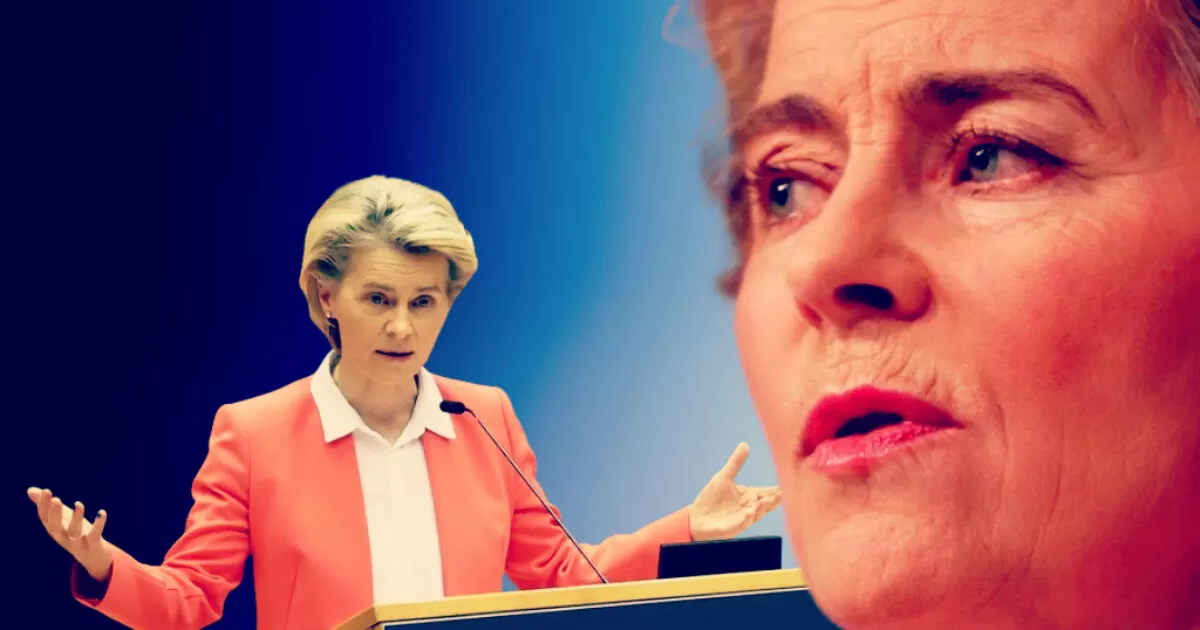

The European Commission has been in turmoil as of late, with many issues and scandals threatening to shake the very foundation of the Union. One such scandal that has garnered much attention is the “Pfizergate” scandal, involving European Commissioner Ursula von der Leyen and her handling of the Pfizer-BioNTech COVID-19 vaccine procurement. The scandal has rocked the EU and has led to a motion of censure against von der Leyen. However, while she may have survived the motion, it is safe to say that she is now in a much weaker position than she was before.
The motion of censure, which was brought forth by the right-wing Eurosceptic group, the Identity and Democracy (ID) party, was a direct result of the controversy surrounding the Pfizer-BioNTech vaccine procurement. Von der Leyen, as the head of the European Commission, was responsible for negotiating the EU’s vaccine contracts. However, it was revealed that she had failed to secure enough doses of the vaccine, resulting in a delayed vaccination rollout in the EU compared to other countries.
This failure was a huge blow to the reputation of von der Leyen, who had previously touted the EU’s unified approach to vaccine procurement as a success. The motion of censure was seen as a direct attack on her leadership and her ability to handle crises effectively. However, despite the calls for her resignation, von der Leyen managed to survive the motion, with a majority of MEPs voting against it.
While this may seem like a victory for von der Leyen, it is important to note that her survival of the motion does not mean she is in the clear. In fact, the opposite is true. The motion of censure has left her in a weakened position, both politically and in terms of negotiating power within the EU.
Firstly, the fact that the motion of censure was even brought to a vote is a clear indication of the lack of trust and confidence in von der Leyen’s leadership. The ID party, along with many other MEPs, have openly criticized her handling of the vaccine procurement and have called for her resignation. This has created a rift within the EU and has weakened the unity that is necessary for effective decision-making.
Moreover, von der Leyen’s survival of the motion was not a resounding victory. In fact, the vote was very close, with 352 MEPs voting against the motion and 326 voting in favor. This slim margin of victory highlights the fact that there are still many within the EU who have lost faith in von der Leyen’s ability to lead effectively. This will undoubtedly make it difficult for her to push through any major decisions or policies in the future.
Furthermore, the motion of censure has also weakened von der Leyen’s position in negotiations within the EU. As the head of the European Commission, she is responsible for negotiating the EU budget and other important policies. However, with her weakened position, it is likely that other EU leaders will see her as a liability and may not take her seriously in negotiations.
This is a major blow to the EU, especially at a time when unity and strong leadership are crucial for navigating through the ongoing pandemic and its aftermath. The EU is facing many challenges, from economic recovery to climate change, and it needs a strong and capable leader to overcome these obstacles. Unfortunately, von der Leyen’s weakened position may hinder her ability to effectively lead the EU through these trying times.
In conclusion, while Ursula von der Leyen may have survived the motion of censure, it is clear that she is now in a much weaker position than she was before. The scandal surrounding the Pfizer-BioNTech vaccine procurement has damaged her reputation and has left her with a lack of trust and confidence from both within the EU and from other global leaders. This has weakened her politically and has also affected her negotiating power within the EU. It remains to be seen how she will navigate through these challenges and whether she will be able to regain the trust and confidence of the EU and its citizens.