

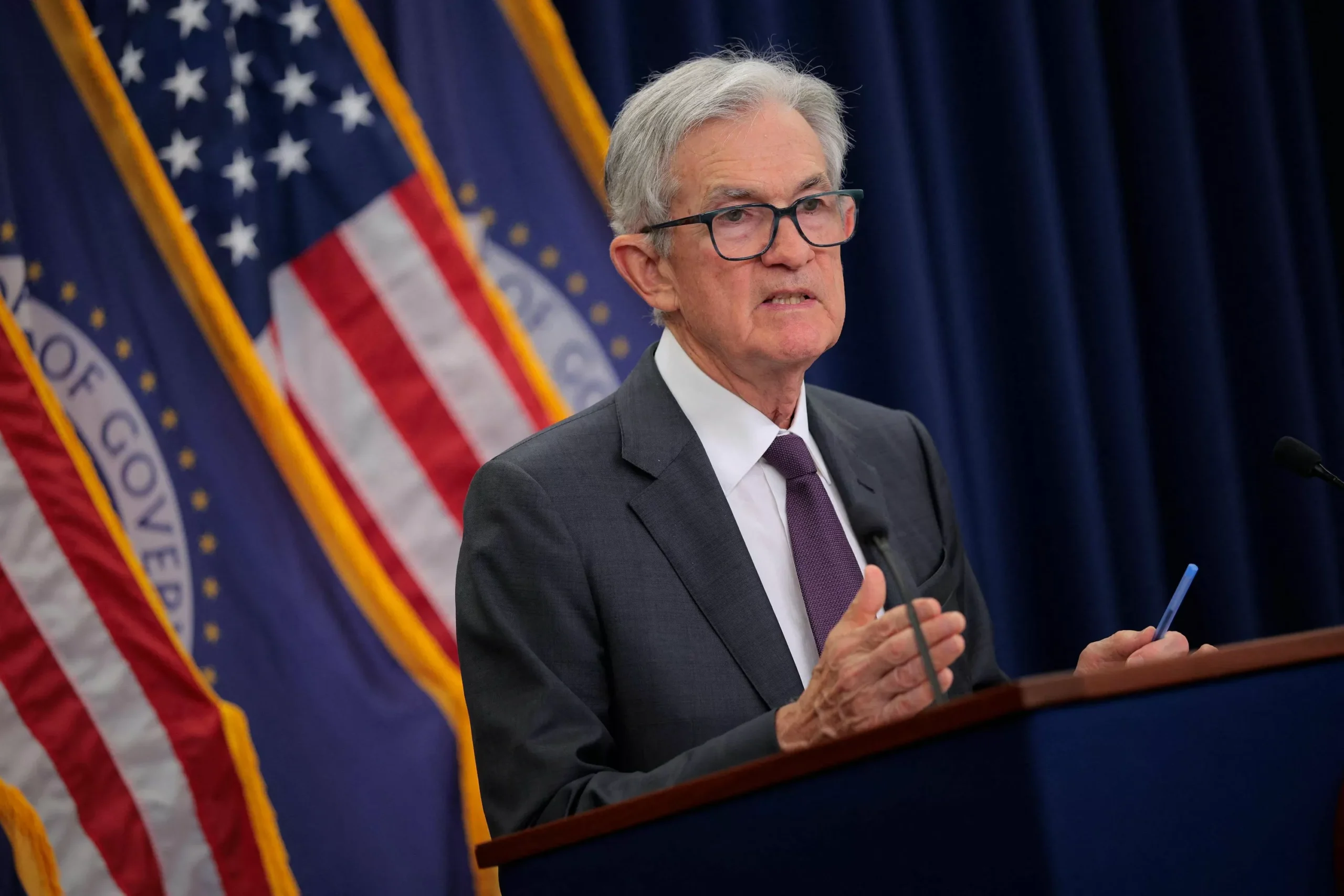

The U.S. Federal Reserve (Fed) has once again stood its ground and kept interest rates unchanged on Wednesday, despite facing mounting pressure from President Donald Trump to lower borrowing costs. This decision, which was widely expected by economists and analysts, is a testament to the Fed’s commitment to its mandate of maintaining a stable and healthy economy.
The Fed’s decision to keep interest rates steady comes at a time when the U.S. economy is showing signs of strength and resilience. The unemployment rate is at a record low of 3.7%, and the economy has been growing steadily for the past decade. Inflation, which is one of the key factors that the Fed considers when setting interest rates, has also been under control.
However, President Trump has been vocal in his criticism of the Fed’s monetary policy, calling for lower interest rates to boost economic growth. He has repeatedly expressed his frustration with the Fed’s decision to raise interest rates four times in 2018, and has even gone as far as to say that the Fed is the biggest threat to the U.S. economy.
Despite the pressure from the President, the Fed has maintained its independence and has not let political considerations influence its decision-making. This is a crucial aspect of the Fed’s role as the central bank of the United States, as it ensures that monetary policy is not swayed by short-term political agendas.
In its statement, the Fed acknowledged the strong performance of the U.S. economy, stating that “economic activity has been rising at a moderate rate” and that “job gains have been solid, on average, in recent months.” The Fed also noted that household spending has been increasing, and that business fixed investment and exports have been growing.
However, the Fed also highlighted some concerns, such as the slowing global growth and the ongoing trade tensions between the U.S. and China. These factors could potentially have a negative impact on the U.S. economy, and the Fed will continue to monitor them closely.
The decision to keep interest rates unchanged was not unanimous, with two members of the Federal Open Market Committee (FOMC) voting for a rate cut. This indicates that there is some division within the Fed about the future direction of interest rates. However, the majority of the FOMC members believe that the current stance of monetary policy is appropriate and that there is no immediate need for a rate cut.
The Fed’s decision to maintain the status quo was met with mixed reactions from the financial markets. While some investors were disappointed that there was no rate cut, others were relieved that the Fed did not give in to political pressure. The stock market initially reacted negatively to the news, but then rebounded as investors digested the Fed’s statement.
Looking ahead, the Fed has left the door open for future rate cuts if the economic conditions warrant it. In its statement, the Fed said that it will “act as appropriate to sustain the expansion.” This indicates that the Fed is closely monitoring the economic data and will adjust its monetary policy if necessary.
In conclusion, the Fed’s decision to keep interest rates unchanged is a clear indication of its commitment to its mandate of promoting maximum employment and stable prices. Despite the pressure from President Trump, the Fed has maintained its independence and has made a decision based on the current state of the economy. This decision is a positive sign for the U.S. economy and shows that the Fed is taking a cautious and data-driven approach to monetary policy.