

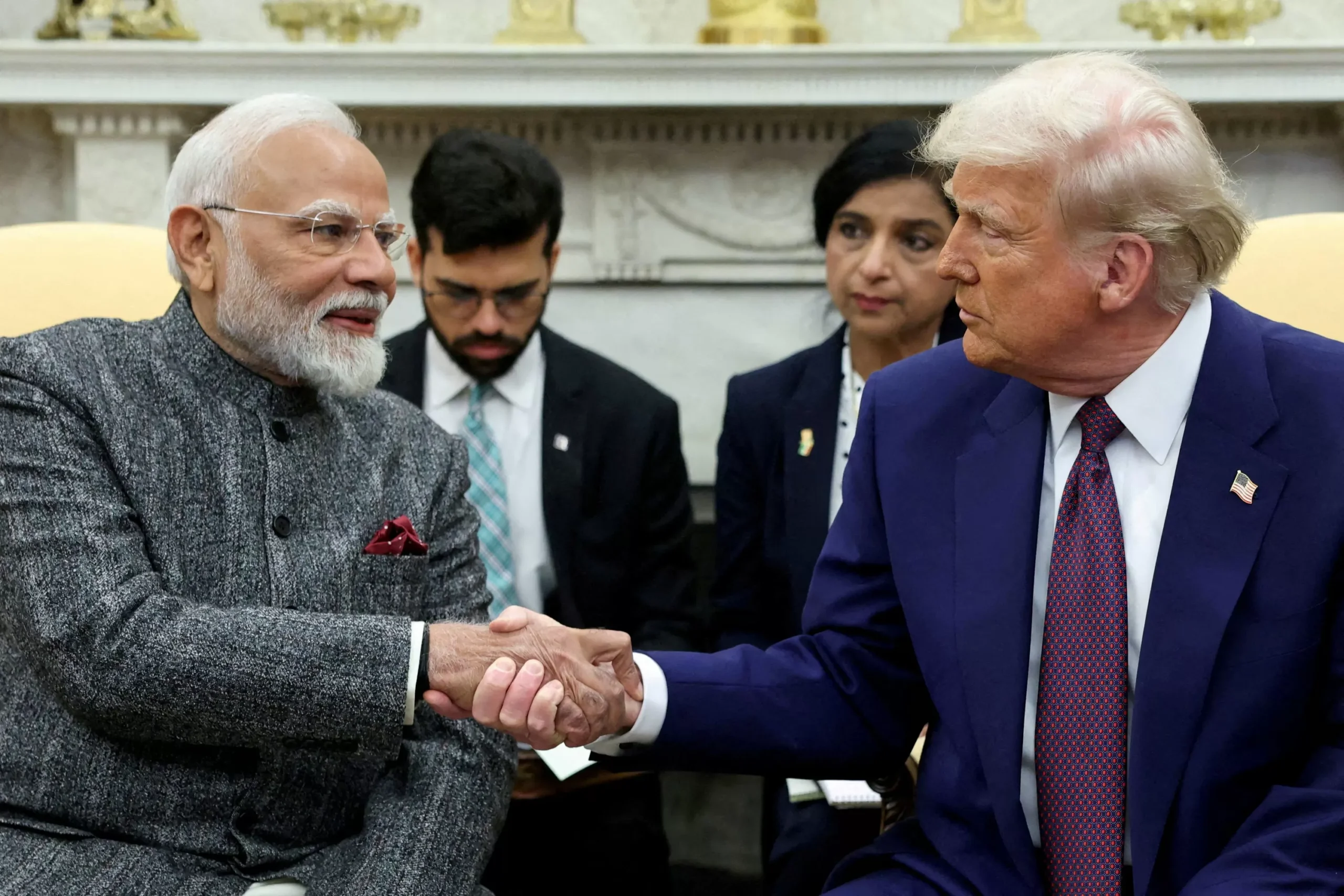

President Donald Trump has once again made a bold move in his efforts to protect American interests and promote fair trade practices. On Wednesday, he issued an executive order to impose an additional 25% tariff on India over its imports of Russian oil. This decision comes as part of the ongoing trade war between the United States and several other countries, including China and India.
The combined duties imposed by the U.S. on Indian goods now amount to a staggering $5.6 billion, making it one of the highest tariffs ever imposed on a single country. This move has been met with mixed reactions, with some praising Trump for taking a strong stance against unfair trade practices, while others criticize it as a protectionist measure that could harm global trade.
The decision to impose tariffs on Indian goods is not a new one. In fact, the U.S. has been engaged in a trade dispute with India for several years now. The main issue at hand is India’s trade deficit with the U.S., which currently stands at $24.2 billion. This means that India is exporting far more goods to the U.S. than it is importing, resulting in a significant trade imbalance.
One of the major factors contributing to this trade deficit is India’s reliance on Russian oil. India is one of the largest importers of Russian oil, with the commodity accounting for nearly 40% of its total oil imports. This has been a major concern for the U.S., as it sees this as a threat to its own oil industry. By imposing tariffs on Indian imports of Russian oil, Trump aims to level the playing field and protect American oil producers.
The executive order issued by Trump has been met with strong opposition from India, with the country’s trade minister calling it “unfortunate” and “unilateral.” However, it is important to note that this is not a targeted attack on India, but rather a strategic move to address the larger issue of unfair trade practices. In fact, the U.S. has also imposed tariffs on other countries, including China, in an effort to reduce its trade deficit and promote fair trade.
Moreover, this decision is not just about protecting American interests, but also about creating a level playing field for all countries involved in global trade. The U.S. has long been a champion of free and fair trade, and this move is in line with that ideology. By imposing tariffs on Indian imports, the U.S. is sending a strong message to other countries that it will not tolerate unfair trade practices that harm its economy.
Some may argue that this decision could lead to a trade war between the U.S. and India, but it is important to remember that this is not a one-sided move. India has also imposed tariffs on American goods in response to the U.S. tariffs on Indian steel and aluminum. This tit-for-tat approach is not ideal, but it is a necessary step in addressing the trade imbalance between the two countries.
It is also worth noting that this decision is not permanent. Trump has stated that the tariffs will be lifted if India takes steps to reduce its trade deficit with the U.S. This shows that the U.S. is open to negotiations and is willing to find a mutually beneficial solution to this issue.
In conclusion, President Donald Trump’s decision to impose an additional 25% tariff on India over its imports of Russian oil is a bold move that aims to promote fair trade practices and protect American interests. While it may be met with opposition, it is a necessary step in addressing the trade imbalance between the two countries. This decision also sends a strong message to other countries that the U.S. will not tolerate unfair trade practices. With negotiations and a willingness to find a solution, this move could ultimately lead to a more balanced and fair global trade system.