

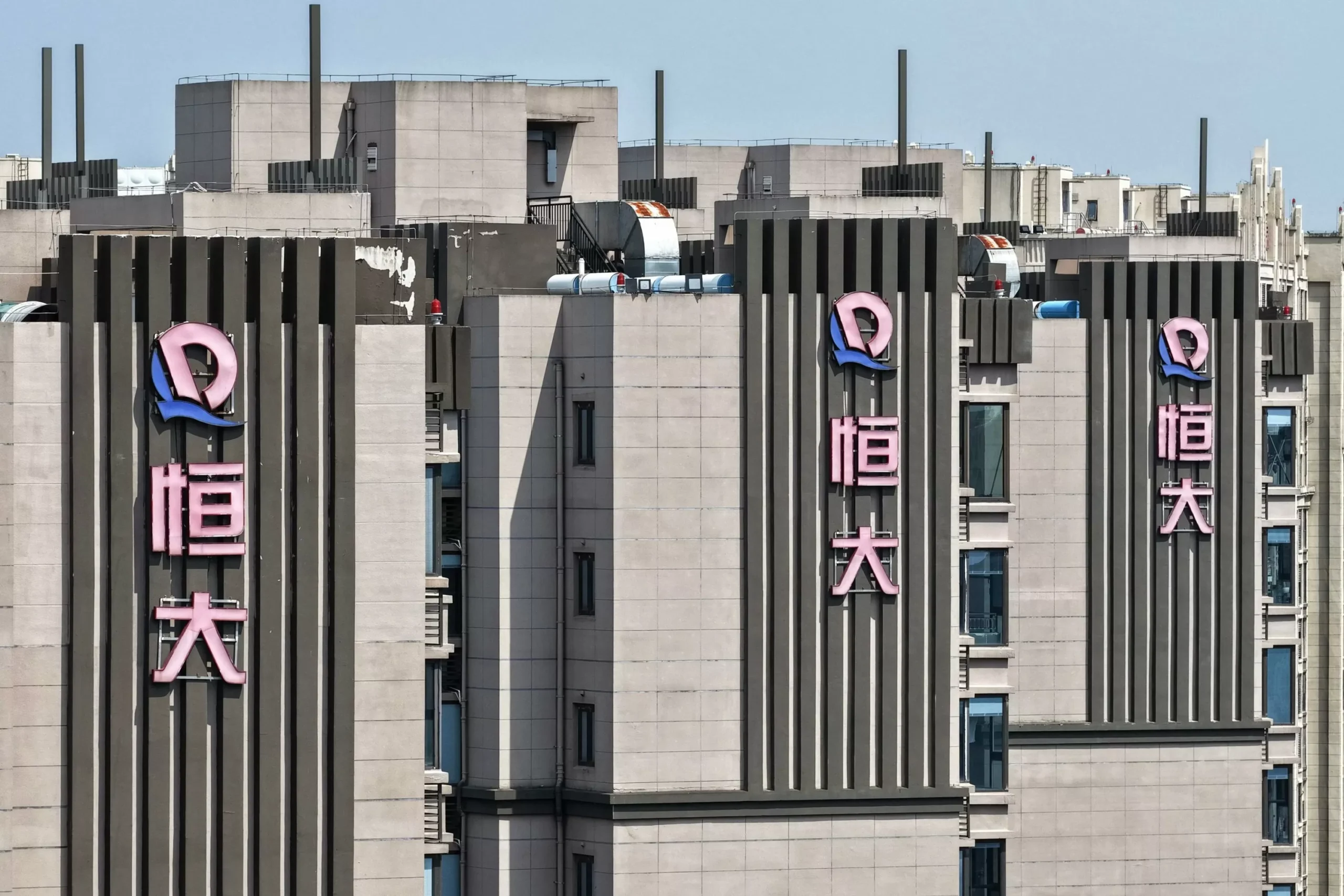

China Evergrande Group, one of the largest property developers in China, has been making headlines recently as it was delisted from the Hong Kong stock exchange on Monday. This marks a significant downfall for the company, which was once a booming force in the real estate market. The delisting comes as a result of mounting debt and financial struggles, leading to a grim reversal of fortune for the company.
The news of China Evergrande’s delisting has sent shockwaves through the business world, with many wondering how such a prominent company could fall so far. Evergrande was once known for its ambitious projects and rapid growth, but now it faces a different reality. The company’s financial troubles have been building for some time, with its debt reaching a staggering $300 billion. This has led to a series of credit downgrades and a sharp decline in its stock price.
The delisting from the Hong Kong stock exchange is a major blow for China Evergrande, as it was one of the company’s main sources of funding. This move will make it even more challenging for the company to raise capital and pay off its debts. It also raises concerns for the thousands of employees and contractors who rely on the company for their livelihoods.
The downfall of China Evergrande is a cautionary tale for the real estate industry. The company’s rapid expansion and aggressive borrowing have ultimately led to its downfall. It serves as a reminder that sustainable growth and responsible financial management are crucial for any business, especially in a volatile market like real estate.
The delisting of China Evergrande also highlights the importance of government regulations in the business world. The Chinese government has been cracking down on excessive borrowing and risky investments in the real estate sector, and Evergrande’s delisting is a clear example of the consequences of not following these regulations. It also serves as a warning to other companies in the industry to be more cautious in their financial decisions.
Despite the current challenges, there is still hope for China Evergrande to turn things around. The company has announced plans to reduce its debt and restructure its business operations. It has also received support from the Chinese government, which has urged banks to support the company and avoid a potential collapse. This shows that the government is willing to step in and help companies in times of crisis, which is a positive sign for the business community.
Moreover, China Evergrande’s delisting does not mean the end for the company. It can still be traded on the over-the-counter market, and there is a possibility of relisting in the future if the company can improve its financial situation. This is a glimmer of hope for investors and employees who have been affected by the delisting.
In conclusion, the delisting of China Evergrande from the Hong Kong stock exchange is undoubtedly a significant setback for the company. However, it also serves as a lesson for the real estate industry and a reminder of the importance of responsible financial management. The Chinese government’s support and the company’s efforts to restructure and reduce its debt give hope for a potential turnaround in the future. Let us hope that China Evergrande can overcome its challenges and emerge stronger from this difficult period.