

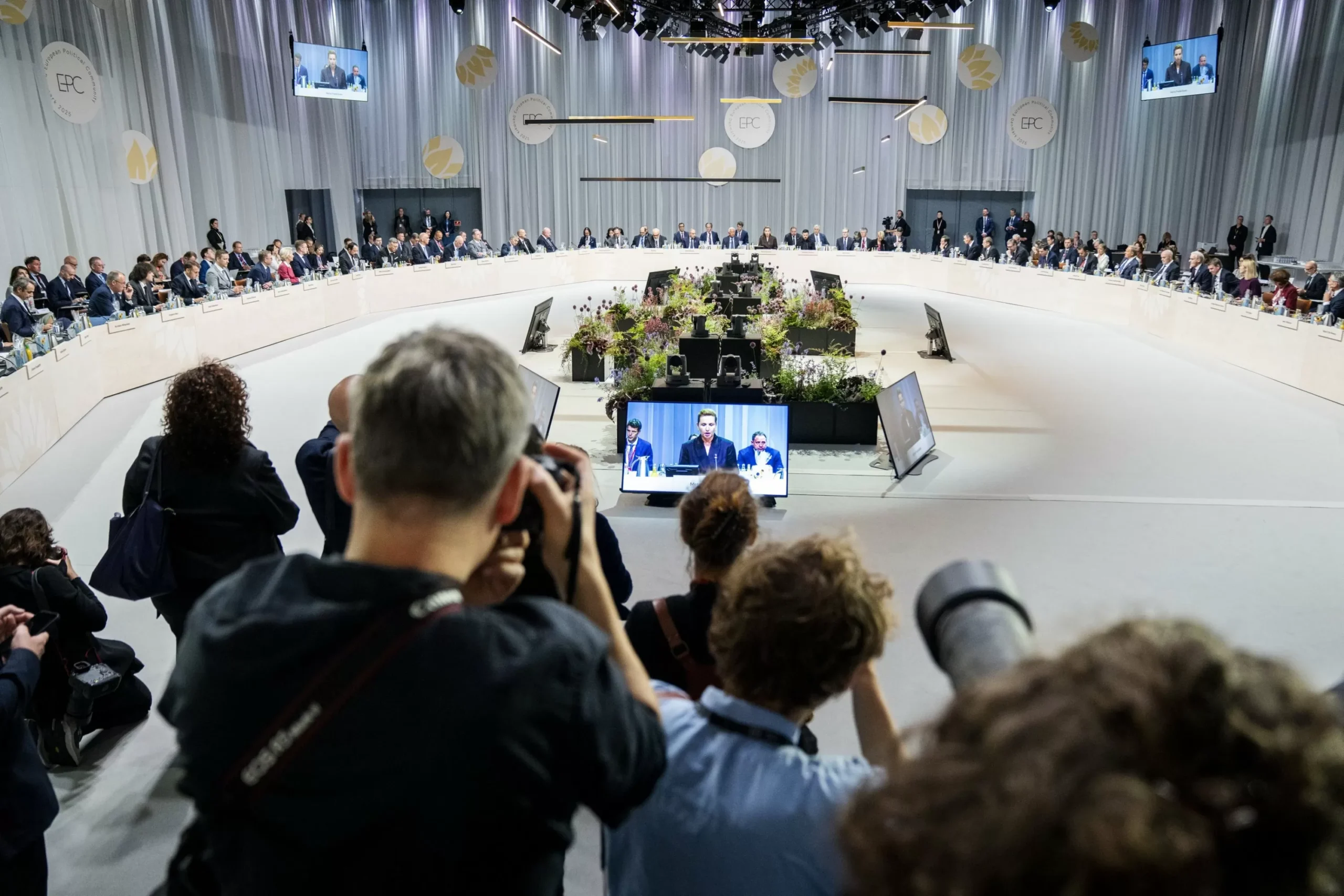

In a recent meeting of European Union leaders, the topic of providing financial support to Ukraine was once again brought to the forefront. Amidst ongoing tensions between Russia and Ukraine, many leaders expressed their support for the idea of using frozen Russian assets to provide a reparations loan to Ukraine. However, there also remained a sense of caution and wariness among the leaders.
The proposal to use frozen Russian assets as a means of providing financial aid to Ukraine has been gaining momentum in recent months. With the ongoing conflict in eastern Ukraine and the annexation of Crimea by Russia, the Ukrainian economy has been struggling. The country is in dire need of financial assistance to rebuild its infrastructure and stabilize its economy.
The idea of using frozen Russian assets as a form of reparations for Ukraine has been met with widespread support from EU leaders. This proposal would not only provide much-needed financial aid to Ukraine but also hold Russia accountable for its actions in the region. It is a powerful message from the EU that aggression and violation of international law will not be tolerated.
Many EU leaders have also highlighted the fact that the frozen Russian assets are a result of sanctions imposed on Russia by the EU. These assets belong to the Russian government and have been frozen as a form of punishment for their actions in Ukraine. Therefore, using these assets to provide financial aid to Ukraine would not only be a justifiable move but also a strategic one.
However, despite the widespread support for this proposal, there is also a sense of caution among EU leaders. The main concern is the potential backlash from Russia. The country has already expressed its opposition to any such move and has warned of retaliatory measures. This has left many EU leaders wary of the consequences of using frozen Russian assets for the benefit of Ukraine.
There is also the question of how much financial aid can be provided through this method. The exact amount of frozen Russian assets is still unclear, and it is uncertain how much of it can be used for a reparations loan to Ukraine. This uncertainty has led some leaders to question the feasibility of this proposal.
Despite these concerns, the overall sentiment among EU leaders is one of support and determination to help Ukraine. The EU has been a strong ally of Ukraine since the beginning of the conflict, providing both political and financial support. The proposal to use frozen Russian assets is seen as another step in this direction, a tangible way to show solidarity with Ukraine and hold Russia accountable for its actions.
Moreover, providing a reparations loan to Ukraine would not only benefit the country but also the EU as a whole. A stable and prosperous Ukraine would mean a more secure and prosperous Europe. It would also help in strengthening the EU’s relationship with Ukraine and furthering its efforts towards European integration.
In conclusion, the idea of using frozen Russian assets to provide a reparations loan to Ukraine has received widespread support from European Union leaders. It is a powerful message to Russia that its actions will not go unpunished, and a show of solidarity with Ukraine. However, there are also valid concerns and uncertainties that need to be addressed before any concrete steps can be taken. Nevertheless, the EU remains committed to supporting Ukraine and finding ways to help the country in its time of need.