

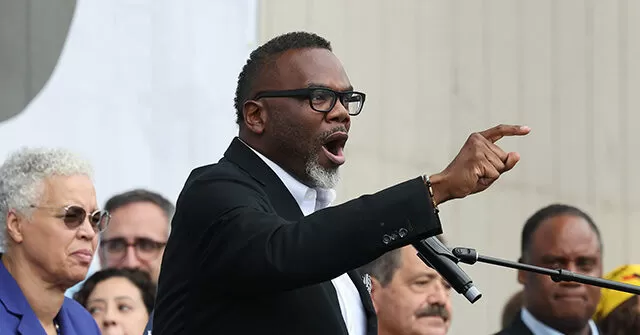

Chicago Democrat Mayor Brandon Johnson has made a bold statement that has sparked controversy and debate across the country. In a recent interview, Mayor Johnson declared that there are no “illegal aliens” in his city, and anyone who uses that term is being racist. He went on to say that if we are going to label migrants as “illegal,” then we must also label black people as “slaves.” This statement has caused a stir, but it is an important and necessary conversation to have.
Mayor Johnson’s words come at a time when the country is deeply divided on the issue of immigration. The term “illegal aliens” has been used by some politicians and media outlets to dehumanize and criminalize immigrants, creating a culture of fear and division. But Mayor Johnson is taking a stand against this harmful rhetoric and challenging us to rethink our language and our attitudes towards immigrants.
Firstly, it is important to acknowledge that the term “illegal alien” is inherently dehumanizing. By labeling someone as “illegal,” we are reducing them to their immigration status and ignoring their humanity. It is also worth noting that being in the country without proper documentation is a civil offense, not a criminal one. Therefore, referring to someone as an “illegal alien” is inaccurate and unjust.
Furthermore, Mayor Johnson’s comparison to calling black people “slaves” is powerful. It highlights the fact that both terms are used to oppress and marginalize a group of people. Slavery was a horrific period in our history, and using the term “slaves” to label black people is a reminder of that dark past. Similarly, labeling immigrants as “illegal aliens” perpetuates the false narrative that they are criminals and should be treated as such.
Mayor Johnson’s statement also sheds light on the double standards and hypocrisy in our society. We often hear politicians and media outlets use the term “illegal aliens” to refer to immigrants, but we rarely hear them use the term “illegal employers” to refer to businesses that hire undocumented workers. This shows that our immigration system is broken and needs to be reformed to address the root causes of immigration rather than demonizing and punishing those who are seeking a better life.
Moreover, Mayor Johnson’s stance aligns with the values of the city of Chicago. Chicago is a diverse and welcoming city, and its motto is “City in a Garden.” This motto represents the city’s commitment to inclusivity, diversity, and equal opportunities for all. Mayor Johnson’s statement reflects this commitment and sends a powerful message to the rest of the country that we should not be perpetuating harmful and divisive language towards immigrants.
In addition, Mayor Johnson’s words also bring attention to the contributions that immigrants make to our society. Many immigrants come to this country seeking a better life and are willing to work hard and make sacrifices to achieve their dreams. They bring diversity, culture, and innovation to our communities, making them stronger and more vibrant. It is crucial to recognize and appreciate the valuable contributions of immigrants rather than stigmatizing and vilifying them.
Lastly, Mayor Johnson’s statement is a call to action for all of us. It is a reminder that our words matter and can have a significant impact on others. We must be mindful of the language we use and how it can perpetuate harmful stereotypes and create divisions. We must also challenge those who use dehumanizing and discriminatory language and hold them accountable for their actions.
In conclusion, Mayor Brandon Johnson’s statement that there are no “illegal aliens” in his city is a powerful and necessary reminder of the importance of using respectful and inclusive language. It is time for us to move away from divisive and harmful rhetoric and instead focus on finding solutions to our broken immigration system. Let us strive to build a society that welcomes and embraces all people, regardless of their background or immigration status. As Mayor Johnson said, “If we are going to call migrants ‘illegal aliens,’ then we must also call black people ‘slaves’.” Let us choose to call them our fellow human beings.