

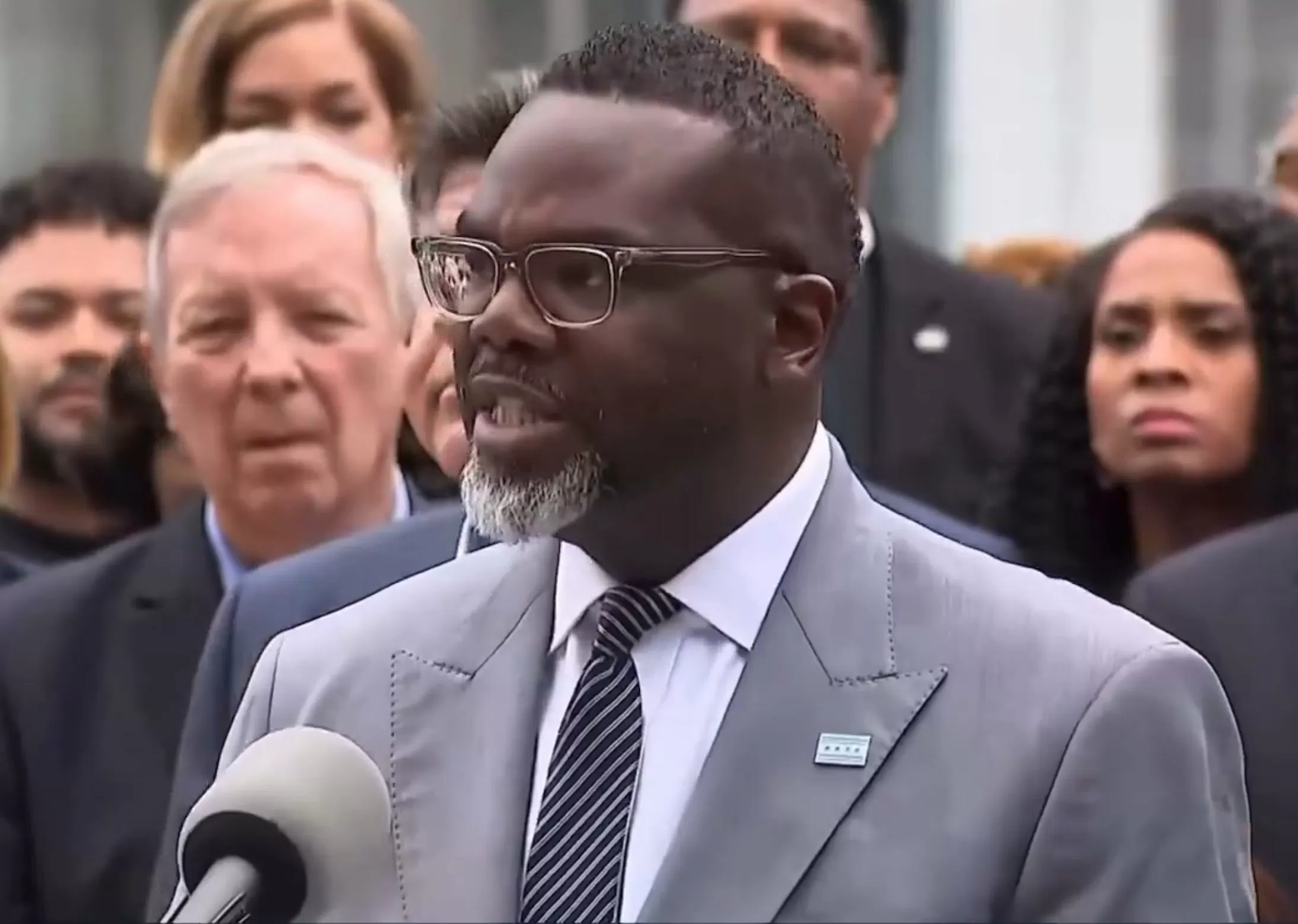

Chicago Mayor Brandon Johnson has recently made controversial statements regarding the imprisonment of violent criminals, calling it “racist, immoral, and unholy”. In a video posted on The Gateway Pundit, Johnson can be seen addressing a group of supporters, passionately arguing against the current system of incarceration in the city.
According to Johnson, the act of imprisoning individuals who have committed violent crimes is not only discriminatory, but also goes against moral and ethical principles. He believes that the current justice system is designed to target and punish people of color, perpetuating systemic racism and injustice.
Johnson’s statements have sparked heated debates and received both praise and criticism from various groups. Some see his words as a reflection of the growing movement against mass incarceration and racial inequality, while others view it as an attack on law enforcement and a disregard for the safety of the community.
But what exactly did Johnson mean when he called imprisonment of violent criminals “racist, immoral, and unholy”? Let’s take a closer look at his arguments and the implications of his statements.
First and foremost, Johnson points out the racial disparities in the prison population. In Chicago, African Americans make up only about 30% of the population, yet they account for more than 60% of the incarcerated individuals. This disproportionate representation of people of color in prisons is not unique to Chicago, but a nationwide issue that highlights the systemic racism ingrained in the criminal justice system.
Johnson also condemns the practice of “warehousing” individuals in overcrowded and underfunded prisons, where they are often subjected to inhumane living conditions and lack access to basic necessities such as healthcare and education. He argues that this not only violates human rights, but also perpetuates a cycle of poverty and crime, as these individuals are not given the opportunity to rehabilitate and reintegrate into society.
Furthermore, Johnson stresses the impact of incarceration on families and communities. When a person is imprisoned, their loved ones are also affected, often struggling to make ends meet and facing social stigma. This, in turn, can lead to further economic and social challenges, creating a ripple effect that harms the community as a whole.
In light of these issues, Johnson proposes a more compassionate and holistic approach to dealing with crime and violence. He advocates for investing in community-based programs and services that address the root causes of crime, such as poverty, lack of education and opportunities, and mental health issues. He also calls for reforming the justice system to focus on rehabilitation and restorative justice, rather than punishment.
Johnson’s statements have sparked a much-needed conversation about the flaws and injustices within the criminal justice system. While some may argue that violent criminals deserve to be punished for their actions, Johnson’s message is not about letting them off the hook, but rather about recognizing the systemic issues that have led to their actions and addressing them in a more effective and humane way.
It is also important to note that Johnson’s stance is not an attack on law enforcement or disregard for public safety. On the contrary, he acknowledges the crucial role of the police in keeping communities safe, but believes that a more balanced and holistic approach is needed to truly address crime and violence in the city.
In conclusion, Chicago Mayor Brandon Johnson’s statements on the imprisonment of violent criminals may be controversial, but they shed light on important issues that need to be addressed. By calling for a more just and compassionate approach to criminal justice, Johnson challenges us to rethink our current system and work towards a fairer and more equitable society for all.