

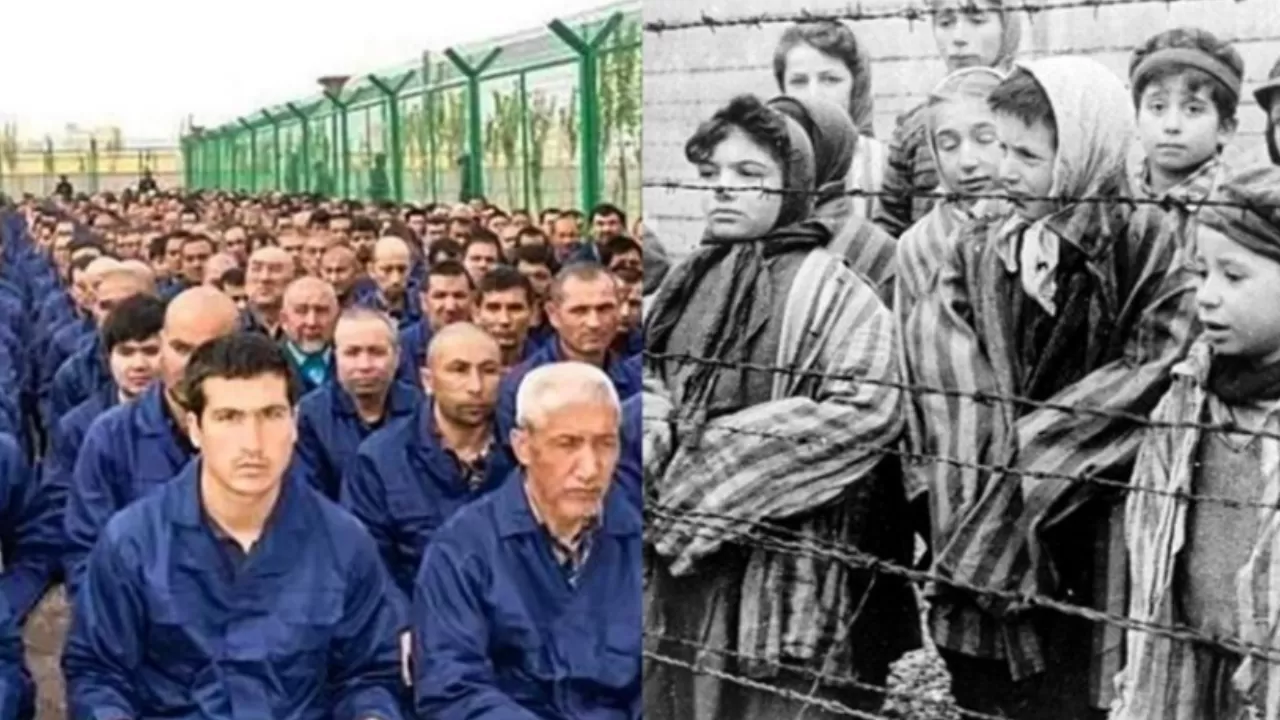

The global economy has become increasingly interconnected in recent years, with countries relying on each other for various goods and services. However, one particular reliance that has been brought to light is America’s reliance on Chinese supply chains. While this may not seem like an issue on the surface, it is important to recognize the negative impact it has on human rights, particularly in the Xinjiang region of China, also known as East Turkistan.
The Uyghur people, who are predominantly Muslim, have been facing persecution and oppression at the hands of the Chinese government for decades. In recent years, the situation has only worsened with the implementation of mass internment camps, surveillance systems, and forced labor programs. The Chinese government justifies these actions as a means to combat extremism and terrorism, but it is clear that the real motive is to suppress the Uyghur culture and religion.
Despite this alarming situation, many Muslim-majority countries have remained silent on China’s persecution of the Uyghur people. This silence has been criticized by many, including top Uyghur officials who have called for more support and action from the Muslim community. In a recent interview with The Gateway Pundit, the Uyghur government-in-exile’s Minister of Foreign Affairs, Dolkun Isa, expressed his disappointment at the lack of response from Muslim countries, stating that “Muslims around the world are reluctant to speak out against China’s atrocities in East Turkistan.”
This reluctance to speak out is not without reason. Many Muslim-majority countries have strong economic ties with China, with some being heavily reliant on Chinese investments and trade. This has created a complex situation where these countries are hesitant to criticize China for fear of jeopardizing their economic relationship. However, this silence is not only detrimental to the Uyghur people, but it also goes against the principles of Islam, which promotes justice and standing up against oppression.
One of the main reasons for America’s reliance on Chinese supply chains is the low cost of production in China. This has led to many American companies outsourcing their manufacturing to China, which in turn has contributed to the economic growth of the country. However, this economic growth has come at a high cost, with forced labor being a major issue in China. It is estimated that around 80% of the world’s cotton comes from Xinjiang, where forced labor is used to pick the cotton. This means that many American products, including popular clothing brands, are made using forced labor from the Uyghur people.
The Uyghur people are not only being oppressed in their own country but also through the products that are being exported to other parts of the world. This is a clear violation of human rights and goes against the values of freedom and justice that America stands for. By relying on Chinese supply chains, America is inadvertently supporting the repression and persecution of the Uyghur people.
It is time for America to reassess its reliance on Chinese supply chains and take a stand against the human rights abuses in Xinjiang. The first step in this process is to raise awareness about the issue and put pressure on American companies to ensure that their supply chains are free from forced labor. This can be achieved through consumer activism and government regulations that require companies to be transparent about their supply chains.
Furthermore, America must also use its diplomatic power to address the situation in Xinjiang and put pressure on China to end its human rights abuses. This can include imposing sanctions and holding China accountable for their actions. The Uyghur people deserve the support of the international community, and it is time for America to lead the way in standing up for their rights.
In conclusion, America’s reliance on Chinese supply chains is not only detrimental to its own economy but also to the human rights of the Uyghur people in Xinjiang. The silence of Muslim-majority countries on this issue is concerning, and it is time for them to speak out against China’s persecution of their fellow Muslims. It is also crucial for America to take action and reassess its reliance on Chinese supply chains to ensure that it is not supporting the machinery of repression in Xinjiang. Only by working together and taking a stand against human rights abuses can we create a world where justice and freedom prevail.