

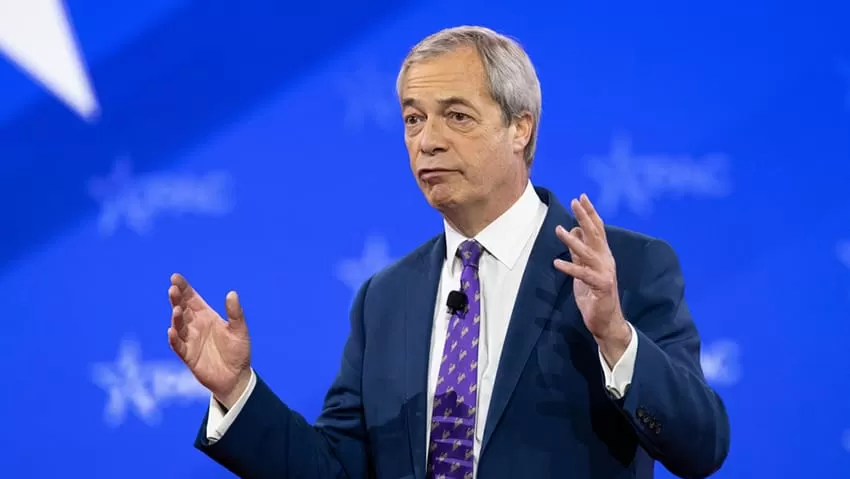

Nigel Farage, the leader of the Brexit Party, has once again made headlines with his bold plans to tax banks by scrapping the interest payments the Bank of England makes to commercial banks. This move has revived tensions with the banking sector and raised questions about market confidence. While some may view this move as controversial, Farage believes that it is necessary in order to ensure a fair and balanced financial system.
In a recent statement, Farage stated that the current system of interest payments from the Bank of England to commercial banks is “fundamentally flawed and unfair.” He argues that these payments are essentially a subsidy to the banking sector, which is already making significant profits from their lending activities. This subsidy, according to Farage, should be redirected towards the public through tax cuts and increased public spending.
The concept of taxing banks by scrapping interest payments is not a new one, as it was first proposed by Farage back in 2016. However, with tensions between the banking sector and politicians still high, the proposal did not gain much momentum. Now, with UK’s exit from the European Union looming, Farage has renewed his pledge to make this a reality.
But what exactly are these interest payments that the Bank of England makes to commercial banks? Essentially, the Bank of England pays interest on the cash that commercial banks keep in their accounts with the central bank. This is meant to incentivize banks to keep their money with the Bank of England rather than lending it out. This interest rate, known as the base rate, is currently set at 0.75%, and the payments made by the Bank of England amount to billions of pounds each year.
While this system may seem fair on the surface, many argue that it is actually benefiting the banking sector at the expense of the general public. In essence, the interest payments act as a subsidy for commercial banks, allowing them to generate profits without taking on much risk. This has led to widespread criticism that banks are not doing enough to support the economy and that their profits are mostly going towards lining the pockets of their executives and shareholders.
This is where Nigel Farage’s proposal comes in. By scrapping these interest payments, banks would have to find other ways to generate profits, such as through increased lending or more competitive interest rates for their customers. This could lead to a more active and efficient banking sector that is better able to support the economy. Additionally, the money saved from these interest payments could be utilized for public benefit, such as tax cuts or increased investment in infrastructure and public services.
However, not everyone is on board with this proposal. The banking sector has strongly opposed the idea, stating that it would harm their profitability and could even lead to negative consequences for the economy. They argue that these interest payments act as a buffer against potential losses and that scrapping them could destabilize the financial system.
But Farage remains unphased by these criticisms, stating that the current system is unsustainable and that something needs to change. He believes that by taxing banks through the elimination of these interest payments, the economy will benefit as a whole, rather than just a select few.
Despite the divided opinions on this proposal, one thing is clear – Nigel Farage’s renewed pledge to tax banks by scrapping the Bank of England’s interest payments has once again sparked widespread debate and discussion. While only time will tell if this proposal will come to fruition, one thing is for sure – Farage’s determination to shake up the financial system is not to be underestimated.