

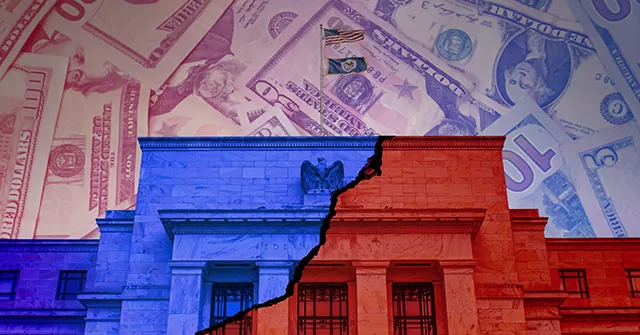

In the world of central banking, the Federal Open Market Committee (FOMC) plays a crucial role in shaping the monetary policy of the United States. As the primary decision-making body of the Federal Reserve, the FOMC is responsible for setting interest rates and managing the country’s money supply. For decades, it has been a tradition for the sitting Board chairman to also serve as the chairman of the FOMC. However, recent political developments have brought this long-standing practice into question, raising concerns about the potential impact on the stability of the central banking system.
The FOMC is made up of 12 members, including the seven members of the Board of Governors and five of the 12 Federal Reserve Bank presidents. The Board of Governors is headed by the chairman, who is appointed by the President and confirmed by the Senate. Traditionally, the FOMC chairman has been the same person as the Board chairman, ensuring a seamless coordination between the two bodies. This has been seen as a way to maintain continuity and stability within the Federal Reserve.
However, politics has a way of challenging established norms and assumptions. With the recent nomination of Jerome Powell as the new chairman of the Federal Reserve, there are concerns that this tradition may be broken. Powell, a Republican, was nominated by President Trump, who has been vocal about his dissatisfaction with the current Fed chair, Janet Yellen. If confirmed by the Senate, Powell will become the first non-economist to lead the Federal Reserve in nearly four decades.
This potential break from tradition has raised questions about the future of the FOMC and the central banking system as a whole. Some experts believe that having a separate chairman for the FOMC and the Board of Governors could lead to conflicting agendas and a lack of coordination between the two bodies. This could potentially create uncertainty and volatility in the financial markets, which rely heavily on the stability and predictability of the Federal Reserve’s actions.
Moreover, a confirmation fight for the new Fed chair could further exacerbate the situation. In the past, the confirmation process for the Fed chair has been relatively smooth and non-partisan. However, with the current political climate, there is a possibility of a contentious confirmation process, which could further divide the already polarized Congress. This could have a ripple effect on the functioning of the Federal Reserve and its ability to carry out its mandate effectively.
The potential consequences of a fractured central banking system are not limited to the United States. The Federal Reserve is considered the most influential central bank in the world, and any disruptions in its operations could have a global impact. The stability of the US dollar, which is the world’s reserve currency, could also be at risk, affecting international trade and financial markets.
In addition to the potential risks, a confirmation fight for the new Fed chair could also have some unexpected consequences. With the current political climate, it is not far-fetched to imagine that the confirmation process could turn into a platform for political grandstanding and posturing. This could divert attention from the important issues at hand and create unnecessary distractions for the Federal Reserve.
In conclusion, the tradition of having the sitting Board chairman also serve as the chairman of the FOMC has been a cornerstone of the Federal Reserve’s stability and continuity. However, with the nomination of a new Fed chair, this tradition is being challenged, and the potential consequences could be far-reaching. It is essential for all parties involved to prioritize the stability and effectiveness of the central banking system over political agendas. The Federal Reserve plays a crucial role in maintaining the economic well-being of the country, and any disruptions to its operations could have severe consequences. Let us hope that politics does not get in the way of the Federal Reserve’s mandate and that the confirmation process for the new Fed chair is smooth and non-partisan.