

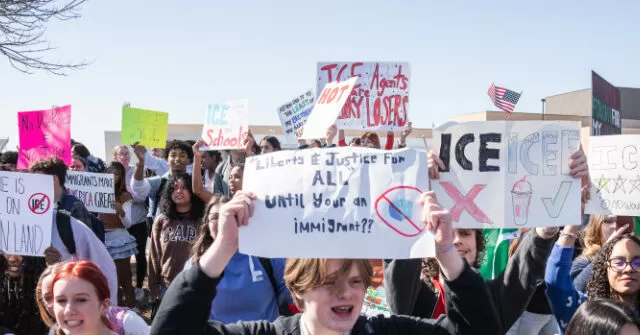

In recent years, we have seen a rise in social activism among students and teachers alike. From climate change to gun control, young people are taking a stand and demanding change. And now, in the midst of a heated debate over immigration policies, teachers and school administrators are once again leading the charge.
Across the country, we have seen a wave of protests organized by teachers and school administrators, calling for an end to the inhumane treatment of immigrants and their families. These protests, which have been dubbed “anti-ICE walkouts,” have gained national attention and sparked important conversations about the role of educators in shaping the minds of our future leaders.
One of the most powerful examples of this activism was seen in Los Angeles, where over 1,000 teachers and students walked out of their classrooms and marched to the local ICE detention center. Led by the United Teachers Los Angeles (UTLA) union, the protest was a powerful display of solidarity and a clear message to the government that the mistreatment of immigrants will not be tolerated.
But it’s not just in Los Angeles where we are seeing this kind of activism. From New York to Texas, teachers and school administrators are taking a stand and using their voices to demand change. In New York, the city’s Department of Education released a statement in support of the walkouts, stating that “students have the right to express themselves and engage in peaceful protest.”
And in Texas, where the issue of immigration hits close to home, teachers and school administrators are using their platform to educate their students about the importance of standing up for what is right. In a powerful display of unity, students and teachers in Austin walked out of their classrooms and formed a human chain around their school, symbolizing their commitment to protecting their immigrant classmates and their families.
But why are teachers and school administrators taking on this role of activism? The answer is simple: because they care. As educators, it is their duty to not only teach their students academic subjects, but also to instill in them the values of compassion, empathy, and social responsibility. And in the face of injustice, it is their responsibility to stand up and fight for what is right.
Some may argue that teachers and school administrators should not involve themselves in political issues, but the truth is that these issues directly affect their students and their families. As educators, they see firsthand the impact of policies such as family separations and detention centers on their students’ mental health and well-being. And as role models, they have a duty to show their students that it is important to use their voices and take action when they see something that is not right.
Furthermore, these protests are not just about immigration policies. They are also about the larger issue of human rights and the treatment of marginalized communities. By participating in these walkouts, teachers and school administrators are not only standing up for immigrants, but also for all those who are facing discrimination and injustice.
In the face of criticism and potential consequences, these educators are choosing to put their students first and use their platform to make a difference. And that is something to be celebrated and admired. As a society, we should be proud of these teachers and school administrators for leading by example and showing our youth the power of standing up for what is right.
In conclusion, the recent anti-ICE walkouts organized by teachers and school administrators across the country are a powerful reminder of the important role that educators play in shaping the minds of our future leaders. These protests are not just about immigration policies, but about standing up for human rights and showing our students the importance of using their voices to demand change. Let us continue to support and stand with these brave educators as they lead our children towards a more just and compassionate society.