

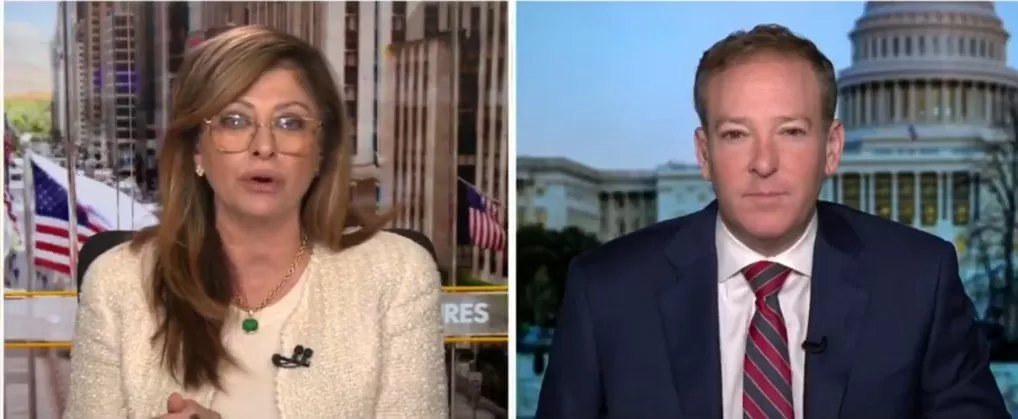

On a recent episode of “Sunday Morning Futures”, Environmental Protection Agency (EPA) Administrator Lee Zeldin sat down with host Maria Bartiromo to discuss the agency’s efforts towards deregulation. Zeldin hailed these efforts as “the largest act of deregulation in American history” and emphasized that it has resulted in an incredible $1.3 trillion in savings.
The EPA has long been known for its strict regulations, often causing frustration and financial burden for businesses and individuals alike. However, under the leadership of Administrator Zeldin, the agency has taken a different approach, focusing on common sense and practical solutions.
Zeldin began by highlighting some of the notable achievements of the EPA’s deregulation efforts. He pointed out that since President Trump took office, the agency has repealed over 70 significant regulations, saving an estimated $200 billion in regulatory costs. Additionally, the EPA has also proposed to repeal or revise an additional 26 regulations, which could lead to an additional $33 billion in savings.
But it’s not just about the numbers for Zeldin and the EPA. They are also focused on making real and positive impacts on the lives of Americans. Zeldin stated that these deregulation efforts have resulted in increased economic growth and job creation, as businesses are now able to thrive without being stifled by burdensome regulations.
One area that has greatly benefited from the EPA’s deregulation is the energy sector. Zeldin highlighted that, under the Trump administration, the United States has become a net energy exporter for the first time in 60 years. This is a significant achievement that has not only boosted our economy but also strengthened our national security.
Moreover, Zeldin stressed that these deregulation efforts have not come at the expense of the environment. The EPA remains committed to protecting the environment while also promoting economic growth. Zeldin pointed out that emissions have continued to decrease under the Trump administration, even without burdensome regulations.
Bartiromo also brought up the issue of the Clean Power Plan, an Obama-era regulation that aimed to reduce carbon emissions from power plants. Zeldin explained that the EPA has proposed a replacement plan, the Affordable Clean Energy rule, which takes a more practical and achievable approach to reducing emissions. This new plan allows individual states to develop their own tailored solutions based on their unique circumstances, rather than imposing a one-size-fits-all approach.
The positive impacts of the EPA’s deregulation efforts go beyond just economic and environmental benefits. It also has a ripple effect, leading to increased consumer confidence and a stronger overall economy. Zeldin stated that these achievements have resulted in “the most robust economy in American history.”
Despite these successes, there are still some challenges ahead for the EPA. Zeldin admitted that there is still work to be done, especially in finalizing and implementing the proposed deregulations. However, he remained confident in the agency’s ability to continue making progress and achieving its goals.
In conclusion, Administrator Zeldin’s appearance on “Sunday Morning Futures” highlighted the incredible achievements of the EPA’s deregulation efforts. Under his leadership, the agency has been able to strike a balance between protecting the environment and promoting economic growth. With billions of dollars in savings and a thriving economy, it is clear that these deregulation efforts have had a positive impact on the lives of Americans. As Zeldin stated, “This is the largest act of deregulation in American history, and we’re not done yet.”