

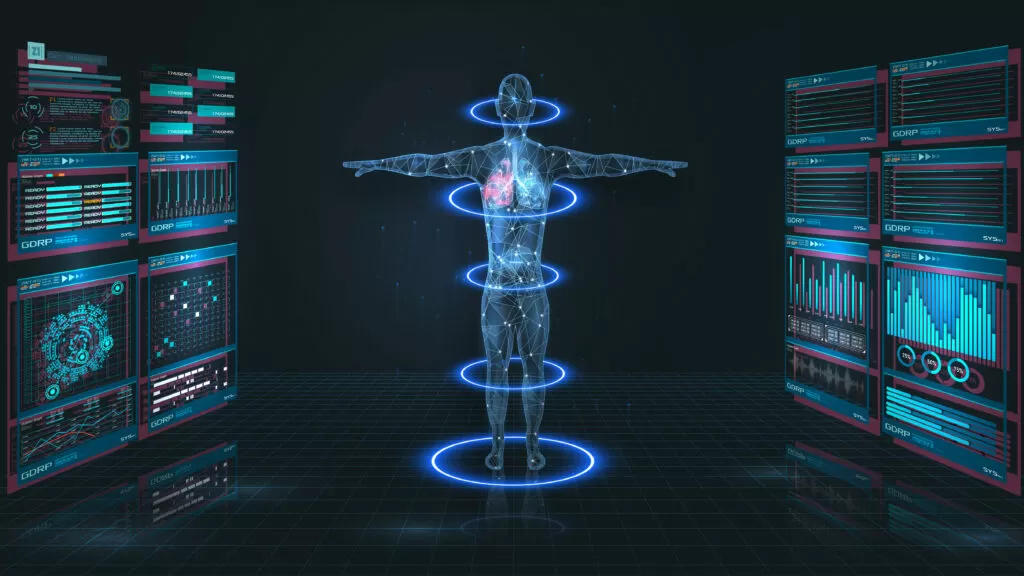

In recent years, the field of artificial intelligence (AI) has seen unprecedented growth and development, with groundbreaking advancements being made in a variety of industries. One area that has particularly captured the attention of scientists, researchers, and healthcare professionals is the concept of “digital twins”. This exciting concept is rapidly moving closer to reality thanks to the combination of AI advances and new data on genomics, patient outcomes, and drug performance.
So, what exactly are digital twins? Simply put, a digital twin is a virtual representation of a real-world object, system, or process. This technology has been used in manufacturing and engineering for decades, but now, it is being applied to the healthcare industry with the goal of improving patient outcomes and streamlining the drug development process.
The use of AI in healthcare is not a new concept. In fact, AI has been utilized in various forms in the medical field for years now, from assisting in medical image analysis to aiding in disease diagnosis. However, the integration of genomics data and patient outcomes has taken AI to a whole new level, making digital twins a viable and promising reality.
The incorporation of genomics data, which includes information about an individual’s genes and their interactions with the environment, is crucial in creating accurate and personalized digital twins. With the help of AI, this vast amount of data can be analyzed and used to create virtual models of patients, enabling healthcare professionals to predict and prevent diseases and tailor treatments to each individual’s genetic makeup.
Moreover, the use of AI in analyzing patient outcomes, such as responses to certain treatments or medications, can provide valuable insights into the effectiveness and safety of drugs. This data can then be used to develop virtual models of drug performance, allowing for more efficient and accurate drug testing and development.
One of the most significant benefits of digital twins is the potential to revolutionize personalized medicine. With the ability to create virtual models of patients, healthcare professionals can gain a deeper understanding of each individual’s unique biology, making it possible to predict and prevent diseases before they even occur. This personalized approach to medicine has the potential to improve patient outcomes, reduce healthcare costs, and ultimately save lives.
Another significant application of digital twins is in the field of drug development. Currently, the process of bringing a new drug to market is a long and costly one, with a high failure rate. However, by using digital twins to simulate the effects of different drugs on virtual patient models, the drug development process can be significantly expedited and made more efficient. This not only benefits pharmaceutical companies but also patients who are in desperate need of effective treatments.
While the concept of digital twins in healthcare is still in its early stages, the potential impact is tremendous. The integration of AI, genomics data, and patient outcomes has brought us closer than ever before to realizing this technology’s full potential. And with the continued advancements in AI and the availability of more comprehensive and accurate data, the possibilities are endless.
In addition to its potential in personalized medicine and drug development, digital twins also have the potential to transform healthcare in other areas. For example, virtual models of medical devices and equipment can be created to ensure their accuracy and safety before being used on patients. This can greatly improve patient safety and reduce the risk of medical errors.
As with any new technology, there are always concerns about privacy and security. However, the use of digital twins in healthcare is highly regulated, and strict measures are being taken to ensure patient data is protected. In fact, the integration of AI and genomics data in digital twins can actually enhance patient privacy by anonymizing data and removing identifying information.
In conclusion, the combination of AI advances and new data on genomics, patient outcomes, and drug performance has brought us to the cusp of making digital twins a reality in healthcare. This technology has the potential to revolutionize personalized medicine, improve patient outcomes, and streamline drug development. As we continue to make progress in these fields, we can look forward to a future where digital twins are an integral part of healthcare, making a positive impact on the lives of patients worldwide.