

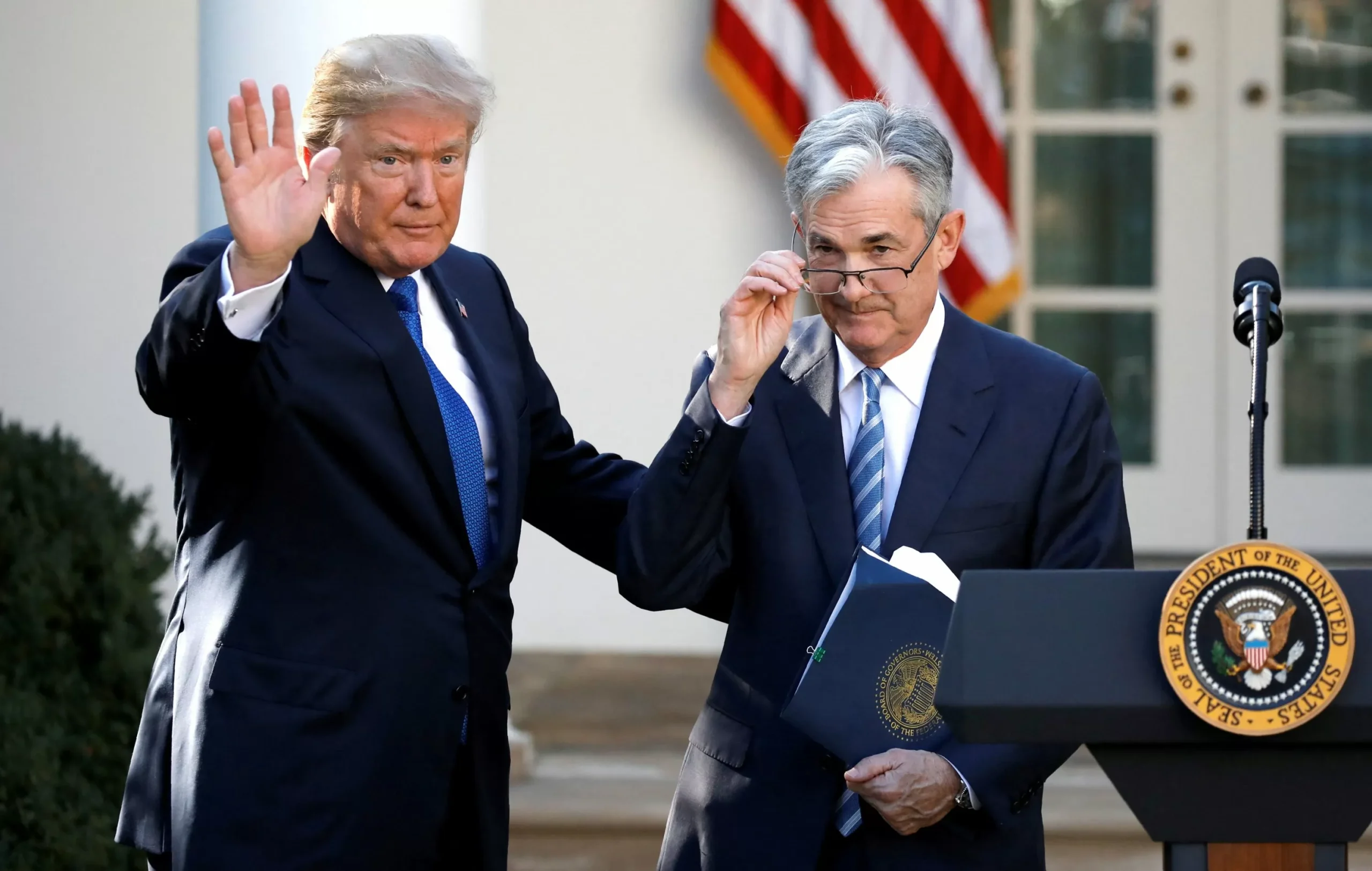

Donald Trump, the 45th President of the United States, has once again made headlines with his verbal attack on the U.S. Federal Reserve (Fed) Chair Jerome Powell. On Monday, Trump criticized the Fed’s decision to not further cut interest rates, causing a stir in the financial world.
In a series of tweets, Trump expressed his disappointment with the Fed’s decision, stating that it was a missed opportunity to boost the economy. He also accused Powell of not having a “feel for the market” and called him a “terrible communicator.” This is not the first time Trump has publicly criticized Powell, as he has been vocal about his disagreement with the Fed’s policies since Powell took office in 2018.
The Fed, which is responsible for setting monetary policies and regulating the country’s financial system, has been under pressure from Trump to lower interest rates in order to stimulate economic growth. However, the Fed has maintained its stance of keeping interest rates steady, citing a strong labor market and steady inflation as reasons for not making any changes.
Trump’s criticism of the Fed has caused concern among investors and financial experts, who fear that his constant attacks on the central bank could undermine its independence and credibility. The Fed has always prided itself on being an independent entity, free from political influence, and Trump’s comments have raised doubts about its autonomy.
The ongoing trade war with China and the recent volatility in the stock market have also added to the pressure on the Fed to take action. However, Powell has repeatedly stated that the Fed will not be swayed by political pressure and will make decisions based on economic data and analysis.
Despite Trump’s criticism, Powell has remained steadfast in his approach, stating that the Fed will continue to monitor the economic situation and make decisions that are in the best interest of the country. He also emphasized the importance of maintaining the Fed’s independence and not succumbing to political pressure.
While Trump’s comments have caused some uncertainty in the financial world, many experts believe that the Fed’s decision to not cut interest rates was the right move. Lowering interest rates could have unintended consequences, such as fueling inflation and creating asset bubbles. The Fed’s cautious approach is seen as a responsible and prudent move to maintain stability in the economy.
In the midst of all the criticism, Powell has received support from other Fed officials, who have defended his leadership and the Fed’s decision. They have also reiterated the importance of the Fed’s independence and its role in maintaining a stable economy.
It is important to note that the Fed’s decision to not cut interest rates does not mean that it will never happen. The Fed has stated that it will continue to monitor economic data and make adjustments as needed. However, it is crucial for the Fed to maintain its independence and not be influenced by political pressure.
In conclusion, while Trump’s verbal assault on Powell and the Fed may have caused some turbulence in the financial world, it is important to trust in the Fed’s expertise and its commitment to maintaining a stable economy. The Fed’s decision to not cut interest rates should not be seen as a failure, but rather as a responsible and calculated move to ensure the long-term health of the economy. As citizens, we must have faith in the institutions that govern our country and not let political rhetoric sway our trust in them.