

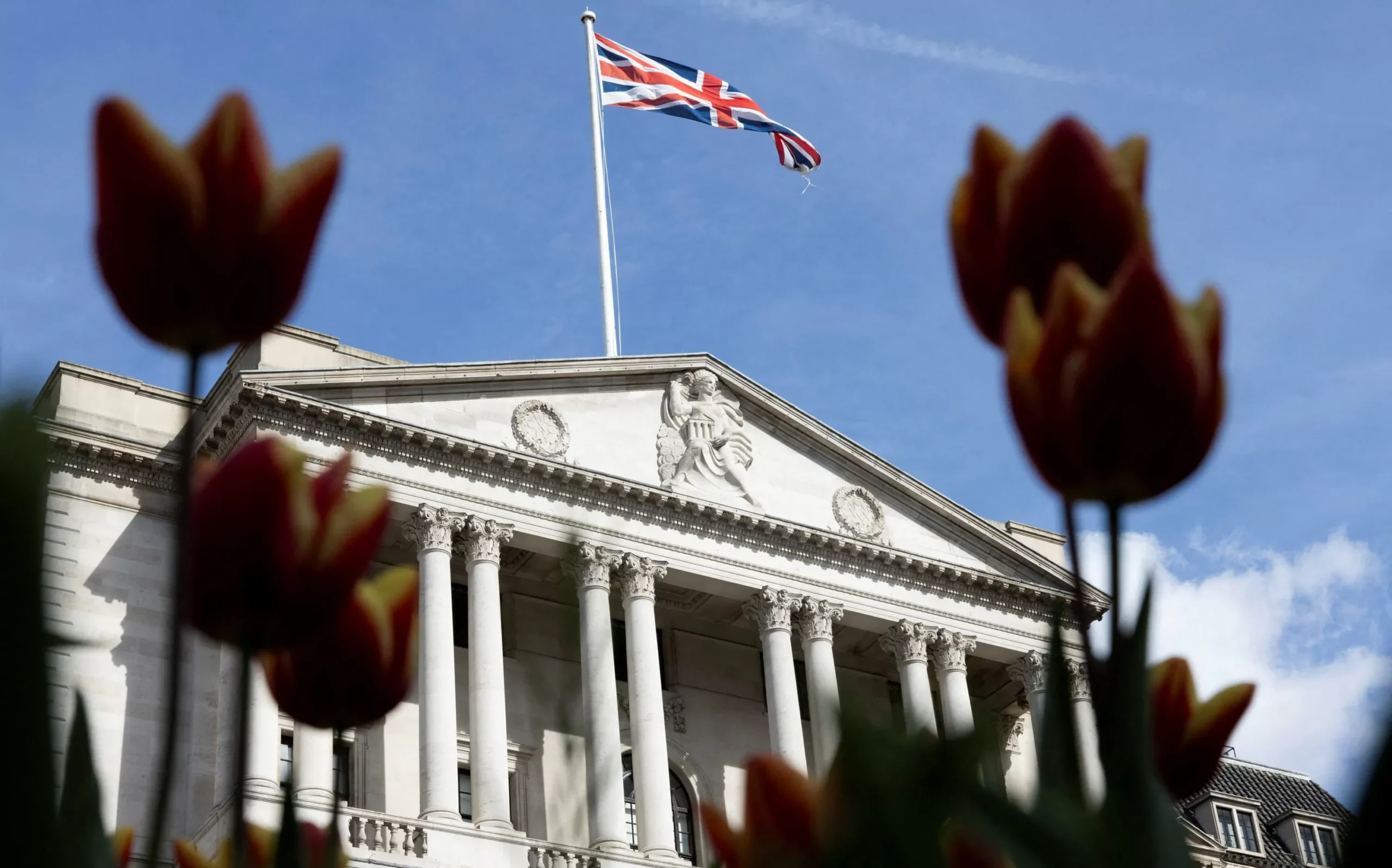

The Bank of England (BoE) has made a bold move by lowering its main interest rate by 0.25 percentage points to 4.25% on Thursday. This decision comes despite an unexpected three-way split among policymakers, as well as the recent comments made by U.S. President Donald Trump.
The BoE’s Monetary Policy Committee (MPC) voted 5-3 in favor of the rate cut, with three members dissenting and calling for rates to remain unchanged. This is the first time since 2016 that the MPC has been divided on a rate decision, highlighting the uncertainty and challenges facing the UK economy.
The decision to lower interest rates was driven by the BoE’s concerns over the slowing global economy and the ongoing Brexit uncertainty. The UK economy has been struggling in recent months, with growth slowing and inflation remaining below the BoE’s target of 2%. The uncertainty surrounding Brexit has also been a major factor in the BoE’s decision, as it continues to weigh on business and consumer confidence.
Despite the split among policymakers, the BoE’s decision has been welcomed by many economists and business leaders. Lower interest rates will provide a much-needed boost to the economy, making it easier for businesses to access credit and for consumers to borrow money. This will help to stimulate spending and investment, which in turn will support economic growth.
The decision to lower interest rates has also been praised by U.S. President Donald Trump, who has been a vocal critic of the Federal Reserve’s monetary policy. In a recent interview, Trump stated that the Fed should follow the BoE’s lead and lower interest rates to stimulate economic growth. This endorsement from the U.S. President is a clear indication of the BoE’s credibility and the positive impact its decision will have on the UK economy.
The BoE’s decision to lower interest rates has also been welcomed by the financial markets, with the pound falling against major currencies and the FTSE 100 rising. This is a clear indication that investors have confidence in the BoE’s decision and believe it will have a positive impact on the economy.
However, it is important to note that the BoE’s decision to lower interest rates is not without risks. Lower interest rates could lead to higher inflation, as it makes borrowing cheaper and encourages spending. This could also put pressure on the BoE to raise interest rates in the future, which could have a negative impact on the economy.
In addition, the BoE’s decision to lower interest rates may not be enough to offset the negative impact of Brexit on the economy. The uncertainty surrounding Brexit continues to weigh on businesses and consumers, and until a clear resolution is reached, the UK economy will continue to face challenges.
Despite these risks, the BoE’s decision to lower interest rates is a positive step towards supporting economic growth and providing stability in these uncertain times. It shows that the BoE is willing to take decisive action to support the economy and is not afraid to go against the status quo.
In conclusion, the BoE’s decision to lower interest rates by 0.25 percentage points to 4.25% is a bold move that has been met with a positive response from economists, business leaders, and even U.S. President Donald Trump. While there are risks involved, this decision is a clear indication of the BoE’s commitment to supporting the UK economy and providing stability in these challenging times. Let us hope that this decision will have a positive impact on the economy and help to steer it towards a path of growth and prosperity.