

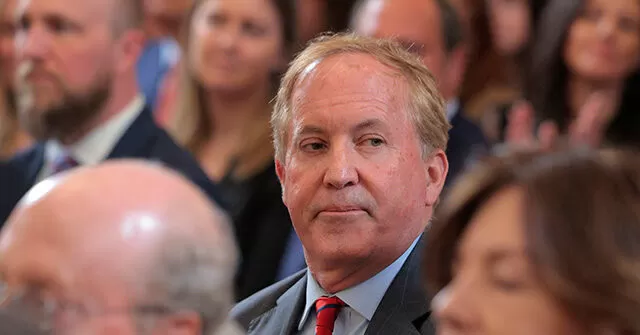

Texas Attorney General Ken Paxton is facing legal challenges from five district attorneys in his state over a controversial rule that targets what he calls “rogue” district attorneys. The rule, which was recently implemented by Paxton, has sparked outrage and pushback from these district attorneys who argue that it undermines their authority and threatens the independence of their offices.
The rule in question requires district attorneys to receive approval from the attorney general’s office before they can accept donations from outside organizations. According to Paxton, this is necessary to prevent conflicts of interest and ensure that district attorneys are not influenced by outside forces. However, the five district attorneys who have filed lawsuits against Paxton argue that this rule is an overreach of his authority and violates the separation of powers between the attorney general’s office and local district attorneys.
The lawsuits were filed in different counties across Texas, including Harris, Dallas, Bexar, Travis, and El Paso. The district attorneys leading the legal challenge are all Democrats, and they accuse Paxton, a Republican, of using his position for political gain. They argue that the rule unfairly targets progressive district attorneys who have been elected by their communities to bring about much-needed criminal justice reform.
One of the district attorneys, Kim Ogg of Harris County, stated in a press conference that “this rule is a blatant attempt by the attorney general to undermine the will of the people and interfere with the duties of locally elected district attorneys.” She also accused Paxton of trying to “intimidate and silence” district attorneys who are working to bring about meaningful change in the criminal justice system.
The lawsuits have gained national attention, with many legal experts weighing in on the matter. Some argue that Paxton’s rule is a violation of the constitutional principle of federalism, which gives states the authority to govern themselves. Others believe that the rule is an attempt by Paxton to consolidate power and control over local district attorneys.
In response to the lawsuits, Paxton’s office released a statement defending the rule and accusing the district attorneys of playing politics. The statement reads, “These district attorneys are more interested in advancing their own political agendas than upholding the law and protecting the people of Texas.” Paxton’s office also argues that the rule is necessary to ensure transparency and accountability in the criminal justice system.
However, critics of the rule argue that it is a thinly veiled attempt to silence progressive district attorneys who have been pushing for criminal justice reform. They point to Paxton’s history of targeting Democratic officials and his close ties to conservative organizations that have been critical of progressive district attorneys.
The legal battle between Paxton and the five district attorneys is far from over, and it is likely to have far-reaching implications for the role of the attorney general’s office in Texas. Many are watching closely to see how the courts will rule on this matter and what impact it will have on the relationship between the state and local governments.
In the meantime, the district attorneys continue to stand firm in their belief that Paxton’s rule is unconstitutional and an attack on their authority. They are determined to fight back against what they see as an abuse of power and a threat to the independence of their offices.
It is clear that this legal battle has sparked a heated debate about the role of the attorney general and the power of local district attorneys in Texas. While Paxton argues that his rule is necessary to prevent conflicts of interest, his critics believe that it is a dangerous overreach of his authority. Only time will tell how this dispute will be resolved, but one thing is certain – the fight for criminal justice reform in Texas is far from over.