

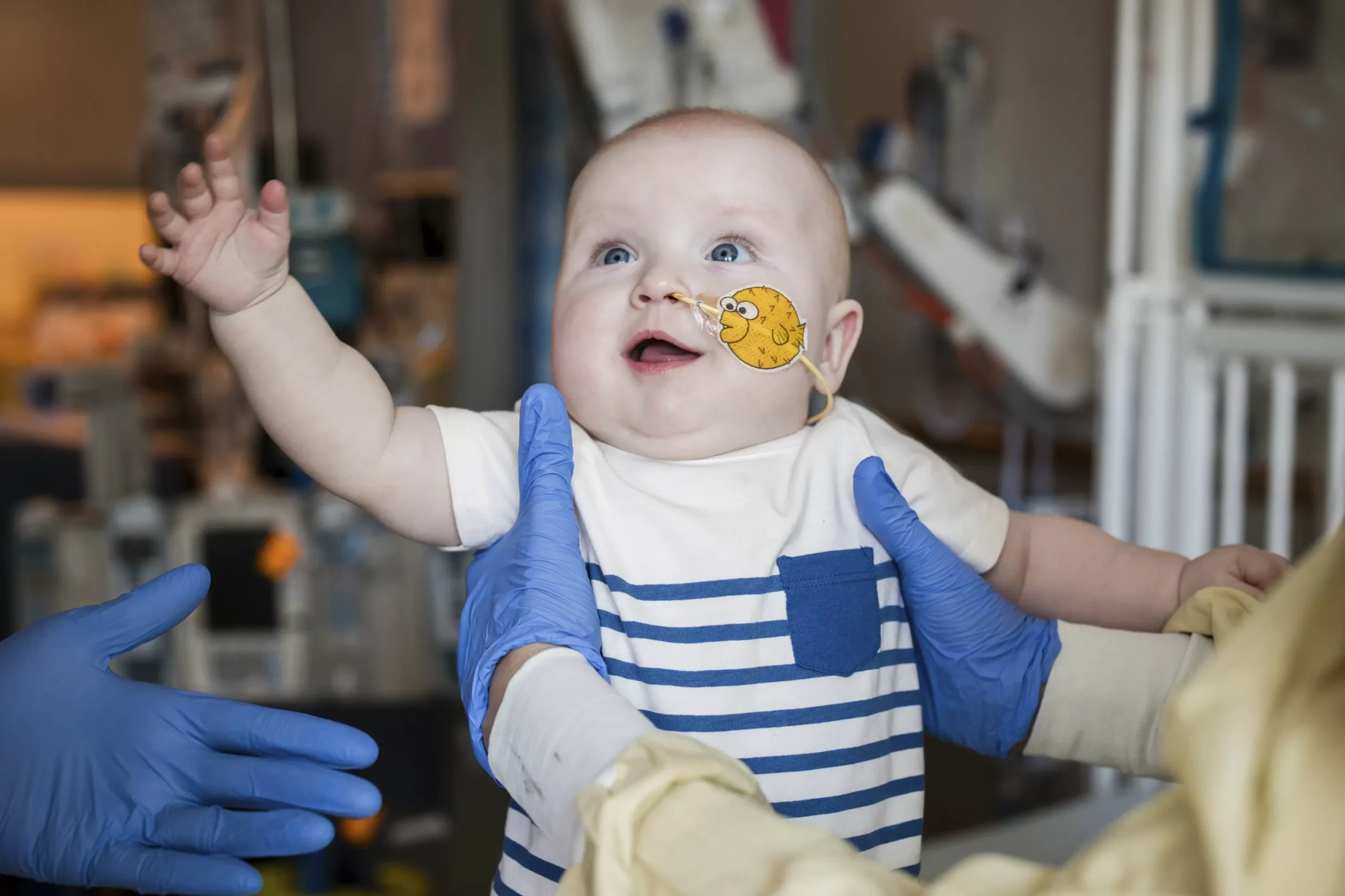

A U.S. baby with a rare condition has made history by becoming the first patient to be treated with a personalized gene-editing technique. This groundbreaking procedure has raised hopes for other individuals with obscure inherited disorders, giving them a chance at a better quality of life.
The baby, whose identity has been kept confidential, was born with a rare genetic disorder called Hunter syndrome. This condition affects the body’s ability to break down certain sugars, leading to a buildup of harmful substances in the body. This can cause a range of symptoms, including developmental delays, organ damage, and shortened lifespan.
Traditionally, the treatment for Hunter syndrome has been enzyme replacement therapy, which involves regular infusions of the missing enzyme. However, this treatment is not a cure and can only manage the symptoms of the disorder. In the case of the U.S. baby, this treatment was not effective, and the child’s condition continued to deteriorate.
This is where the revolutionary gene-editing technique comes into play. The treatment, known as in vivo genome editing, involves using a harmless virus to deliver a healthy copy of the gene responsible for producing the missing enzyme. This allows the body to produce the enzyme on its own, effectively curing the disorder.
The procedure was carried out by a team of doctors and scientists at the University of California, San Francisco (UCSF). The team used a customized version of the CRISPR-Cas9 gene-editing tool, which has been making waves in the scientific community for its potential to treat a wide range of genetic disorders.
The success of this treatment has given hope to millions of individuals around the world who suffer from rare inherited disorders. These conditions often have no cure and can significantly impact the quality of life for those affected and their families. The personalized gene-editing technique offers a glimmer of hope for these individuals, giving them a chance at a normal life.
Dr. Chester Whitley, a professor of pediatrics at the University of Minnesota, who was not involved in the study, said, “This is a major milestone in the field of gene therapy. It’s a proof of concept that this type of treatment can work for rare genetic disorders.”
The success of this treatment also opens up possibilities for other rare genetic disorders that have no cure. Scientists and doctors are now looking into using this technique to treat other conditions such as sickle cell disease, muscular dystrophy, and even certain types of cancer.
However, this groundbreaking treatment is not without its challenges. The personalized gene-editing technique is still in its early stages, and there is a lot more research and testing to be done before it can be widely available. The treatment also comes with a hefty price tag, with estimates ranging from hundreds of thousands to millions of dollars.
Despite these challenges, the success of this treatment is a significant step forward in the field of gene therapy. It has the potential to change the lives of millions of individuals and their families, giving them hope for a better future.
The U.S. baby who received this treatment is now over a year old and is showing significant improvements in his condition. He is meeting developmental milestones and has a better quality of life. This is a testament to the potential of this personalized gene-editing technique and the dedication of the team at UCSF.
The success of this treatment also highlights the importance of continued research and funding for rare genetic disorders. These conditions often do not receive the same attention and resources as more common diseases, making it challenging to find effective treatments. The breakthrough at UCSF shows that with the right resources and determination, anything is possible.
In conclusion, the first successful treatment of a U.S. baby with a rare condition using a personalized gene-editing technique is a significant milestone in the field of gene therapy. It offers hope for individuals with rare inherited disorders and their families, and paves the way for potential treatments for other rare conditions. This groundbreaking achievement is a testament to the power of science and the resilience of the human spirit.