

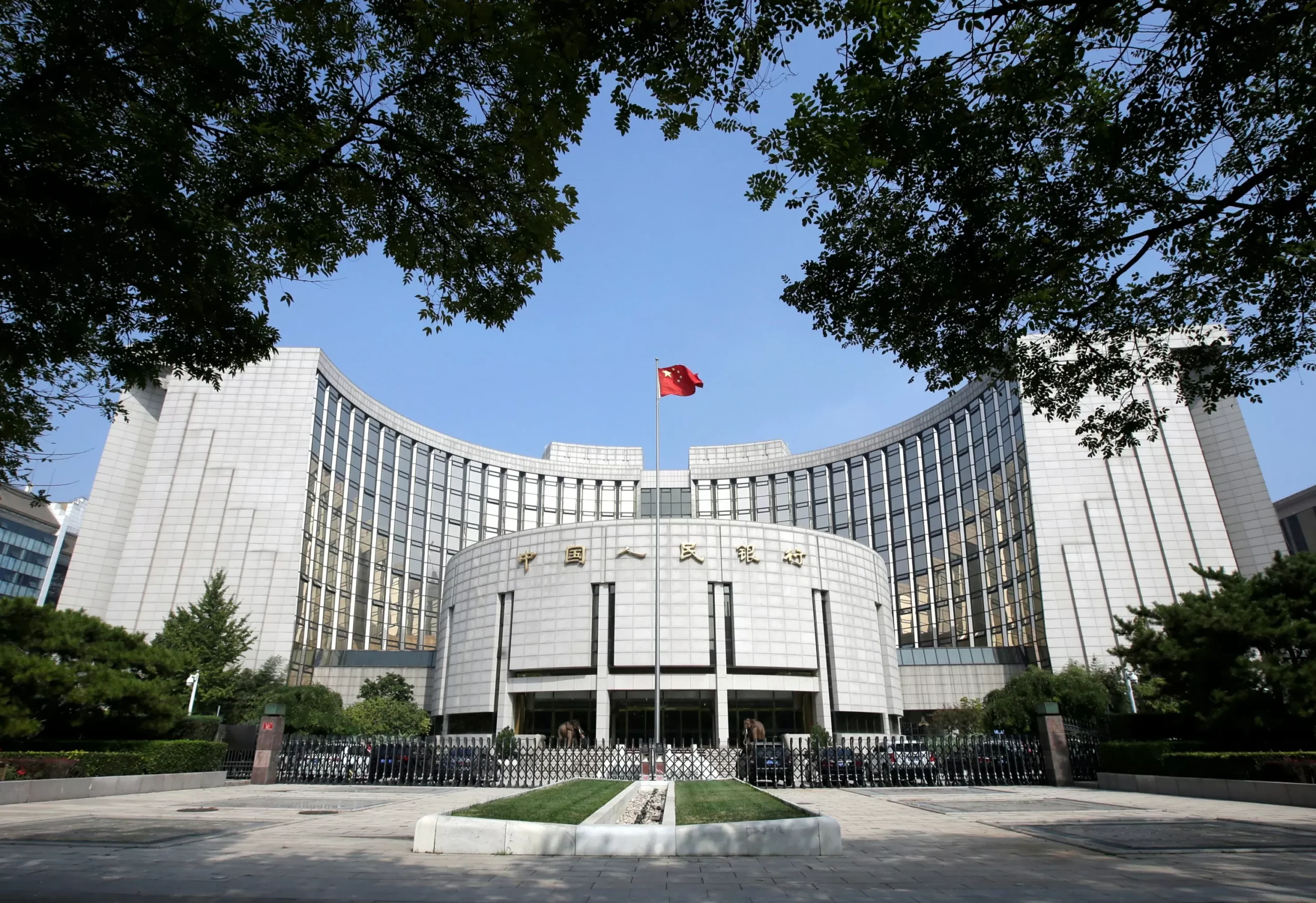

China’s Central Bank Lowers Interest Rates to Boost Economy
In a move to further stimulate its economy, China’s central bank has lowered two of its key interest rates to historic lows. This decision comes amidst ongoing trade tensions with the United States, which have caused uncertainty and volatility in the global market.
On Tuesday, the People’s Bank of China (PBOC) announced a 0.25 percentage point cut in the one-year loan prime rate (LPR) to 4.15%, and a 0.20 percentage point cut in the five-year LPR to 4.80%. This marks the second time this year that the central bank has lowered the LPR, which serves as a benchmark for new loans issued by banks.
The move is seen as a proactive measure by the Chinese government to counter the effects of the ongoing trade war with the US, which has slowed down the country’s economic growth. The trade tensions have led to a decrease in exports and investments, and have also affected consumer confidence.
By lowering interest rates, the PBOC hopes to encourage borrowing and spending, which will in turn boost economic activity. This is a crucial step in China’s efforts to maintain stable economic growth and achieve its target of 6-6.5% GDP growth for 2019.
The decision to lower interest rates also reflects the government’s commitment to implementing a more accommodative monetary policy. In addition to the LPR cuts, the PBOC has also injected liquidity into the financial system through various measures, such as reducing the reserve requirement ratio for banks and providing targeted lending to small and medium-sized enterprises.
These measures are expected to provide much-needed support to the Chinese economy, which has been facing downward pressure due to the trade tensions and a slowdown in global demand. The country’s GDP growth in the third quarter of 2019 was the slowest in nearly three decades, at 6%.
However, the PBOC’s actions have been met with criticism from some analysts, who argue that the interest rate cuts may not have a significant impact on the economy. They point out that the LPR is still higher than the benchmark lending rate of 4.35%, and that banks may not pass on the full rate cuts to borrowers.
Despite these concerns, the PBOC’s decision has been welcomed by the business community and investors. The lower interest rates are expected to reduce borrowing costs for businesses and individuals, and provide a much-needed boost to the real estate market.
The move has also been praised by international organizations, such as the International Monetary Fund (IMF), which has called for more monetary and fiscal stimulus to support China’s economy. The IMF has also urged China to continue with structural reforms to address long-term challenges, such as high debt levels and an aging population.
In conclusion, the PBOC’s decision to lower interest rates is a positive step towards boosting China’s economy and mitigating the effects of the trade tensions with the US. It demonstrates the government’s commitment to maintaining stable economic growth and providing support to businesses and individuals. With the ongoing trade negotiations between the two countries, the interest rate cuts are expected to provide a much-needed boost to investor confidence and help China weather the storm of the trade war.