

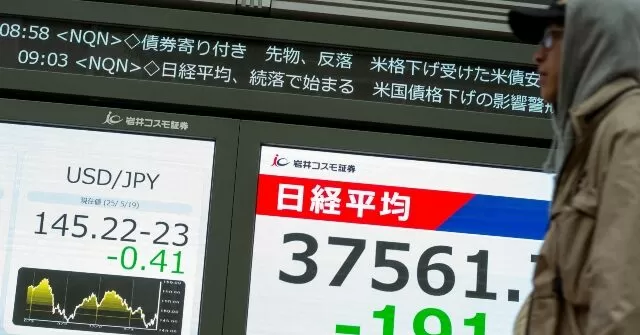

Japan’s economy, once a powerhouse of growth and innovation, has hit a rough patch. In the first quarter of 2025, the country’s economy contracted, marking its first decline in a year. This news comes as a shock to many analysts, who were expecting a much better performance from one of the world’s largest economies.
The decline in Japan’s economy is a cause for concern, not only for the country but for the global economy as well. It serves as a wake-up call for policymakers and businesses to take a closer look at the underlying issues that have been plaguing the Japanese economy for years.
The roots of Japan’s economic troubles can be traced back to the 1990s, when the country’s asset bubble burst, leading to a prolonged period of economic stagnation. Despite various attempts by the government to revive the economy, it has struggled to regain its momentum and has been facing challenges on multiple fronts.
One of the major factors contributing to Japan’s economic woes is its aging population. With a declining birth rate and a rapidly aging population, Japan is facing a shrinking workforce and a growing number of retirees. This has put a strain on the country’s social security system and has resulted in a decrease in consumer spending, which is a major driver of economic growth.
Another issue that has been weighing down the Japanese economy is its high public debt. Japan has one of the highest debt-to-GDP ratios in the world, standing at around 240%. This has limited the government’s ability to implement fiscal policies to stimulate the economy and has also raised concerns about the country’s long-term financial stability.
In addition to these domestic challenges, Japan has also been impacted by the ongoing trade tensions between the United States and China. The recent tariffs imposed by the Trump administration have had a ripple effect on the global economy, and Japan, being a major exporter, has not been spared. The uncertainty surrounding trade policies has made businesses hesitant to invest, further dampening economic growth.
However, it is important to note that Japan’s economic decline is not solely due to external factors. The country has been facing structural issues for years, which have hindered its ability to adapt to changing global trends. For instance, Japan’s traditional corporate culture, characterized by lifetime employment and seniority-based promotions, has made it difficult for companies to innovate and compete on a global scale.
But despite these challenges, there is still hope for Japan’s economy. The country has a highly educated and skilled workforce, and its technological advancements continue to be a key driver of growth. The government has also been taking steps to address some of the underlying issues, such as implementing policies to boost women’s participation in the workforce and promoting entrepreneurship.
Moreover, Japan’s economy has shown resilience in the past. It has weathered multiple crises, including the 2008 global financial crisis and the 2011 earthquake and tsunami. The country has a strong infrastructure, a stable political system, and a culture of resilience, which are all factors that will help it bounce back from this current setback.
In conclusion, Japan’s recent economic contraction is a cause for concern, but it is not the end of the road for the country. It is a wake-up call for policymakers and businesses to address the underlying issues that have been holding back the economy for years. With the right strategies and policies, Japan can overcome its challenges and continue to be a major player in the global economy. As the saying goes, “Fall seven times, stand up eight.” Japan’s economy may have stumbled, but it will surely rise again.