

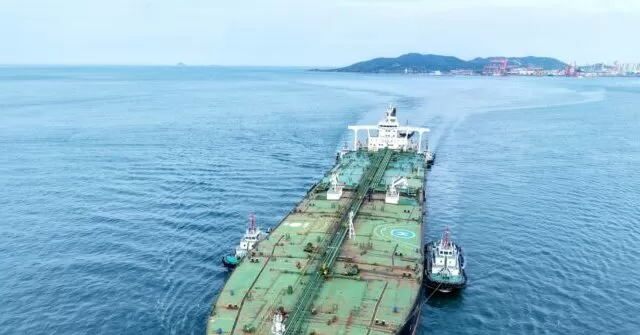

The recent geopolitical tensions between the United States and Iran have caused a stir in the global oil market. The US airstrike on Iran’s top military commander, Qasem Soleimani, has led to a sharp increase in oil prices, with traders closely monitoring the situation for any potential disruptions to the global supply. Despite this shock, the market’s response has been relatively modest, indicating that traders are not yet pricing in a prolonged disruption to global supply or doubting Iran’s ability to escalate the situation to a point where it threatens oil flows.
In the early hours of Friday, January 3rd, the world woke up to the news of the US airstrike that killed General Soleimani in Baghdad, Iraq. The news sent shockwaves through the global oil market, with Brent crude futures surging by more than 4% to $69.16 a barrel, the highest level since September. Similarly, US West Texas Intermediate (WTI) crude futures rose by 4.4% to $63.84 a barrel, the highest level since May.
The market’s reaction to the US airstrike was not surprising, given that Iran is one of the world’s largest oil producers and any disruption to its production could have a significant impact on global oil supply. However, what was surprising was the relatively modest scale of the rally, suggesting that traders are not yet fully convinced that the situation will escalate to a point where it threatens oil flows.
One possible explanation for this modest response is that traders are not yet pricing in a prolonged disruption to global supply. Despite the tensions between the US and Iran, there has been no immediate threat to oil production or supply. In fact, both countries have stated that they do not want a war, and Iran has even indicated that it will not disrupt oil flows in the region. This has helped to ease some of the concerns in the market, leading to a more measured response.
Another possible reason for the market’s modest reaction is that traders doubt Iran’s ability to escalate the situation to a point where it threatens oil flows. While Iran has threatened retaliation for the US airstrike, it is unlikely that it will target oil production or supply directly. Iran’s economy heavily relies on oil exports, and any disruption to its production would only harm its own economy. Moreover, the US has stated that it is prepared to respond to any Iranian aggression, which could further deter Iran from targeting oil flows.
Despite the relatively modest response from the market, the increase in oil prices is still significant and could have a ripple effect on the global economy. Higher oil prices could lead to an increase in inflation, which could impact consumer spending and business investment. It could also lead to higher transportation costs, which could affect the prices of goods and services.
However, it is important to note that the situation is still evolving, and the market’s reaction could change depending on how events unfold. Traders will continue to closely monitor the situation and adjust their positions accordingly. Any further escalation could result in a more significant rally in oil prices, while a de-escalation could lead to a decline in prices.
In conclusion, the US airstrike on Iran’s top military commander has caused a modest increase in oil prices, with traders closely monitoring the situation for any potential disruptions to the global supply. The market’s response suggests that traders are not yet pricing in a prolonged disruption to global supply or doubting Iran’s ability to escalate the situation to a point where it threatens oil flows. However, the situation is still evolving, and any further escalation could have a significant impact on the global economy.