

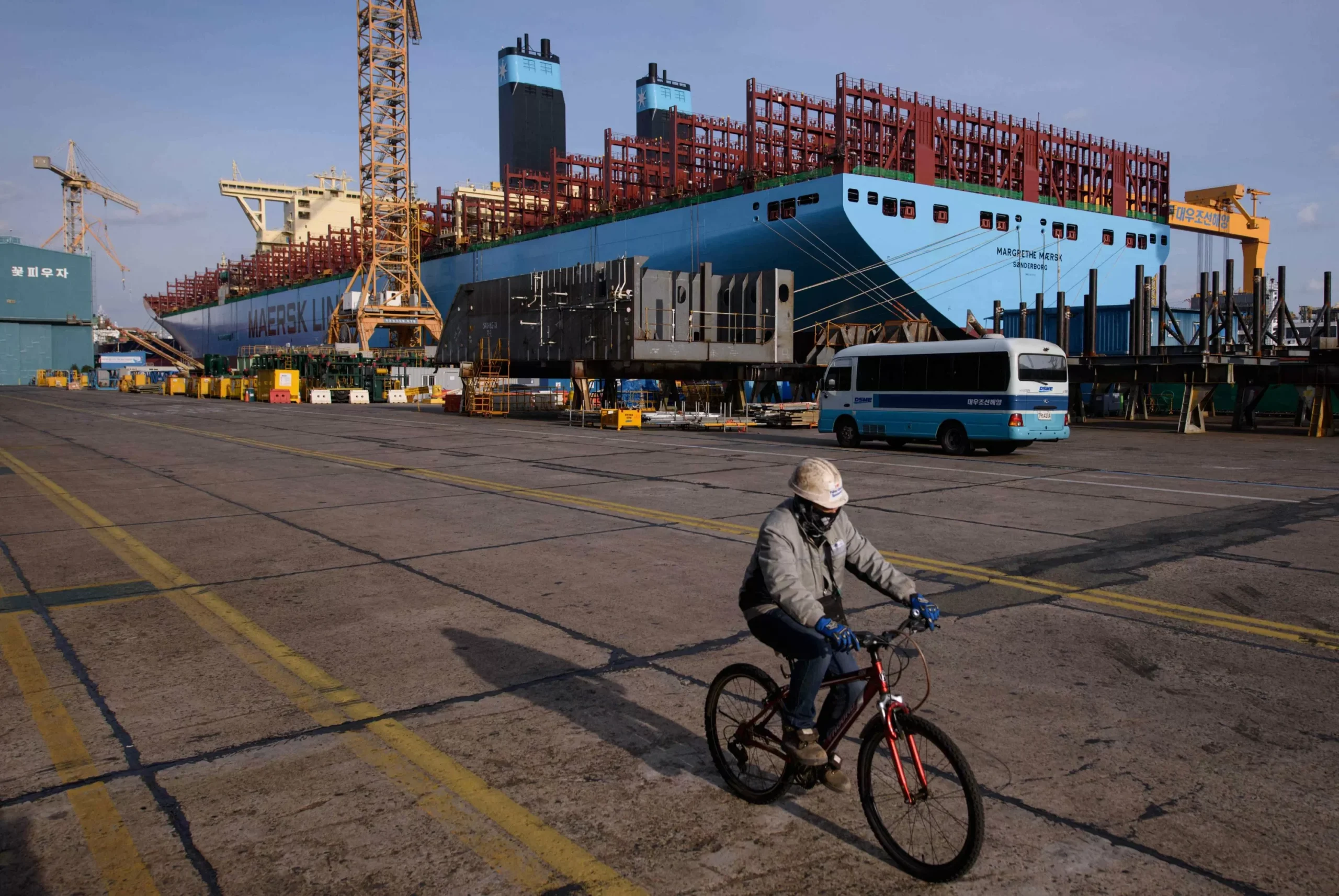

South Korea, the fourth largest economy in Asia, is currently facing a challenging situation due to the tariffs imposed by U.S. President Donald Trump. The country, like many other Asian nations, is feeling the impact of these tariffs on its economy. However, amidst this difficult time, there is a glimmer of hope for South Korea’s shipbuilding industry.
The shipbuilding industry has been a crucial sector for South Korea’s economy, contributing significantly to its growth and development. It has been a major source of employment and has played a vital role in the country’s export earnings. However, in recent years, the industry has been facing tough competition from other countries, especially China, which has been able to offer lower prices due to its massive production capacity.
The tariffs imposed by President Trump have only added to the challenges faced by the South Korean shipbuilding industry. The country’s shipbuilders have been hit hard by the 25% tariff on steel and 10% tariff on aluminum, as these materials are essential for shipbuilding. This has led to an increase in production costs, making it difficult for South Korean shipbuilders to compete in the global market.
Despite these challenges, the shipbuilding industry in South Korea is not backing down. The country’s shipbuilders have a long history of resilience and innovation, and they are determined to overcome this hurdle as well. They have been investing in research and development to find new ways to reduce costs and increase efficiency. This has led to the development of new technologies and processes, making South Korean shipbuilders more competitive.
One such example is the use of eco-friendly materials in shipbuilding. South Korean shipbuilders have been at the forefront of developing and using eco-friendly materials, such as high-strength steel and lightweight aluminum alloys. These materials not only reduce production costs but also make the ships more fuel-efficient, reducing their carbon footprint. This has not only helped the industry to become more environmentally friendly but has also given them an edge in the global market.
Another factor that sets South Korean shipbuilders apart is their focus on quality. They have a reputation for delivering high-quality ships that meet international standards. This has earned them the trust and loyalty of their customers, who continue to choose South Korean shipbuilders for their projects. This has also helped the industry to maintain its position as a leader in the global shipbuilding market.
The South Korean government has also been supportive of the shipbuilding industry, providing various incentives and subsidies to help them overcome the challenges posed by the tariffs. The government has also been working towards diversifying the country’s export portfolio, reducing its dependence on the shipbuilding industry. This has helped to mitigate the impact of the tariffs on the overall economy.
The shipbuilding industry in South Korea is not just about building ships; it is about creating a legacy. The country’s shipbuilders take great pride in their work and have a strong sense of responsibility towards their customers and the environment. They are constantly striving to improve and innovate, making them a force to be reckoned with in the global market.
In conclusion, while the tariffs imposed by President Trump have caused some setbacks for South Korea’s shipbuilding industry, it has also presented an opportunity for the industry to evolve and become even more competitive. The industry’s determination, innovation, and focus on quality have helped it to weather many storms in the past, and it is well-equipped to overcome this one as well. With the support of the government and the trust of their customers, the shipbuilding industry in South Korea is poised to emerge stronger and continue to contribute to the country’s economic growth.