

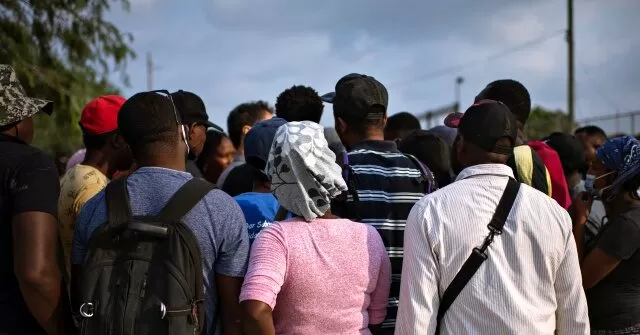

President Donald Trump’s administration has recently announced its decision to terminate Temporary Protected Status (TPS) for tens of thousands of Haitian migrants. This move has sparked controversy and raised concerns among many, as it could potentially leave thousands of Haitians vulnerable to deportation.
TPS is a program that allows individuals from designated countries to live and work in the United States temporarily if their home country is facing ongoing armed conflict, environmental disaster, or other extraordinary conditions. Haiti was granted TPS in 2010 after a devastating earthquake struck the country, leaving it in a state of chaos and destruction.
Since then, the TPS designation for Haiti has been extended multiple times by both the Obama and Trump administrations. However, the current administration has now decided to end this temporary amnesty for Haitian migrants, citing the improved conditions in Haiti as the reason for their decision.
This move has been met with criticism from various human rights organizations and immigration advocates, who argue that Haiti is still struggling to recover from the earthquake and is not yet ready to handle the return of thousands of its citizens. They also point out that Haiti is facing other challenges such as political instability, poverty, and a recent outbreak of cholera.
The termination of TPS for Haitian migrants is expected to affect approximately 55,000 individuals who have been living and working in the United States for years. These individuals have built their lives in the US, contributing to their communities and the economy. Many of them have US-born children who are American citizens, and their deportation would mean separating families and disrupting the lives of these children.
The decision to end TPS for Haitian migrants is not only concerning but also raises questions about the administration’s immigration policies. This move comes after the administration’s decision to end TPS for other countries such as El Salvador, Nicaragua, and Sudan. It seems that the current administration is determined to reduce the number of immigrants in the country, regardless of their circumstances.
However, the Department of Homeland Security (DHS) defends its decision, stating that the conditions in Haiti have improved significantly since the earthquake in 2010. They also argue that the TPS program was never intended to be a permanent solution and that it is time for Haitian migrants to return to their home country.
While it is true that Haiti has made progress in its recovery efforts, it is still a long way from being a stable and prosperous nation. The country is still facing many challenges, and the termination of TPS for its citizens could have devastating consequences.
Moreover, the decision to end TPS for Haitian migrants goes against the values of compassion and humanity that the United States has always stood for. It is a country built by immigrants, and it is disheartening to see the current administration turning its back on those in need.
The termination of TPS for Haitian migrants is not only a humanitarian issue but also an economic one. These individuals have been contributing to the US economy for years, and their departure could have a significant impact on various industries, such as healthcare, construction, and hospitality.
Furthermore, the termination of TPS for Haitian migrants could also have a negative impact on the US’s relationship with Haiti. The country has been a strong ally of the US, and this decision could strain their relationship and hinder future collaborations.
In conclusion, the decision to end TPS for tens of thousands of Haitian migrants is a concerning and disappointing move by the Trump administration. It not only goes against the values of compassion and humanity but also raises questions about the administration’s immigration policies. It is our hope that the administration will reconsider this decision and find a more compassionate and practical solution for the Haitian migrants who have made the US their home.