

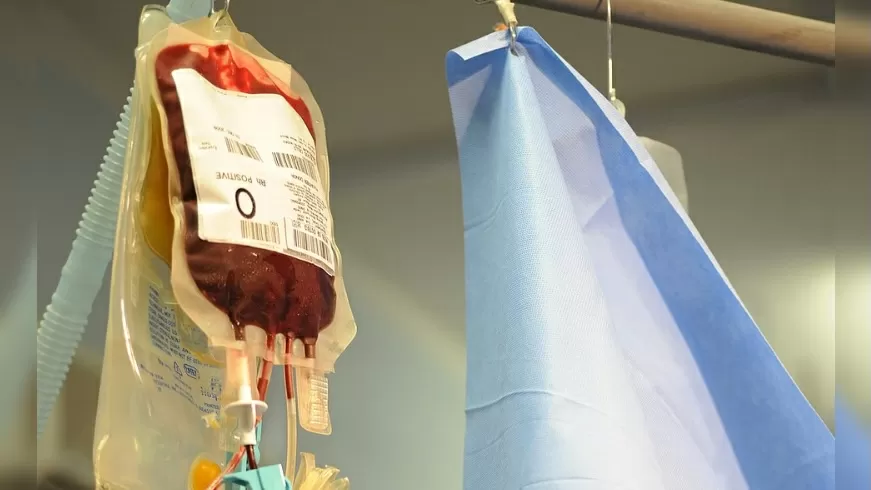

Scientists in Maryland are making groundbreaking progress in the field of medicine with their latest development – artificial blood. This revolutionary discovery has the potential to save thousands of lives and change the landscape of healthcare as we know it.
The team of scientists at the University of Maryland School of Medicine have been working tirelessly to create a viable alternative to human blood. This artificial blood, made from stem cells, has been successfully tested in animals and is now ready for human trials. This is a major milestone in the quest for a safe and effective blood substitute.
The need for artificial blood has been a pressing issue for decades. Blood transfusions are a critical part of medical treatment, but the supply of donated blood is often limited and can pose risks such as infection and rejection. This is where artificial blood comes in – it can be produced in large quantities and eliminates the risk of contamination.
The process of creating artificial blood involves taking stem cells from bone marrow and coaxing them into becoming red blood cells. These cells are then combined with a solution that mimics the composition of human blood, creating a product that is almost identical to the real thing. This means that it can carry oxygen and perform all the functions of natural blood.
The potential uses for artificial blood are vast. It can be used in emergency situations where there is a shortage of donated blood, such as in natural disasters or on the battlefield. It can also be used in surgeries, where the risk of blood loss is high. This could greatly reduce the need for blood donations and save countless lives.
But the benefits of artificial blood go beyond just emergency situations. It could also have a huge impact on patients with chronic conditions such as sickle cell anemia, who require frequent blood transfusions. With artificial blood, they would no longer have to rely on donated blood and could have a steady supply of safe and compatible blood.
The team at the University of Maryland School of Medicine is confident that their artificial blood will be a game-changer in the medical field. Dr. John Hess, the lead researcher on the project, believes that this breakthrough could potentially save thousands of lives every year. He also emphasizes the importance of continued research and development in this area to improve the product and make it more widely available.
The news of this development has been met with excitement and optimism from the medical community. Dr. Anthony Fauci, director of the National Institute of Allergy and Infectious Diseases, has called it a “major advance” and believes that it has the potential to be a “real game-changer.”
The potential impact of artificial blood on the healthcare industry cannot be overstated. It has the potential to save lives, reduce the risk of infection, and improve the overall quality of care for patients. This breakthrough also highlights the importance of investing in scientific research and innovation, as it can lead to life-changing discoveries like this one.
The team at the University of Maryland School of Medicine is now preparing for human trials, which could begin as early as next year. This is an exciting time for the medical community and for all those who could benefit from this groundbreaking technology.
In conclusion, the development of artificial blood by scientists in Maryland is a major step forward in the field of medicine. It has the potential to save thousands of lives and improve the quality of care for patients. This breakthrough is a testament to the power of scientific research and innovation, and we can only imagine the possibilities that lie ahead. Let us continue to support and invest in these advancements, as they have the potential to change the world for the better.