
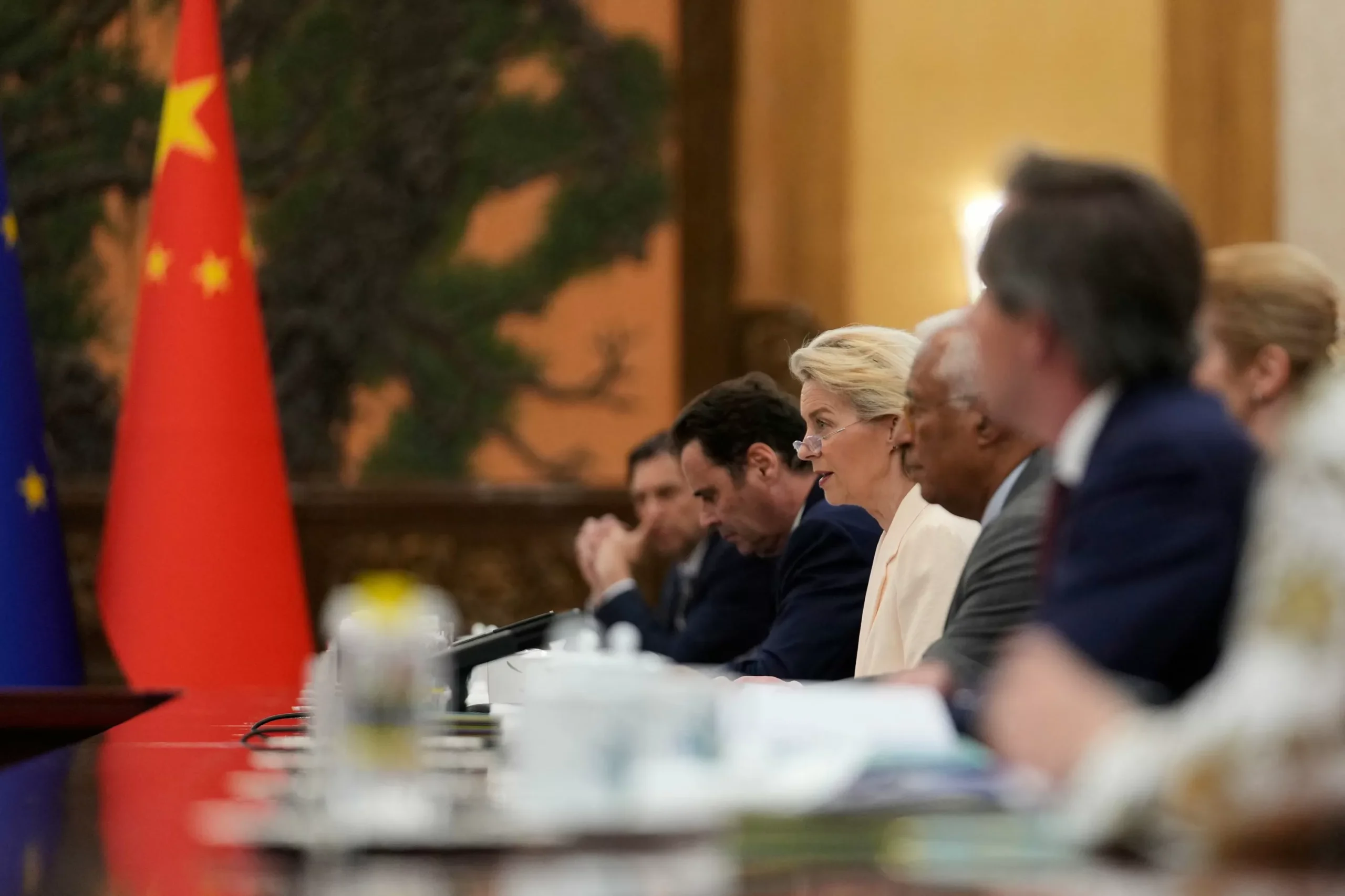

European Commission chief Ursula von der Leyen has urged for a much-needed rebalancing of trade ties with China during a high-stakes summit with Chinese President Xi Jinping on Thursday. This call comes amidst growing concerns over China’s trade practices and its impact on the global economy.
In her speech at the summit, von der Leyen emphasized the importance of a fair and balanced trade relationship between the European Union (EU) and China. She stated that while China is an important trade partner for the EU, it is crucial to address the existing imbalances and ensure a level playing field for both sides.
The EU has long been critical of China’s trade policies, particularly its state subsidies for domestic industries and restrictions on foreign companies operating in the Chinese market. These practices have been seen as a threat to fair competition and have led to a significant trade deficit for the EU.
Von der Leyen’s call for a rebalancing of trade ties with China is a clear message that the EU will not tolerate unfair trade practices. She emphasized the need for China to open up its markets and adhere to international trade rules in order to achieve a more mutually beneficial relationship.
The EU is China’s largest trading partner, with a total trade volume of over €560 billion in 2019. However, the trade relationship has been heavily skewed in China’s favor, with the EU facing a trade deficit of over €180 billion. This has raised concerns about the impact of China’s trade practices on the EU economy.
In addition to trade issues, von der Leyen also raised concerns about human rights and the rule of law in China. She urged for a more transparent and accountable approach from China in these areas, stating that they are essential for a strong and sustainable partnership.
President Xi Jinping, on the other hand, emphasized the importance of cooperation and mutual respect in the EU-China relationship. He acknowledged the need for addressing trade imbalances and stated that China is committed to opening up its markets and creating a more level playing field for foreign businesses.
The summit was seen as a crucial opportunity for the EU to address its concerns and push for a fairer trade relationship with China. The tense atmosphere at the summit reflected the growing tensions between the two economic giants, with both sides standing firm on their positions.
However, despite the differences, both sides have expressed a willingness to continue the dialogue and work towards finding solutions to the existing challenges. This is a positive sign for the future of EU-China relations and shows a commitment towards a more balanced and mutually beneficial trade partnership.
Von der Leyen’s call for a rebalancing of trade ties with China has been welcomed by many in the EU, including European Council President Charles Michel. He stated that the EU stands united in its approach towards China and will continue to push for a fairer and more sustainable trade relationship.
The EU has also been working towards diversifying its trade partnerships and reducing its reliance on China. The recent signing of the EU-Vietnam Free Trade Agreement and the ongoing negotiations for a trade deal with India are clear examples of this effort.
In conclusion, the summit between the EU and China has highlighted the need for a more balanced and mutually beneficial trade relationship. Von der Leyen’s call for a rebalancing of trade ties has sent a strong message to China, and it is now up to both sides to work towards achieving a fair and sustainable partnership. The EU’s commitment to addressing trade imbalances and promoting fair competition should be seen as a positive step towards strengthening global trade relations.