

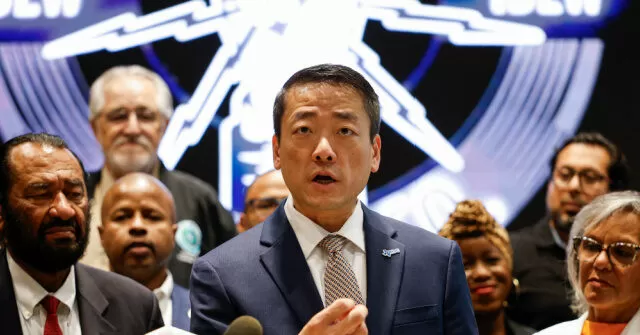

Texas Attorney General Ken Paxton has recently made headlines with his announcement that he will be seeking judicial orders to declare that runaway Democrats who fail to appear by the Speaker’s deadline have vacated their office. This move comes after more than four dozen Texas House Democrats fled the state in an effort to block a controversial voting bill.
In a press release, Paxton stated that Speaker of the Texas House Dustin Burrows had given Democrats a deadline of Friday, August 8, to return to Texas and present themselves before the House. Failure to do so would result in their seats being declared vacant, effectively removing them from office.
This bold move by Paxton has sparked a heated debate among politicians and citizens alike. While some see it as a necessary step to ensure the functioning of the government, others view it as an attack on democracy and the rights of elected officials.
The controversial voting bill, known as Senate Bill 1, has been a hot topic in Texas politics. It aims to impose stricter voting regulations, including limits on early voting hours and mail-in voting. Democrats argue that the bill would disproportionately affect minority and marginalized communities, making it harder for them to exercise their right to vote.
In an attempt to block the bill, more than four dozen Democratic lawmakers boarded private planes and left the state, effectively breaking quorum and halting the legislative process. This move has been met with both praise and criticism, with some applauding their efforts to protect voting rights and others condemning their actions as a dereliction of duty.
Paxton’s decision to seek judicial orders to declare the seats of these Democrats vacant has only added fuel to the fire. Many see it as a power play by the Republican Attorney General to force the Democrats back to Texas and resume the legislative process.
However, Paxton maintains that his actions are in line with the Texas Constitution, which states that “any member of the Legislature who shall absent himself from the House of which he is a member without permission of the House, or shall, without such permission, refuse to attend for ten consecutive days, shall forfeit his seat.”
The Speaker’s deadline of August 8th has come and gone, and as of now, the Democrats have not returned to Texas. This has left the fate of their seats in the hands of the courts. It remains to be seen how the judicial system will rule on this matter and what the implications will be for the future of Texas politics.
In the meantime, the standoff between the Democrats and Republicans continues, with both sides refusing to back down. The Democrats have vowed to stay out of the state until the special session ends on August 7th, while the Republicans are determined to pass the voting bill and other legislation on their agenda.
This political showdown has brought national attention to the state of Texas and its ongoing battle over voting rights. It has also highlighted the deep divide between the two major parties and the lengths they are willing to go to push their agendas.
As the situation unfolds, one thing is clear – the future of Texas politics hangs in the balance. The decisions made by the courts and the actions of both parties will have a significant impact on the state and its citizens.
In the end, it is crucial for all parties involved to remember the importance of upholding democracy and the rights of all citizens to participate in the political process. Only through open and honest dialogue can we find a solution that benefits all Texans and ensures a fair and just electoral system.