

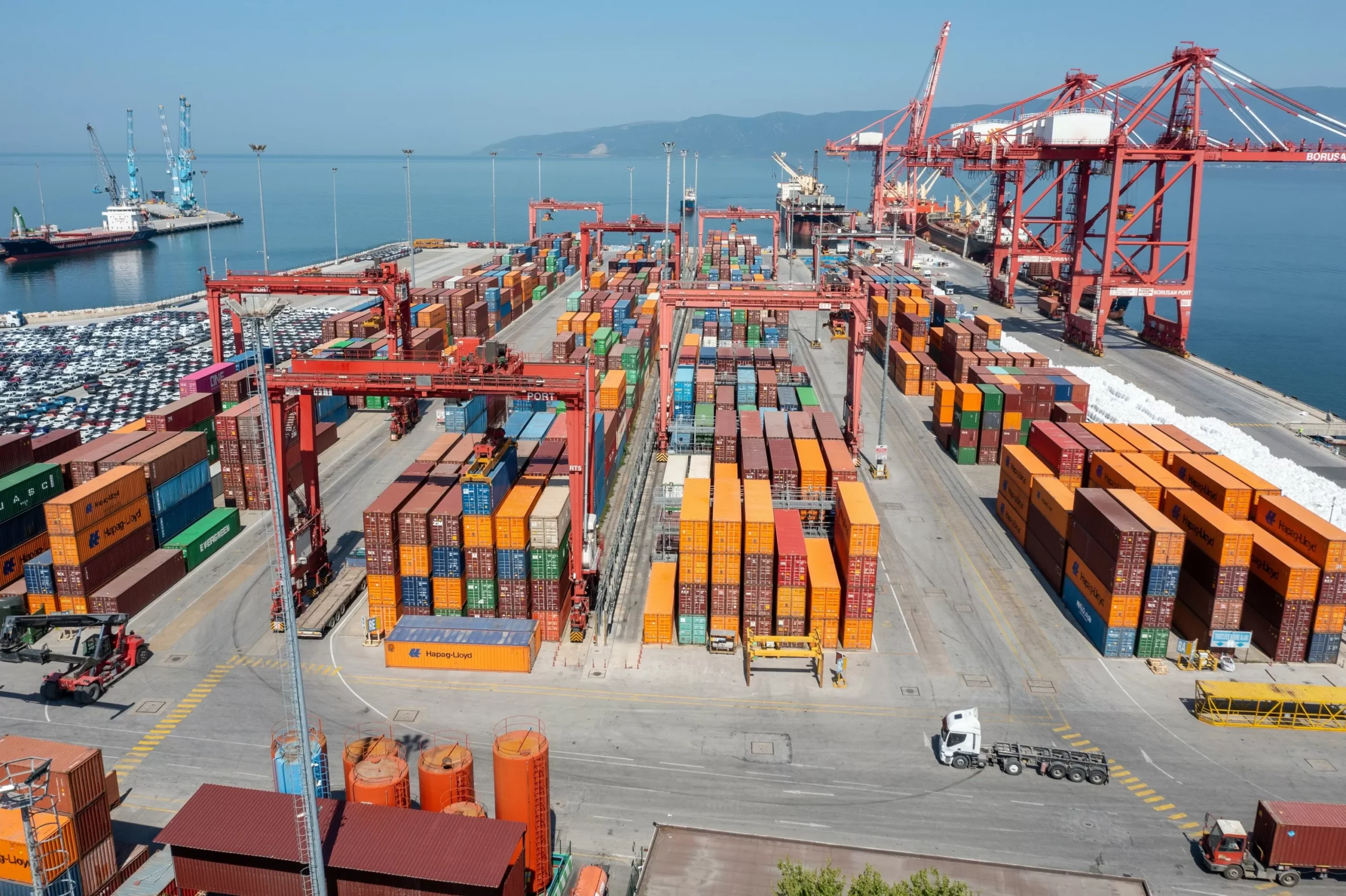

Türkiye’s exports have been a crucial driver of economic growth for the country, but in August, they experienced a decline. However, this was offset by a sharper drop in imports, resulting in the trade deficit shrinking to its narrowest level in almost four years. This is certainly good news for the country’s economy and a positive sign for its future.
According to official data released by the Turkish Statistical Institute (TÜİK), the country’s exports fell by 5.7% in August compared to the same period last year. This was mainly due to a decrease in exports of manufactured goods, which account for the majority of Türkiye’s exports. However, this decline was more than compensated by a 14.3% drop in imports, resulting in a trade deficit of $2.27 billion, the lowest level in 14 months.
This significant decrease in imports can be attributed to the measures taken by the government to curb the country’s current account deficit. Türkiye has been struggling with a high current account deficit for years, which has put pressure on the country’s economy. However, the recent decline in imports has helped narrow the deficit and ease this pressure.
The decrease in imports can also be seen as a reflection of the country’s efforts to boost domestic production and reduce its reliance on imports. The government has been actively promoting local production and investing in key sectors to increase Türkiye’s self-sufficiency. This has not only helped reduce the trade deficit but has also created more job opportunities and boosted the country’s overall economic growth.
Moreover, the decline in imports has also had a positive impact on the Turkish lira, which has been struggling against major currencies in recent years. The lira has gained strength against the US dollar and the euro, and this trend is expected to continue with the narrowing of the trade deficit. This will not only stabilize the currency but also boost investor confidence in the country’s economy.
The decrease in imports has also had a positive effect on Türkiye’s inflation rate. With a decrease in the cost of imported goods, the country’s inflation rate has dropped to 15.01% in August, the lowest level in almost a year. This is a significant achievement for Türkiye, which has been battling high inflation for a long time.
The government’s efforts to reduce the trade deficit and boost domestic production have also been reflected in the country’s overall economic growth. In the second quarter of 2021, Türkiye’s GDP grew by 21.7%, the highest growth rate among G20 countries. This growth has been driven by strong domestic demand and a rebound in exports, which grew by 25.6% compared to the same period last year.
The narrowing of the trade deficit in August has also had a positive impact on Türkiye’s current account deficit. In the first seven months of 2021, the current account deficit decreased by 52% compared to the same period last year. This is a significant improvement and shows that the country’s efforts to reduce the deficit are paying off.
In conclusion, the decline in Türkiye’s exports in August may have been a cause for concern, but the sharper drop in imports has helped shrink the trade deficit to its narrowest level in almost four years. This is a positive development for the country’s economy, and it reflects the government’s efforts to reduce the current account deficit and boost domestic production. With the narrowing of the trade deficit, the country’s inflation rate and currency are expected to stabilize, and its economic growth is likely to continue on a positive trajectory. This is certainly good news for Türkiye and its people, and it sets a strong foundation for a brighter economic future.