

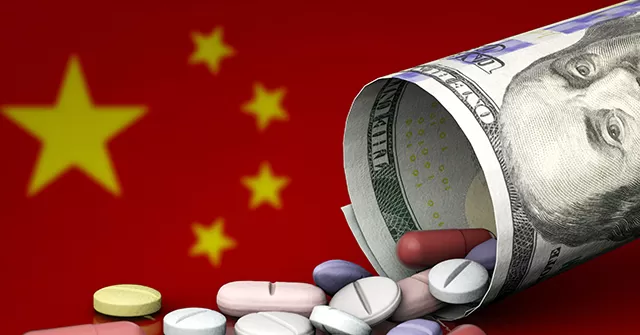

America’s Dependence on Foreign Drug Ingredients: A National Security and Safety Issue
In today’s globalized world, it is no secret that many of the products we use on a daily basis are manufactured overseas. From electronics to clothing, we have become accustomed to seeing the “Made in China” label on almost everything we purchase. However, there is one industry where this dependence on foreign production has become a major concern – the pharmaceutical industry.
It may come as a surprise to many, but the United States is heavily reliant on foreign drug ingredients, particularly from China. In fact, according to a recent report by the U.S.-China Economic and Security Review Commission, China is the world’s largest supplier of active pharmaceutical ingredients (APIs), accounting for nearly 40% of the global supply. This means that a significant portion of the medications we rely on are being produced in a country that has a history of quality control issues and a lack of transparency.
This issue has been brought to the forefront by Chad F. Wolf, the former Acting Secretary of Homeland Security, in an exclusive article for Breitbart. In his piece, Wolf highlights the dangers of America’s dependence on foreign drug ingredients and calls for action to bring medicine production back to the U.S.
The first and most obvious concern with this reliance on China for drug ingredients is the potential threat to national security. As Wolf points out, “the Chinese Communist Party (CCP) has a history of using its control over critical supply chains to exert political influence and pressure on other countries.” This means that in times of crisis, such as a pandemic or a conflict with China, the U.S. could face serious shortages of essential medications.
But the issue goes beyond just national security. The safety of American citizens is also at risk. China’s lax regulatory standards and lack of transparency make it difficult to ensure the quality and safety of the drugs being imported into the U.S. In recent years, there have been numerous cases of contaminated and counterfeit medications being traced back to China. This not only puts patients at risk but also undermines the trust in our healthcare system.
So why has the U.S. become so reliant on China for drug ingredients? The answer lies in the cost. China’s low labor and production costs make it an attractive option for pharmaceutical companies looking to cut costs and increase profits. However, as Wolf points out, “the true cost of this dependence is much higher than the price tag.” The potential consequences of relying on a foreign country for essential medications far outweigh any short-term financial gains.
It is time for the U.S. to take action and bring medicine production back to our shores. This is not only a matter of national security and safety but also an opportunity to boost our economy and create jobs. As Wolf suggests, the government should provide incentives for pharmaceutical companies to invest in domestic production and establish a strategic stockpile of essential medications.
But this is not a problem that can be solved overnight. It will require a long-term commitment from both the government and the private sector. As Wolf states, “we must take a hard look at our supply chains and make the necessary changes to ensure our national security and the safety of our citizens.”
In conclusion, America’s dependence on foreign drug ingredients is a national security and safety issue that cannot be ignored any longer. It is time for the U.S. to take control of its own medicine production and reduce its reliance on China. By doing so, we can not only protect our citizens but also strengthen our economy and ensure our national security. Let us not wait for another crisis to strike before we take action. The time to act is now.