

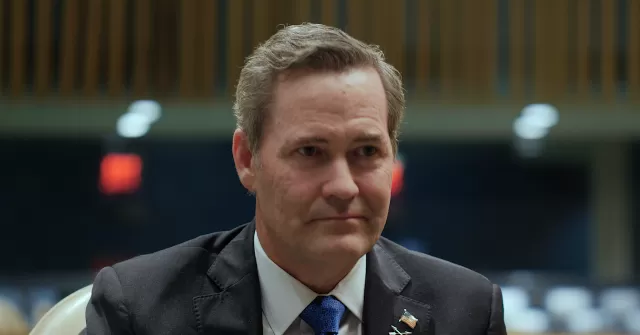

U.S. Ambassador to the United Nations Mike Waltz and reform envoy Jeff Bartos made a bold statement as they walked outside the UN headquarters in Manhattan. They were determined to shake things up and bring about much-needed changes in the UN system. With a vow to “clean house,” Waltz and Bartos were on a mission to eliminate the bloated bureaucracy and inefficiency that has plagued the organization for far too long.
In recent years, the UN has come under fire for its lack of transparency and accountability, as well as its excessive spending. The organization’s budget has steadily increased over the years, reaching a staggering $3.21 billion in 2019. This has raised concerns about the misuse of funds and the need for drastic reforms.
Ambassador Waltz wasted no time in addressing these issues. He and Bartos were quick to point out that their efforts have already resulted in more than a billion dollars in savings. This is a significant achievement, considering that the reforms are still in their early stages. It is a clear indication that they are on the right track and that their approach, which they call “DOGEing,” is working.
DOGEing, which stands for “Draining, Overhauling, and Gathering Efficiency,” is based on the successful waste-cutting measures implemented by former President Trump. This approach is all about streamlining processes, eliminating redundant positions, and optimizing the use of resources. It is a no-nonsense, results-driven strategy that has proven to be effective in both the public and private sectors.
But the reforms go beyond just cutting costs. Waltz and Bartos are also focused on improving the efficiency and effectiveness of the UN. They believe that the organization should be more responsive and adaptable to the ever-evolving global landscape. With the world facing so many challenges, the UN must be able to act swiftly and decisively. The reforms aim to make the organization more agile and better equipped to address issues such as poverty, climate change, and conflict resolution.
One of the key areas of focus for the reform team is the UN’s peacekeeping operations. With a budget of over $6 billion, this is one of the most expensive and controversial aspects of the organization. In recent years, there have been reports of misconduct and sexual abuse by UN peacekeepers, which have tarnished the organization’s reputation. Waltz and Bartos are determined to address these issues and ensure that peacekeeping operations are carried out with the highest level of integrity and accountability.
Despite facing some resistance from within the organization, Waltz remains determined to push ahead with the reforms. He is confident that with the support of like-minded individuals and countries, they will be able to achieve their goal of a leaner, more efficient UN.
The early successes of the reforms have been met with widespread praise and support. This is a testament to the fact that there is a growing recognition of the need for change within the UN. Many have praised Waltz and Bartos for their bold and decisive actions and have expressed their confidence in their ability to bring about much-needed reforms.
In conclusion, as Ambassador Waltz and reform envoy Jeff Bartos continue their efforts to “clean house” at the UN, there is a sense of optimism and hope for a better and more effective organization. The billion dollars in savings and the early wins are just the beginning. With their DOGEing approach and determination to bring about real change, there is no doubt that the UN will emerge stronger and more efficient than ever before. The world needs a UN that can live up to its mandate and effectively address the global challenges we face today. Waltz and Bartos are on a mission to make that a reality, and they are just getting started.