


The issue of birthright citizenship has long been a point of contention in the United States, with debates raging on both sides of the political spectrum. With President Trump’s focus on immigration, the topic has once again come to the forefront as the US Supreme Court has agreed to take up the case.
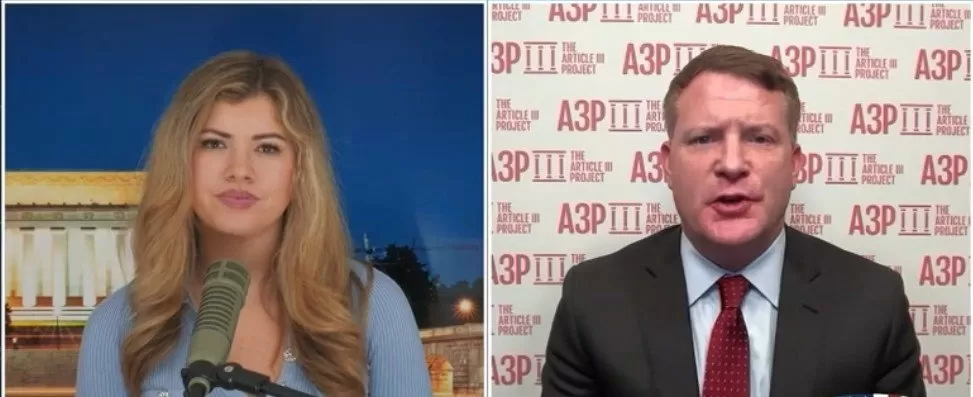
In the midst of this legal battle, Natalie Winters and Mike Davis of the Article III Project sat down with Steve Bannon on War Room to discuss the implications of the upcoming ruling.
First and foremost, it is important to understand what birthright citizenship is and why it is such a hotly debated topic. Birthright citizenship, or jus soli, is the principle that anyone born on US soil is automatically granted US citizenship, regardless of their parent’s citizenship status. This concept has been in place since the 14th amendment was ratified in 1868, and has been a cornerstone of US immigration law ever since.
However, as Natalie Winters explains, “birthright citizenship is not a constitutional right.” Despite the widespread belief that this is a concrete aspect of US citizenship, there is room for debate and interpretation.
Mike Davis, the founder of the Article III Project, also adds that “birthright citizenship is a magnet for illegal aliens,” as it provides an incentive for individuals to come into the country illegally in order to secure citizenship for their children.
President Trump has long been vocal about his desire to end birthright citizenship, stating that it is “ridiculous” and that the US is one of only two developed nations to still have this policy. With his administration’s focus on immigration and border security, it was only a matter of time before the issue came before the Supreme Court.
Now, with the highest court in the land set to make a ruling on the matter, the stakes are higher than ever. Winters and Davis agree that this is a chance for the Supreme Court to push back against the “judicial activism” that has become increasingly prevalent in recent years.
But what does this mean for the future of America and its immigration policies? Both Winters and Davis argue that ending birthright citizenship would not only help to secure our borders, but also prevent the exploitation of this loophole by those seeking to take advantage of our system.
They also point out the potential economic benefits, as ending birthright citizenship would likely decrease the number of illegal immigrants and their children receiving government benefits, saving taxpayers money.
Of course, there are those who argue that ending birthright citizenship would be a violation of the 14th amendment and could lead to statelessness for those born to undocumented parents. But Davis argues that those individuals would still have the opportunity to gain citizenship through the naturalization process, just like any other immigrant.
As Steve Bannon states in the War Room interview, this case is not only about birthright citizenship, but also about the broader issue of judicial activism and the power of the Supreme Court. The court’s ruling on this case will have far-reaching implications for the future of our country and its immigration system.
The fact that the Supreme Court has agreed to take up this case is a positive step towards addressing and potentially rectifying an issue that has been a source of controversy for decades. As Natalie Winters states, “birthright citizenship is a problem that needs to be solved.”
It is clear that Winters and Davis are passionate about this topic and believe strongly in the potential benefits of ending birthright citizenship. And with the Supreme Court set to make a ruling on the matter, there is hope that this issue will finally be resolved in a way that will positively impact the American people.
In the words of Steve Bannon, “This is a moment that the entire nation is going to be watching,” and it is one that could have a lasting impact on the future of our country. Let us hope that the Supreme Court makes a ruling that is in the best interest of the American people and our immigration system.