

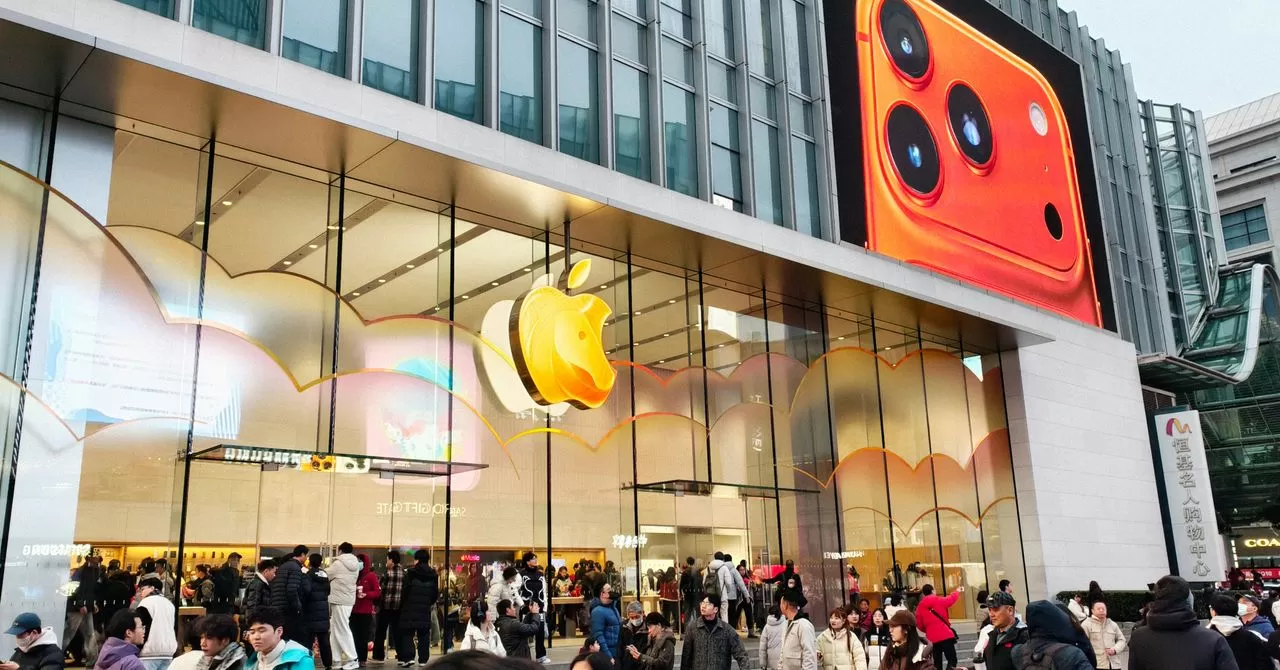

In recent years, the Chinese smartphone market has become increasingly competitive, with major players such as Huawei, Xiaomi, and Apple vying for the top spot. While Huawei and Xiaomi have been making waves with their impressive flagship devices, it seems that Apple has once again emerged as the dominant force in the Chinese market. But how did this happen and what does it mean for the future of the smartphone industry in China?
Huawei and Xiaomi have been making headlines with their flagship devices, the Huawei P40 Pro and the Xiaomi Mi 10 Pro. Both devices boast impressive features such as high-resolution cameras, powerful processors, and sleek designs. These devices have been well-received by consumers and have helped to solidify Huawei and Xiaomi’s positions as major players in the global smartphone market.
However, despite the success of these devices, it seems that Apple has once again taken the lead in the Chinese market. According to a report by Counterpoint Research, Apple’s iPhone 11 was the best-selling smartphone in China in the first quarter of 2020, capturing a 14% market share. This is a significant increase from the previous year, where Apple only held a 6% market share in the same period.
So, what has led to Apple’s resurgence in the Chinese market? One of the main factors is the company’s focus on improving its services and user experience. Apple has been investing heavily in its services, such as Apple Music and the App Store, which have been well-received by Chinese consumers. Additionally, the company has been working closely with Chinese developers to create localized apps and services, further enhancing the user experience for Chinese consumers.
Another key factor is Apple’s strong brand reputation and loyal customer base in China. Despite the rise of domestic brands, many Chinese consumers still see Apple as a premium and aspirational brand. This is reflected in the sales of the iPhone 11, which is considered to be a more affordable option compared to previous iPhone models. This has allowed Apple to tap into a wider market in China, including price-sensitive consumers who may have previously opted for domestic brands.
Furthermore, Apple’s timely release of the iPhone SE, a more budget-friendly option, has also contributed to its success in the Chinese market. With the economic impact of the COVID-19 pandemic, many consumers are looking for more affordable options without compromising on quality. The iPhone SE, with its powerful processor and updated features, has been a hit among Chinese consumers, further solidifying Apple’s position in the market.
However, this does not mean that Huawei and Xiaomi are out of the game. Both companies have a strong presence in the Chinese market and continue to release innovative devices that cater to the needs of Chinese consumers. In fact, Huawei’s recent launch of the P40 series has seen strong sales, despite the absence of Google services. This shows that there is still a demand for Huawei’s devices, especially among loyal customers.
Moreover, with the ongoing trade tensions between the US and China, there is a growing sentiment among Chinese consumers to support domestic brands. This could potentially work in favor of Huawei and Xiaomi, who have been investing heavily in research and development to create cutting-edge devices that can rival those of Apple.
In conclusion, while Apple may be dominating the Chinese smartphone market for now, the competition is far from over. Huawei and Xiaomi continue to be strong contenders, and with their focus on innovation and customer satisfaction, they are not to be underestimated. As for Apple, its success in the Chinese market can be attributed to its strong brand reputation, focus on services, and timely release of budget-friendly options. It will be interesting to see how the competition unfolds in the coming years, but one thing is for sure, the Chinese smartphone market will continue to be a battleground for these tech giants.