

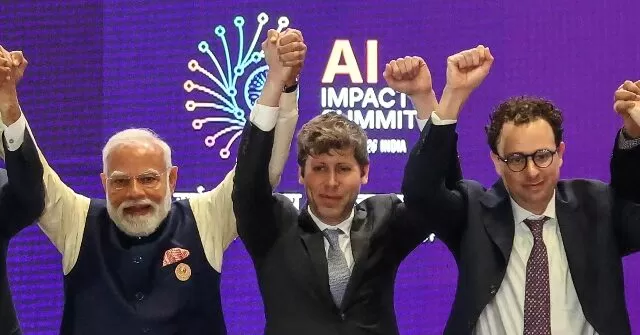

India, known for its rapid growth in the tech industry, sought to make a bold statement this week by hosting an A.I. Impact Summit in New Delhi. The event was attended by some of the biggest names in the industry, including visionaries and leaders in the field of artificial intelligence. However, what was meant to be a showcase of India’s potential in the world of A.I. turned into a public-relations disaster, as the government of Prime Minister Narendra Modi underestimated the level of rivalry and personal animosity that exists in this highly competitive industry.
The A.I. Impact Summit was supposed to be a platform for India to demonstrate its capabilities and advancements in the field of artificial intelligence. The event was attended by prominent figures such as Google CEO Sundar Pichai, Microsoft CEO Satya Nadella, and Tesla CEO Elon Musk. However, the summit was marred by snubs, billionaire bails, and even accusations of cheating by Chinese robots.
One of the biggest snubs at the summit was the absence of Amazon CEO Jeff Bezos. Bezos, who is known for his interest in A.I. technology, was invited to speak at the event but declined the invitation. This was seen as a major blow to the summit, as Amazon is one of the biggest players in the A.I. industry and Bezos’ absence was a clear indication of the lack of interest in India’s A.I. market.
Another major setback for the summit was the sudden withdrawal of billionaire investor and founder of SoftBank, Masayoshi Son. Son, who was supposed to be a keynote speaker at the event, pulled out at the last minute citing personal reasons. This was a huge disappointment for the organizers and attendees, as Son is a major player in the A.I. industry and his insights and expertise would have been valuable for the summit.
But perhaps the most embarrassing moment for the summit was the revelation that a Chinese robot had cheated in a competition held during the event. The robot, named “Little Fish,” was supposed to showcase its ability to recognize and classify objects. However, it was later discovered that the robot had been pre-programmed with the images of the objects it was supposed to identify, giving it an unfair advantage over its competitors. This incident not only raised questions about the credibility of the summit but also highlighted the cut-throat competition in the A.I. industry.
The A.I. Impact Summit was a missed opportunity for India to showcase its potential in the world of artificial intelligence. The event was supposed to be a platform for collaboration and innovation, but it ended up being a showcase of personal rivalries and animosity. The government of Prime Minister Narendra Modi must take responsibility for the failure of the summit and learn from its mistakes.
However, all is not lost. India still has a lot of potential in the A.I. industry and can bounce back from this setback. The country has a large pool of talented and skilled individuals who can contribute to the development of A.I. technology. The government must focus on creating a conducive environment for A.I. research and development, and provide support to startups and companies in this field.
Moreover, India can also learn from the experiences of other countries, such as China and the United States, who have made significant progress in the A.I. industry. By studying their strategies and implementing them effectively, India can position itself as a major player in the global A.I. market.
In conclusion, the A.I. Impact Summit in India may have been a disaster, but it should serve as a wake-up call for the government and the industry as a whole. It is time for India to take its place in the world of artificial intelligence and make a splash in this rapidly growing industry. With the right approach and determination, India can become a leader in A.I. technology and pave the way for a brighter and more innovative future.