

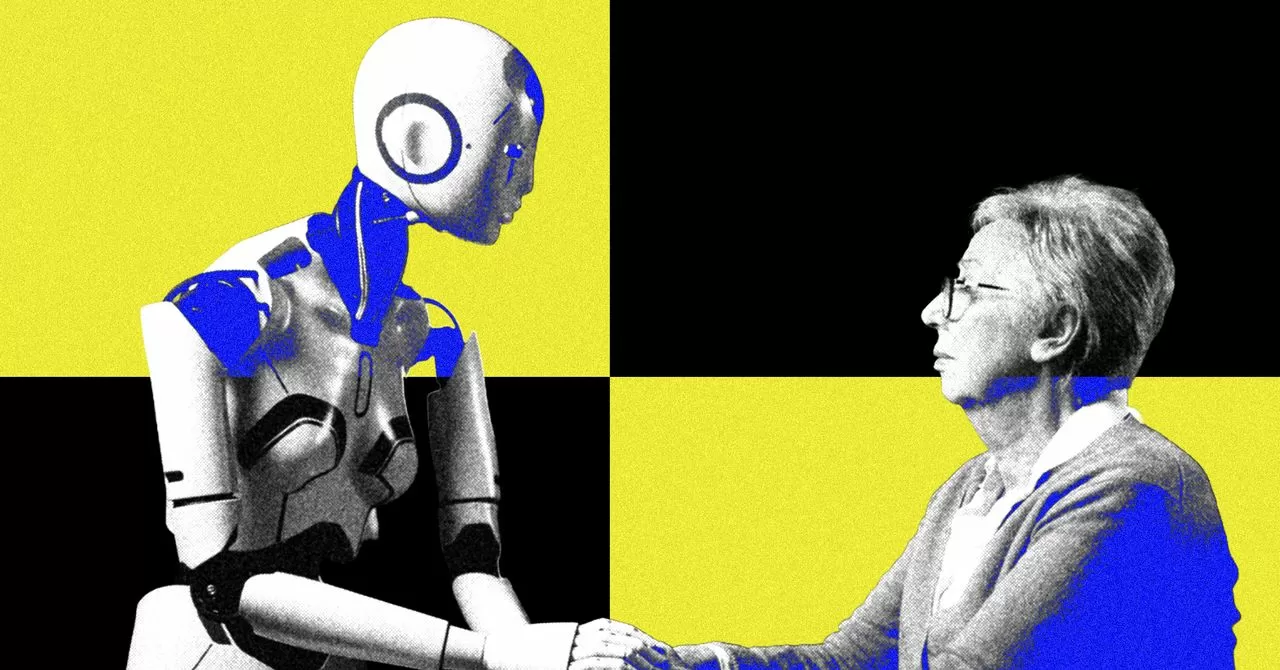

In his latest book, A World Appears, renowned author and journalist Michael Pollan delves into the realm of artificial intelligence and its capabilities. With the advancement of technology, AI has become an integral part of our daily lives, from virtual assistants to self-driving cars. But can it truly replicate the complexity and uniqueness of a human being? Pollan argues that while AI can do many things, it can never truly be a person.
One of the main arguments that Pollan presents in his book is the concept of consciousness. He believes that true consciousness is something that cannot be replicated by machines. As humans, we have a sense of self-awareness, emotions, and the ability to think abstractly. These are qualities that make us human and set us apart from machines.
Pollan also highlights the limitations of AI when it comes to creativity and imagination. While AI can be programmed to generate ideas and create art, it lacks the ability to truly innovate. It can only produce what it has been taught or programmed to do. On the other hand, humans have the capacity to think outside the box and come up with original ideas and creations.
Another aspect that Pollan touches upon is the moral and ethical implications of AI. As machines, AI lacks the moral compass and empathy that humans possess. This can lead to potential dangers and ethical dilemmas, especially when it comes to decision-making. Humans have a sense of right and wrong, and we are capable of making ethical decisions based on our emotions and values. AI, on the other hand, can only make decisions based on algorithms and data.
Moreover, Pollan argues that AI is limited when it comes to experiencing the world. As humans, we have five senses that allow us to interact and experience the world around us. AI, on the other hand, can only process data and information, lacking the ability to truly feel and experience the world in a human way.
While AI may excel in certain tasks and perform them with incredible speed and accuracy, it can never truly replicate the complexity and uniqueness of a human being. Pollan emphasizes that AI can never have a soul, something that makes us human and gives us a sense of purpose and meaning in life.
However, Pollan does not dismiss the potential of AI. He acknowledges that it has the power to revolutionize our world and make our lives easier in many ways. But he believes that we must be cautious and mindful of the limitations of AI and not let it overshadow the value and importance of human intelligence.
In conclusion, Michael Pollan’s book, A World Appears, presents a thought-provoking argument about the capabilities of artificial intelligence. While AI can do many things, it can never truly be a person. As humans, we possess qualities that make us unique and set us apart from machines. We must embrace the potential of AI while also recognizing its limitations. As Pollan aptly puts it, “AI can do many things, but it can never be human.”