

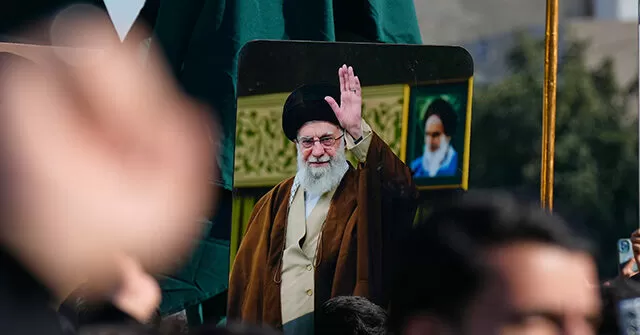

The Washington Post has recently published a glowing obituary for Iran’s Supreme Leader Ali Khamenei, who was killed in a series of strikes launched by the United States and Israel on Saturday. The article paints a softer picture of the notorious leader, highlighting his love for Persian poetry and portraying him as a man of culture and sophistication. This unexpected portrayal of Khamenei has raised eyebrows and sparked controversy among readers.
The obituary, titled “Washington Post Gives Iranian Regime’s Ali Khamenei Glowing Obituary: He Was ‘Fond of Persian Poetry’,” has received criticism for its seemingly positive tone towards a leader who has been known for his oppressive regime and human rights violations. Many have questioned the intentions of the Washington Post in publishing such an article, especially in the aftermath of Khamenei’s death.
The article begins by describing Khamenei as a “fierce and charismatic leader” who was “beloved by many Iranians.” It goes on to mention his love for poetry, stating that he was “fond of Persian poetry and often recited verses from famous poets during his speeches.” This portrayal of Khamenei as a man of culture and refinement is a stark contrast to the image that has been portrayed by the media for decades.
The Washington Post also highlights Khamenei’s rise to power and his role in the Iranian Revolution of 1979. It mentions his close relationship with the founder of the Islamic Republic, Ayatollah Khomeini, and his efforts in establishing Iran as a powerful Islamic state. The article also mentions his controversial stance on issues such as women’s rights and the LGBTQ+ community, but quickly moves on to his accomplishments in other areas.
One of the most surprising aspects of the article is the mention of Khamenei’s “moderate” views on foreign policy. The Washington Post claims that Khamenei was a “pragmatic leader” who was willing to negotiate with the West and had a “soft spot” for the United States. This portrayal of Khamenei as a moderate leader goes against the commonly held belief that he was a hardliner who was vehemently opposed to any form of Western influence.
The article also highlights Khamenei’s efforts in promoting education and healthcare in Iran. It mentions his support for free education and universal healthcare, which has improved the quality of life for many Iranians. The Washington Post also credits Khamenei for Iran’s economic growth and stability, stating that under his leadership, the country has made significant progress despite facing sanctions and international pressure.
The obituary ends with a quote from a former Iranian diplomat, who describes Khamenei as a “wise and compassionate leader” who will be remembered for his contributions to the country. This final statement serves as a tribute to Khamenei and his legacy, portraying him as a leader who will be deeply missed by his people.
However, the Washington Post’s portrayal of Khamenei has raised questions about the media’s role in shaping public opinion. While it is important to acknowledge the positive aspects of a leader’s life, it is equally important to acknowledge their flaws and the impact of their actions on their people. By painting a softer picture of Khamenei, the Washington Post has been accused of whitewashing his oppressive regime and downplaying the suffering of millions of Iranians under his rule.
In conclusion, the Washington Post’s obituary for Ali Khamenei has sparked controversy and divided opinions. While some have praised the article for shedding light on lesser-known aspects of the leader’s life, others have criticized it for its one-sided and seemingly biased portrayal. It serves as a reminder for the media to be responsible in their reporting and to present a balanced view of individuals, especially those in positions of power.