
Afghan Women Share Harrowing Accounts: Five Years Under Taliban Control
Afghan women reveal devastating impact of five years of Taliban rule, including public floggings, job losses, and critical healthcare barriers affecting their s...
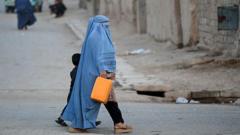
Afghan Women Describe Transformative Life Changes Under Taliban Governance
Afghan women have come forward to share deeply personal accounts of how their existence has fundamentally shifted during five years under Taliban rule. The testimonies paint a stark picture of restrictions, hardship, and systematic barriers that have reshaped every aspect of daily life for females across the nation. These Afghan women represent countless others whose voices remain unheard, yet their experiences collectively demonstrate the severity of conditions facing the country's female population.
Public Punishment and Judicial Practices
Among the most disturbing revelations are descriptions of public floggings administered as punishment. Multiple women reported witnessing and experiencing corporal punishment carried out in open spaces, turning what were once private matters into public spectacles. The revival of these practices reflects a return to interpretations of law that fundamentally differ from those in place during the previous governmental period.
These punishments often relate to perceived moral violations or failures to comply with strict behavioral codes imposed on women. The public nature of such discipline serves an additional purpose: it creates a climate of fear and intimidation that extends far beyond those directly punished. Communities witness these events, creating a chilling effect on women's autonomy and personal freedom.
Economic Devastation and Employment Barriers
Employment opportunities for women have contracted dramatically. Jobs that were once accessible have been systematically closed off, with women losing positions in government, education, healthcare, and business sectors. The economic ramifications extend beyond individual financial loss—they represent a wholesale removal of women from economic participation in society.
Many Afghan women who were breadwinners for their families now find themselves completely dependent on male relatives. This economic dependence reinforces other forms of control and restriction. Women who held professional positions describe the sudden upheaval and uncertainty that followed the Taliban's return to power, leaving many families in precarious financial situations.
The prohibition on women working in certain sectors has created a cascading effect of poverty and vulnerability. Female-headed households, which constitute a significant portion of Afghanistan's poorest populations, have been particularly devastated by employment restrictions.
Healthcare Access and Life-Threatening Consequences
Perhaps most critically, barriers to healthcare present genuine threats to women's survival. Afghan women report severe restrictions on accessing medical services, including limitations on female doctors treating them and requirements for male accompaniment to medical facilities. These regulations create dangerous delays in receiving necessary treatment.
Pregnant women face elevated risks due to restricted access to prenatal and obstetric care. Female healthcare workers have been removed from their positions, reducing the availability of female medical professionals that many Afghan women require due to cultural preferences and restrictions on male-female interaction. The combination of reduced healthcare infrastructure and behavioral restrictions has resulted in documented cases of preventable deaths and serious health complications.
Women with chronic conditions struggle to manage their health when accessing treatment requires navigating complex social restrictions. Reproductive health services, including family planning and gynecological care, have been severely curtailed. These restrictions disproportionately endanger women's physical wellbeing and life expectancy.
Educational Opportunities Eliminated
Afghan women have also been systematically excluded from educational advancement. Girls' education beyond certain grade levels has been prohibited, and women's access to higher education has been severely restricted or eliminated entirely. This educational exclusion has long-term consequences, affecting future employment prospects and economic independence.
Daily Life Under Restrictive Regulations
Beyond these major areas, Afghan women describe a suffocating environment of daily restrictions. Dress codes, movement limitations, and behavioral expectations have created an atmosphere where women's autonomy is constantly curtailed. The psychological impact of living under such stringent control extends to mental health, with reports of increased depression, anxiety, and despair among the female population.
Women describe the inability to leave their homes without male permission, restrictions on education and work, and constant surveillance of their behavior. These cumulative restrictions create a situation where Afghan women have lost basic freedoms that had been gained during the previous two decades.
Looking Forward
The testimonies from Afghan women paint a comprehensive picture of how five years of Taliban rule has fundamentally altered the trajectory of women's lives. From economic devastation to health crises to educational exclusion, the impact spans every dimension of human development and dignity. International attention to these accounts remains crucial for documenting the experiences of Afghan women during this significant historical period.