
Andy Burnham Leadership Pledge: End Labour Party Infighting
Andy Burnham becomes Labour leader, pledging united government free of faction disputes. New PM promises leftwing vision with public ownership and social care r...
Andy Burnham Leadership Pledge: End Labour Party Infighting
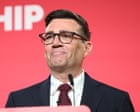
Andy Burnham formally assumed control as the new Labour leader, delivering a comprehensive commitment to eliminate internal party divisions and factional disagreements. The incoming prime minister, set to enter Downing Street on Monday, addressed concerns about organizational cohesion while announcing his vision for transforming British governance through progressive policies. Andy Burnham Labour leader position marks a significant turning point for the party as it prepares to govern the nation.
Unified Government Vision
During his acceptance speech, Burnham articulated a clear message: his administration would function as a cohesive unit without the debilitating conflicts that have plagued previous political cycles. He emphasized that factional politics would have no place in his government, stressing the importance of internal unity for effective policymaking. This commitment directly addresses longstanding criticisms of Labour's organizational struggles and internal disputes.
The incoming prime minister characterized the current moment as the government's "last chance" to implement meaningful change. This framing underscores the urgency and weight of responsibility that accompanies his new role, suggesting that public expectations have reached a critical threshold requiring decisive action and unified leadership from his administration.
Progressive Economic Agenda
Burnham outlined an explicitly leftwing economic framework for Britain's future development. His vision fundamentally rejects the neoliberal policies that dominated since the 1980s, particularly the Thatcherite economic model that reshaped British society decades ago. He committed to reversing privatization trends through expanded public ownership of essential utilities, believing government control would better serve citizens' interests.
The new Labour leader proposed comprehensive investment in social infrastructure, particularly emphasizing the critical need to resolve Britain's deteriorating social care system. He pledged to secure adequate funding for elderly care services, a commitment that addresses one of the nation's most pressing domestic challenges. Additionally, Burnham announced plans to construct a substantial new generation of council housing, targeting the ongoing housing crisis that has affected millions of British families.
Chancellor Appointment Controversy
Despite his unifying message, significant anxiety persists within Labour's left wing regarding Burnham's selection of Shabana Mahmood as chancellor. This appointment has generated considerable internal debate about the ideological direction of the incoming administration. The chancellor position represents one of the most powerful and influential roles within any British government, controlling fiscal policy and economic strategy.
Mahmood's elevation to this critical position has prompted questions among party progressives about whether Burnham's leftward rhetoric will translate into leftward economic policies. The appointment reflects a complex political calculation, balancing various factions within Labour while attempting to maintain credibility with financial markets and international economic institutions. This tension between progressive promises and institutional constraints remains a central challenge facing the new administration.
Historical Significance of Transition
Burnham's assumption of leadership represents a transformative moment for British Labour politics. The party has undergone substantial evolution, and his explicit commitment to dismantling Thatcherite policies signals a dramatic philosophical departure from recent administrations. His emphasis on public ownership, social investment, and democratic governance reflects decades of Labour movement principles.
The transition to his premiership on Monday will mark the beginning of a new political era. Success in delivering his stated objectives—maintaining party unity, implementing progressive economic policies, and addressing social care and housing crises—will determine both his political legacy and Labour's electoral prospects in future contests. The balance between managing internal party factions and governing effectively will prove crucial to this administration's sustainability and success.