
BBC Faces Mounting Challenges, Demands New Funding Model
The BBC confronts significant hurdles and pushes for a fresh funding structure beyond the traditional licence fee system. Katie Razzall examines the crisis.
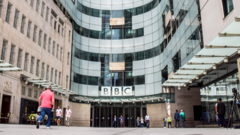
BBC Confronts Critical Funding Crisis
The BBC funding model has become increasingly untenable as the broadcaster faces a cascade of institutional pressures outlined in its latest annual report. Media editor Katie Razzall has analyzed the corporation's candid assessment of structural challenges that threaten the viability of Britain's public broadcasting service. The revelation signals an urgent call to action for policymakers to consider transforming how the BBC secures financial resources.
Understanding the Scope of Organizational Pressures
The comprehensive annual documentation reveals that the BBC funding model requires fundamental restructuring to sustain operations effectively. Several interconnected challenges have converged to create what senior leadership describes as an unsustainable situation. These difficulties encompass budgetary constraints, evolving audience expectations, and the accelerating shift toward digital content consumption patterns.
The Licence Fee System Under Scrutiny
The traditional licence fee mechanism has served as the financial backbone of British public broadcasting for generations. However, contemporary market dynamics and demographic shifts have rendered this revenue stream increasingly precarious. Fewer households maintain television licenses, while production costs continue their upward trajectory. The discrepancy between projected income and actual expenditure has widened considerably over recent years.
Declining Revenue Streams
The licence fee, once considered a stable and predictable income source, now presents significant collection challenges. Younger audiences increasingly view broadcast content through streaming platforms rather than traditional television sets. This behavioral transformation has eroded the tax base upon which the BBC fundamentally depends. Additionally, enforcement mechanisms face mounting criticism regarding fairness and effectiveness in modern contexts.
Rising Operational Expenses
Simultaneously, the organization confronts escalating costs across multiple operational categories. Technology investments require substantial capital allocation as the broadcaster competes in digital environments. Talent retention demands competitive compensation structures. International production standards necessitate continuous infrastructure upgrades and modernization initiatives.
Proposals for Sustainable Structural Reform
The BBC funding model transformation must address both revenue enhancement and strategic reallocation of resources. Leadership has initiated preliminary discussions regarding alternative mechanisms that could supplement or replace traditional licence fee arrangements. These proposals encompass diverse approaches, ranging from voluntary subscription models to hybrid structures combining public funding with consumer contributions.
Potential Alternative Revenue Models
Industry analysts and stakeholders have identified several pathways forward for the BBC funding model. Subscription-based services could generate dedicated revenue from audiences who actively choose to support premium content. Advertisement integration on specific programming tiers might create additional income streams while preserving commercial-free core offerings. Strategic partnerships with international broadcasters could facilitate content cost-sharing arrangements.
Mixed Funding Approaches
Some experts advocate for the BBC funding model to incorporate elements from multiple revenue sources simultaneously. This diversified strategy could reduce dependence on any single mechanism while creating financial resilience. Government appropriations through general taxation might replace direct licence fee collection while maintaining public funding principles. Dedicated digital platform revenues could offset traditional broadcasting decline.
Stakeholder Perspectives and Industry Response
The announcement regarding necessary BBC funding model adjustments has prompted reactions across media industries, policy circles, and audience segments. Public broadcasting advocates emphasize the critical importance of maintaining robust funding for cultural institutions. Commercial competitors simultaneously argue that current regulatory frameworks unfairly advantage the corporation. International observers monitor developments with interest given implications for other public service broadcasters globally.
Strategic Implications for British Media Landscape
How decision-makers address the BBC funding model challenge will substantially reshape Britain's media ecosystem. The broadcaster's capacity to produce original content, maintain editorial independence, and fulfill public service obligations directly correlates with financial sustainability. Investment in news gathering, drama production, and educational programming requires adequate resources to maintain competitive quality standards.
Pathway Forward for Public Broadcasting
The organisation's annual report effectively communicates that incremental adjustments to existing frameworks cannot resolve fundamental structural issues affecting the BBC funding model. Comprehensive reform requires collaborative engagement among government officials, industry stakeholders, and audience representatives. The establishment of new mechanisms must preserve the broadcaster's editorial independence while ensuring transparent accountability to public interest.
Katie Razzall's analysis underscores that transforming the BBC funding model represents not merely a financial exercise but a consequential decision about the nature and future of Britain's public broadcasting infrastructure. The coming months will determine whether policymakers embrace meaningful structural innovation or pursue incremental modifications that fail to address underlying sustainability challenges comprehensively.