
Bezos Investment Group's Liverpool Takeover: What It Means for The Reds' Future
Discover how the Bezos-led investment group's potential Liverpool takeover could reshape the club's finances and strategy. Explore the implications for fans and...
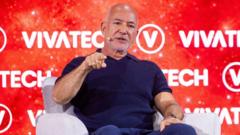
Bezos Investment Group's Potential Liverpool Takeover: A Game-Changer or Status Quo?
The prospect of a Liverpool takeover involving Jeff Bezos and his investment consortium has dominated football headlines, yet the true implications for the club's competitive spending remain far more nuanced than initial reports suggest. While the involvement of one of the world's wealthiest entrepreneurs might seem like a guaranteed financial revolution, the reality presents a considerably different picture for supporters hoping to witness dramatic transfer expenditure increases.
Understanding the Financial Framework
The Liverpool takeover negotiated through the FSG ownership group would introduce substantial capital, but the club's existing financial obligations significantly constrain how these resources could be deployed. The Reds operate under Premier League Financial Fair Play regulations, UEFA's Financial Sustainability Rules, and existing debt structures that continue regardless of ownership changes. These regulatory frameworks mean that simply injecting wealth doesn't automatically translate into exponential spending capacity.
Current Premier League regulations limit spending to 85 percent of total revenue, a restriction that applies equally to newly acquired clubs. This means that even with Bezos-backed investment, Liverpool cannot simply open financial floodgates to compete recklessly. The club must balance investment across infrastructure, stadium development, and personnel while maintaining long-term sustainability—requirements that conservative ownership groups like FSG have historically prioritized.
The FSG Legacy and Operational Philosophy
Fenway Sports Group's stewardship of Liverpool demonstrated a commitment to measured financial discipline rather than extravagant spending. The group successfully stabilized the club's finances following previous mismanagement, reduced debt obligations, and built a squad capable of winning the Premier League and Champions League through strategic recruitment. A transition to the Bezos-led investment consortium might fundamentally alter this philosophical approach.
However, questions persist about whether the Liverpool takeover represents genuine transformational change or merely a continuation of existing operational structures. Bezos's involvement could signal intentions toward greater investment, yet the mechanics of how this translates into team performance remain speculative. Previous takeovers of English football clubs by wealthy foreign investors have produced mixed results, with financial injection often failing to guarantee sporting success.
Fan Reception and Expectations
Liverpool's fanbase presents a notably traditional demographic, with many supporters expressing discomfort regarding foreign investment and potential cultural shifts. The FSG investment deal involving Bezos creates tension between financial optimism and cultural apprehension. Some fans welcome the prospect of increased spending power, while others worry about commercialization and the erosion of traditional club values.
This dichotomy reflects broader concerns within English football regarding globalization and ownership structures. Supporters fear that American-led investment groups might prioritize profit maximization over sporting achievement, converting beloved institutions into corporate entertainment products. The Liverpool takeover narrative therefore encompasses not just financial considerations but fundamental questions about club identity and community connection.
Competitive Implications and Transfer Strategy
Even with enhanced financial resources, several factors would limit the immediate competitive advantage of increased spending capacity. Modern football transfer markets exhibit inflationary pressures, with elite players commanding astronomical wages. A budget increase of 20 or 30 percent provides meaningful but not transformational advantages when competing against Manchester City, Manchester United, and Chelsea—clubs with established financial advantages and global commercial appeal.
The Liverpool takeover also coincides with an era where sporting success increasingly depends on integrated recruitment strategies, player development, and tactical sophistication rather than simply outspending competitors. Liverpool's recent success under Jürgen Klopp derived partly from strategic signings maximizing value rather than pursuing marquee acquisitions at inflated prices. Whether Bezos-backed investment would respect this philosophy or disrupt it remains uncertain.
Long-Term Strategic Considerations
The FSG investment deal reflects broader trends in football ownership, where traditional family-owned structures yield to investment consortiums and corporate entities. This transition presents both opportunities and risks. Enhanced resources could accelerate stadium modernization, improve training facilities, and expand the club's global commercial footprint—investments supporting sustained competitiveness.
Conversely, the Liverpool takeover might introduce operational redundancies, conflicting strategic visions, and governance complications. Multi-stakeholder ownership structures sometimes generate conflict regarding spending priorities, transfer strategy, and personnel decisions. The involvement of numerous investors alongside Bezos could create decision-making friction rather than streamlined organizational efficiency.
Regulatory and Financial Fair Play Considerations
Regulatory bodies worldwide have intensified scrutiny of football club ownership, particularly regarding financial sustainability and competitive balance. The Liverpool takeover would undoubtedly undergo rigorous examination from Premier League authorities ensuring compliance with existing regulations and good faith governance standards. These investigations require transparency and documentation, potentially delaying finalization while authorities assess legitimacy.
Additionally, Financial Fair Play regulations increasingly penalize excessive spending relative to revenue generation. Clubs violating these provisions face potential points deductions and tournament exclusions. Therefore, even if Bezos-backed investment dramatically increased capital availability, regulatory constraints would prevent unrestricted deployment toward player acquisitions without proportional revenue growth.
Conclusion: Evolution Rather Than Revolution
The prospect of a Liverpool takeover involving Jeff Bezos generates excitement about potential financial enhancement, yet realistic assessment suggests evolutionary rather than revolutionary change. The FSG investment deal likely improves infrastructure and supports measured spending increases, but regulatory frameworks and competitive dynamics ensure no sudden sporting dominance. Success ultimately depends not on capital injection magnitude but on strategic deployment and organizational coherence—factors where new ownership's track record remains unproven.