
Burnham Dismisses Early Election Prospects in BBC Exclusive Interview
Andy Burnham rules out an early election in exclusive BBC interview, reaffirming commitment to honoring the government's manifesto and policy platform.
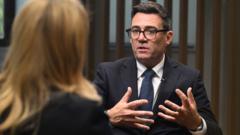
Burnham Rules Out Early Election in Candid BBC Interview
In an exclusive and revealing conversation with BBC interviewer Laura Kuenssberg, Andy Burnham has definitively addressed speculation surrounding an early election, making clear his intention to proceed with the current electoral mandate. The prime minister's dismissal of early election possibilities represents a significant moment in recent political discourse, as he reiterates his commitment to the principles outlined during the campaign.
Burnham emphasized that the electorate delivered a clear verdict by voting for a specific manifesto, and his administration remains bound by that democratic choice. This statement underscores the government's philosophical approach to governance and its respect for the electoral process that brought it to power.
The Manifesto Commitment: A Core Political Principle
During the interview, the prime minister stressed that citizens exercised their democratic right by endorsing a comprehensive manifesto that serves as the blueprint for his government's legislative agenda. The assertion that people "voted for a manifesto" reflects a principled stance on democratic accountability and governmental responsibility.
This commitment to manifesto implementation distinguishes the government's approach from speculative or opportunistic political maneuvering. Rather than pursuing short-term political advantage through an unexpected electoral appeal, Burnham has signaled that his administration will focus on delivering the policies and reforms promised to voters. Such a position carries substantial weight in contemporary politics, where trust in political institutions remains a paramount concern.
Political Context and Strategic Implications
The prime minister's categorical rejection of early election prospects arrives at a pivotal juncture in the government's tenure. By explicitly ruling out such a scenario, Burnham provides stability and certainty to his administration's planning and policy implementation efforts.
The remarks made during this exclusive BBC interview serve multiple strategic purposes. First, they reassure coalition partners, parliamentary allies, and the broader electorate that the government intends to complete its full term as originally mandated. Second, they demonstrate confidence in the government's ability to deliver on its promises within the established timeframe. Third, they reinforce the principle that electoral mandates carry binding moral and political obligations.
Understanding the Electoral Mandate
When voters cast their ballots, they endorse not merely individual candidates or parties, but entire platforms of proposed policies and reforms. The manifesto represents the social contract between elected officials and the citizens who empower them. Burnham's repeated emphasis on this relationship highlights his understanding of democratic principles and electoral legitimacy.
This perspective stands in contrast to governments that might view electoral victories as opportunities for strategic repositioning or tactical adjustments to electoral timing. Instead, Burnham's administration frames its mandate as sacred, something to be honored through consistent implementation rather than exploited for partisan advantage.
Implications for Government Stability
The rejection of early election possibilities carries profound implications for the stability and coherence of governmental operations. When a prime minister commits to completing a full parliamentary term, departments can engage in long-term planning, implement complex legislative reforms, and pursue ambitious policy agendas without the constant uncertainty of potential electoral disruption.
This stability extends beyond the machinery of government to encompass the broader economy, business community, and civil society. Investors, employers, and organizational leaders benefit from the predictability that comes with a committed, full-term administration.
Laura Kuenssberg's Line of Questioning
The BBC interviewer's direct questioning about early election possibilities reflects genuine public and political interest in potential electoral scenarios. Kuenssberg's decision to press Burnham on this crucial matter demonstrates responsible journalistic practice, seeking clarity on matters of significant public concern.
By obtaining a clear, unambiguous response on this matter through an exclusive interview, the BBC provided viewers with authoritative information directly from the prime minister himself, eliminating speculation and providing definitive guidance on governmental intentions.
Looking Forward: The Government's Path
With the early election question definitively resolved, the government can move forward with its legislative agenda and policy implementation with renewed clarity and purpose. The administration's focus can now concentrate on delivering the manifesto commitments that secured electoral victory.
The exclusive BBC interview therefore serves as more than mere political theater; it represents a moment of institutional clarity where democratic principles are reasserted and governmental legitimacy is reinforced through transparent communication with the electorate.