
Colombia Earthquake Death Toll Reaches 180 as Rescue Teams Battle Aftershocks
Colombia earthquake kills 180 people with ongoing rescue operations. Aftershocks continue as teams search through rubble for survivors in affected areas.
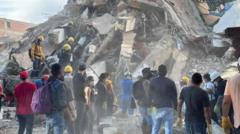
Colombia Earthquake Claims 180 Lives Amid Ongoing Crisis
A devastating Colombia earthquake has left at least 180 people dead, with rescue teams working around the clock to locate and extract survivors from collapsed structures across the affected regions. The tragic disaster has triggered numerous powerful aftershocks throughout Tuesday, complicating emergency response efforts and putting additional strain on rescue personnel.
Rescue Operations Continue Under Challenging Conditions
Emergency responders have mobilized extensive resources to conduct search and rescue missions in areas hardest hit by the Colombia earthquake. Heavy machinery, specialized detection equipment, and trained rescue dogs are being deployed to navigate through unstable rubble where survivors are believed to be trapped. The ongoing aftershocks present significant hazards to rescue teams, requiring frequent safety assessments and strategic planning to minimize additional casualties during recovery operations.
Challenges Faced by First Responders
The sequence of aftershocks following the initial Colombia earthquake has created an increasingly dangerous environment for rescue workers. Unstable building structures that remain standing pose collapse risks, while secondary tremors continue to dislodge debris and create new hazards. Medical teams have established triage centers near collapsed buildings to provide emergency care to injured survivors as they are pulled from the wreckage.
Impact on Communities and Infrastructure
The Colombia earthquake has caused widespread destruction to residential neighborhoods, commercial districts, and critical infrastructure. Hospitals in the affected regions are overwhelmed with injured patients, many suffering from crush injuries, broken bones, and traumatic wounds. Power outages have been reported across multiple provinces, hampering rescue efforts and complicating coordination between emergency response teams.
Search Efforts in Major Affected Areas
Rescue teams have prioritized locations where concentrations of casualties are expected, including residential buildings, schools, and public gathering spaces that collapsed during the Colombia earthquake. Thermal imaging technology and listening devices are being employed to detect signs of life beneath tonnes of concrete and steel. Each passing hour becomes more critical, as the survival rate for people trapped in rubble significantly decreases after the initial 72-hour period.
National and International Response
The Colombian government has declared a national emergency, mobilizing military personnel and additional resources to support ongoing rescue operations. International assistance has been coordinated through various humanitarian organizations and neighboring countries offering specialized search and rescue teams. The scale of the disaster has prompted emergency funding allocations to support both immediate rescue efforts and long-term reconstruction initiatives.
Support for Affected Residents
Temporary shelters have been established for displaced individuals and families who have lost their homes in the Colombia earthquake. Humanitarian organizations are distributing essential supplies including food, water, blankets, and medical assistance to survivors. Mental health services and counseling are being provided to those traumatized by the disaster and loss of loved ones.
Updates on the Aftershock Sequence
Seismologists report that the aftershock activity following the major Colombia earthquake remains elevated, with tremors continuing to impact rescue timelines and safety protocols. Each significant aftershock has the potential to cause additional collapses and create new pockets of trapped individuals. Monitoring stations throughout the region are tracking seismic activity and providing early warning alerts to rescue teams operating in dangerous zones.
The rescue operations surrounding the Colombia earthquake represent one of the most significant emergency response efforts in recent years, with resources stretched across multiple affected municipalities and provinces. As rescue teams persist in their efforts, the focus remains on recovering survivors and accounting for the missing while simultaneously preparing for long-term disaster recovery and reconstruction phases.