
Farage Fights Back: Reclaiming Control After Finance Scandal
Farage attempts to regain political momentum following finance controversy, positioning the by-election as a battle between people and establishment.
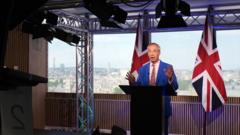
Farage Attempts to Reclaim Political Momentum
In a strategic political maneuver, Farage has moved swiftly to reassert control over the narrative following recent financial controversies that threatened to derail his political standing. The veteran politician's calculated response demonstrates his intention to redirect public attention toward broader ideological themes, positioning himself at the forefront of an anti-establishment crusade during the upcoming by-election campaign.
Political analysts suggest that Farage's approach reflects a deliberate effort to transform a potential liability into an opportunity for reinforcing his core message. By reframing the discussion around fundamental political divisions, he seeks to mobilize supporters who feel alienated from traditional political institutions.
The Central Campaign Message
Throughout the forthcoming electoral battle, Farage's messaging strategy centers on a particular dichotomy: positioning the by-election as a fundamental contest between ordinary citizens and entrenched establishment forces. This framing serves multiple purposes within his broader political framework, allowing him to simultaneously address and deflect from recent controversies while mobilizing his grassroots support base.
The narrative of populist resistance has long formed the cornerstone of Farage's political identity. By emphasizing this theme during a critical campaign period, he aims to shift focus from institutional questions toward ideological boundaries that resonate with his electoral coalition.
Political Strategy and Public Perception
Observers of British politics note that Farage's tactical repositioning represents a classic crisis management approach within populist movements. When confronted with challenges to personal or organizational credibility, such movements frequently emphasize their opposition to broader institutional structures rather than engaging directly with specific allegations.
This strategy proves particularly effective when targeted audiences already harbor skepticism toward mainstream media and establishment institutions. By reinforcing this skepticism and positioning himself as the primary voice speaking for ordinary people, Farage seeks to strengthen loyalty among his core supporters while potentially attracting voters disillusioned with conventional politics.
Context of Recent Controversies
The financial row that preceded Farage's renewed campaign push had generated significant scrutiny and criticism from multiple political quarters. Rather than allowing this narrative to dominate public discourse, Farage's team has orchestrated a deliberate strategic shift toward broader campaign themes.
This approach reflects sophisticated political awareness regarding the relationship between media cycles and public attention. By introducing a powerful overarching narrative, political operatives can effectively redirect journalistic and public focus toward terrain that proves more advantageous to their objectives.
By-Election Significance and Broader Implications
The forthcoming by-election takes on particular significance given the current state of British politics and ongoing debates about representation and institutional reform. For Farage and his supporters, this electoral contest represents an opportunity to demonstrate continued political relevance and mobilizing capacity.
The by-election also provides a platform for testing messaging strategies and assessing public sentiment regarding populist political movements. Success in framing the contest according to his preferred narrative could strengthen Farage's political positioning heading into any future national electoral cycles.
Establishment Response and Counter-Messaging
Political rivals have begun articulating counter-arguments to Farage's populist framing. Critics contend that characterizing all institutional opposition as establishment resistance oversimplifies complex policy disagreements and institutional functions essential to democratic governance.
The debate surrounding these competing narratives reflects deeper divisions within British political culture regarding the nature of legitimate institutional authority and the appropriate mechanisms for democratic accountability and representation.
The Role of Media in Political Narratives
Media coverage of Farage's repositioning efforts will likely play a crucial role in determining whether his strategic shift successfully reestablishes control over the campaign narrative. Different media outlets bring varying levels of skepticism and scrutiny to his claims and framing strategies.
Looking Forward
As the by-election campaign progresses, observers will continue monitoring whether Farage's effort to reclaim political momentum proves effective in overshadowing recent controversies. The broader implications for British politics and the continuing evolution of populist political movements will depend significantly on how effectively Farage communicates his core message to both committed supporters and persuadable voters.
The stakes in this by-election extend beyond the specific electoral outcome, potentially influencing broader political trends and the strategic playbooks employed by various political movements throughout the United Kingdom.