
Glacier Collapse Triggered Catastrophic Nepal-Tibet Floods
Scientists confirm glacier collapse caused devastating Nepal-Tibet floods, revealing risks of rapidly melting Himalayan ice and climate change impacts.
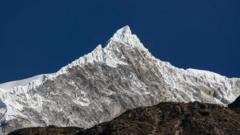
Glacier Collapse Confirmed as Trigger for Nepal-Tibet Disaster
Recent scientific investigations have identified a major glacier collapse as the primary mechanism behind the catastrophic floods that devastated regions across Nepal and Tibet. The glacier collapse, occurring in one of the world's most sensitive mountain environments, has prompted renewed concerns about the accelerating rate at which Himalayan ice masses are disappearing.
Understanding the Glacier Collapse Event
The glacier collapse represents a significant rupture in an ice formation that had remained relatively stable for decades. Researchers examining the geological evidence and satellite imagery documented the precise moment when massive volumes of ice detached from the parent glacier, initiating a chain reaction of destructive forces. This glacier collapse demonstrates how critical environmental thresholds can be crossed with minimal warning, creating hazardous conditions for downstream communities.
Rapidly Melting Himalayan Ice: A Growing Crisis
The incident underscores a broader environmental challenge affecting the entire Himalayan region. The rapidly melting Himalayan ice phenomenon represents one of the most visible consequences of global climate change. Scientists report that glaciers throughout this mountain range are retreating at unprecedented rates, with some losing significant portions of their mass annually.
The Himalayan ice sheet contains frozen water reserves that supply drinking water and irrigation resources to nearly two billion people across Asia. As these ice formations continue their rapid decline, the risk of sudden catastrophic events—such as the glacier collapse that triggered these floods—increases substantially.
Scientific Analysis and Findings
Preliminary investigations conducted by international research teams revealed critical details about the glacier collapse mechanism. The scientists employed multiple analytical methods, including satellite monitoring, ground-based surveys, and climate data analysis, to reconstruct the sequence of events leading to the disaster.
The research team documented temperature patterns in the weeks preceding the glacier collapse, identifying a warming trend that likely contributed to structural weakening within the ice mass. As temperatures rose above seasonal norms, meltwater infiltrated surface cracks and internal cavities, reducing the cohesion between ice layers and ultimately triggering the catastrophic failure.
Implications for Regional Water Systems
The glacier collapse and subsequent floods have exposed vulnerabilities in how downstream regions prepare for such events. Water resources managers now recognize that traditional risk assessment models may underestimate the speed and intensity of flood events generated by glacier failures. Communities throughout Nepal and Tibet must reconsider infrastructure design and emergency response protocols.
The disaster has prompted discussions among environmental authorities about establishing more comprehensive glacier monitoring systems. Early warning networks could potentially provide critical hours of advance notice before another glacier collapse generates destructive flood waves.
Climate Change and Accelerating Ice Loss
Scientists emphasize that the glacier collapse incident reflects broader climate patterns affecting the Himalayan region. Global temperature increases are pushing permafrost boundaries upward in elevation, destabilizing mountain slopes and weakening structural integrity of glacial systems. The rapidly melting Himalayan ice phenomenon represents one of the most visible manifestations of these climate trends.
Research institutions across multiple countries have contributed data supporting the conclusion that glacier collapse events will likely become more frequent as climate change progresses. The scientific consensus indicates that without significant reductions in atmospheric greenhouse gases, Himalayan ice loss will accelerate, creating cascading hazards for downstream populations.
Future Risk Assessment and Adaptation Strategies
Regional governments and international organizations are now prioritizing enhanced surveillance of vulnerable glacier formations. The glacier collapse that triggered these floods has motivated investment in advanced monitoring technologies, including high-resolution satellite systems and ground-based sensors that can detect subtle changes in ice stability.
Communities affected by the disaster are developing enhanced emergency preparedness programs designed to respond more quickly to future glacier-related threats. These adaptation strategies recognize that while scientists can improve their ability to predict glacier collapse events, the best protection remains early warning systems combined with resilient evacuation protocols.