
Starmer Reveals 'Deeply Personal' Reasons Behind Resignation Decision
Starmer opens up about his resignation in candid BBC interview, calling it 'intensely personal' and warning Burnham. Read the latest statement.
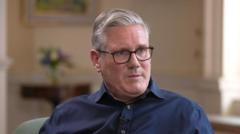
Prime Minister Discusses Resignation in Rare Candid Interview
In a notably forthright conversation with the BBC, the departing Prime Minister has addressed his recent departure from office, describing the Starmer resignation as an emotionally challenging moment in his political journey. The interview marks one of his first public statements since announcing his decision to step down from the nation's highest office.
The outgoing leader expressed the profound difficulty of accepting that his tenure as Prime Minister had reached its conclusion. Speaking with unusual openness about the personal toll of his departure, he characterized the decision as deeply rooted in his own circumstances and reflections. This Starmer resignation has sent ripples through Westminster and beyond, prompting widespread discussion about the future direction of British politics.
An 'Intensely Personal' Choice
During the interview, the former PM emphasized the intimate nature of his decision to leave office. He acknowledged that stepping away from a career defined by decades of public service required considerable introspection and courage. The complexity of this choice extended beyond mere political calculation, touching upon aspects of his personal life that have long remained private.
The decision to resign comes at a significant juncture for the government, leaving many observers questioning what prompted such a dramatic shift. While the Prime Minister did not elaborate extensively on specific circumstances, his candid demeanor suggested the weight of responsibility he carried throughout his tenure.
Warnings Directed at Andy Burnham
A notable aspect of the interview involved pointed remarks directed toward Andy Burnham, the Mayor of Greater Manchester. The outgoing Prime Minister issued what appeared to be cautionary words regarding Burnham's own political ambitions and decision-making processes. These comments have sparked considerable speculation about internal party dynamics and the tensions that may have contributed to the leadership transition.
The nature of these warnings remains somewhat ambiguous, though sources close to the government suggest they relate to potential future political moves within the Labour party structure. Burnham, who has been increasingly prominent in national discourse, now faces scrutiny regarding his response to the Prime Minister's remarks.
Reflecting on a Political Career
The interview showcased a reflective side of the departing leader, as he contemplated the trajectory of his political career spanning multiple decades. From his early days in public service through his ascent to the Prime Minister's office, he has been a defining figure in contemporary British politics.
Coming to terms with the conclusion of this chapter has proven challenging, as evidenced by his emotional tone during the conversation. The Prime Minister's acknowledgment of this struggle humanizes the often-distant figure at the center of power, revealing the personal dimensions of high office that rarely reach public consciousness.
What Lies Ahead for the Government
With the Starmer resignation now official, the government faces significant uncertainty regarding its leadership and policy direction. Potential successors are already being discussed across political circles, each bringing their own vision for the nation's future governance.
The transitional period presents both challenges and opportunities for the Labour party, as it must navigate internal divisions while maintaining public confidence and addressing ongoing national concerns. The Prime Minister's departure marks a pivotal moment that will shape British politics in the months and years to come.
Impact on Party Dynamics
The resignation has exposed underlying tensions within the party structure, with various factions now positioning themselves for influence in the selection of a new leader. These internal negotiations will likely determine the character and priorities of the government moving forward, affecting everything from economic policy to international relations.
Sources indicate that the Prime Minister's warnings to figures like Burnham reflect genuine concerns about the party's future trajectory and the need for careful stewardship during this transitional period.