
Supreme Court Delivers Mixed Rulings for Trump Amid Constitutional Debates
The Supreme Court has issued pivotal decisions that both limit and expand Trump's presidential powers, culminating in contentious birthright citizenship rulings...
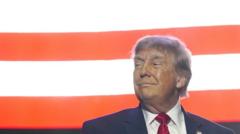
Supreme Court's Complex Legacy for Trump Administration
The Supreme Court has navigated a turbulent landscape of cases that fundamentally shaped the Trump presidency, producing a nuanced portfolio of Supreme Court Trump rulings that simultaneously constrained certain executive actions while broadening presidential authority in other critical domains. This recent term underscores the delicate balance the justices attempted to maintain between protecting constitutional principles and acknowledging executive prerogatives.
Landmark Victories and Strategic Wins
Throughout the judicial calendar, Trump secured instrumental victories that strengthened his administrative capabilities. These Supreme Court Trump rulings represent foundational achievements for the executive branch, granting the administration expanded latitude in regulatory implementation and policy execution. The decisions provided legal scaffolding for controversial initiatives that had previously faced substantial constitutional obstacles.
The administration championed its positions across multiple jurisdictional questions, from immigration enforcement to environmental regulation. Legal analysts recognized these outcomes as watershed moments that redefined the contours of presidential power expansion. The court's conservative majority demonstrated willingness to defer substantially to executive judgment in matters traditionally subject to legislative oversight.
Significant Setbacks and Constitutional Constraints
Counterbalancing these triumphs, the Supreme Court also issued rulings that represented decisive defeats for Trump's legal agenda. Several high-profile cases resulted in unanimous or near-unanimous opposition to administration positions, signaling broad judicial skepticism toward specific executive overreach claims. These decisions imposed meaningful limitations on certain emergency powers and challenged the scope of unilateral presidential action.
The court rejected arguments that suggested unlimited authority for particular executive functions, particularly in contexts involving fundamental constitutional protections. These Supreme Court Trump rulings demonstrated that even a constitutionally sympathetic bench maintained boundaries regarding the extent of presidential autonomy. The justices articulated principled distinctions between legitimate executive authority and unconstitutional aggrandizement of power.
The Birthright Citizenship Decision: Culmination of Ideological Conflict
The term concluded with the birthright citizenship ruling, a particularly contentious decision that crystallized ongoing constitutional disputes. This case represented the apex of ideological conflict between competing visions of constitutional interpretation and national membership criteria. The Supreme Court Trump rulings on this matter generated extraordinary public and legal scrutiny.
Legal scholars characterized the birthright citizenship decision as historically significant, potentially reframing citizenship acquisition standards that had remained substantially unchanged for generations. The ruling's implications extended far beyond immediate policy considerations, touching foundational questions about American identity and constitutional interpretation methodologies.
Broader Implications for Executive Authority
The cumulative effect of these Supreme Court Trump rulings created an ambiguous landscape for presidential power expansion going forward. While the administration achieved notable victories in strategic domains, the defeats established meaningful constitutional guardrails against boundless executive authority. The court's approach suggested conditional rather than categorical deference to presidential claims.
Constitutional scholars identified a pattern of pragmatic incrementalism rather than revolutionary constitutional reorientation. The Supreme Court maintained its role as constitutional arbiter while demonstrating responsiveness to executive branch arguments in contexts where legal reasoning appeared supportable. This balanced approach disappointed both those seeking expansive presidential autonomy and those opposing significant executive power growth.
Long-Term Consequences and Future Litigation
The term's outcomes established precedential foundations that will influence executive-judicial relations for decades. Future administrations will reference these Supreme Court Trump rulings when defending controversial policies and justifying expansive interpretations of presidential authority. The decisions created a complex jurisprudential record requiring careful navigation.
Legal analysts anticipate continued constitutional litigation over presidential power boundaries. The court's mixed messaging suggests that case-by-case evaluation will remain the governing standard rather than categorical rules favoring either executive deference or aggressive judicial constraint. This approach maintains judicial flexibility while providing some predictability regarding constitutional limits on presidential action.