
Tragic Helicopter Collision Claims Two Lives During Greece Firefighting Operation
A devastating collision between two firefighting helicopters in Greece results in two fatalities. A Danish and Greek crew member died while a British pilot and...
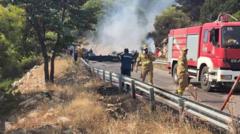
Helicopter Collision Greece: Fatal Accident During Firefighting Mission
A tragic helicopter collision Greece incident has claimed the lives of two crew members during an active firefighting operation in the country. The catastrophic event involved two firefighting helicopters that collided during coordinated aerial firefighting efforts, resulting in immediate fatalities and raising serious concerns about aerial operations in emergency response scenarios.
The helicopter collision Greece accident resulted in the deaths of one Danish national and one Greek national who were serving as crew members aboard the aircraft. The incident unfolded during a critical moment in the ongoing firefighting operations, where multiple helicopters were engaged in water-dropping missions to combat wildfires affecting the region.
Survivors and Rescue Details
Among those involved in the helicopter collision Greece event, a British pilot managed to survive the impact. Additionally, another Greek crew member also survived the accident, demonstrating the varied outcomes that can occur even in the same collision scenario. Emergency responders quickly mobilized to assist the survivors and recover the deceased crew members from the wreckage.
International Crew Composition
The multinational crew composition of the helicopters highlights the international cooperation often required during large-scale firefighting operations. The presence of a Danish national, a British pilot, and Greek crew members underscores how European nations frequently collaborate on emergency response efforts that transcend national boundaries.
Investigation and Safety Implications
The helicopter collision Greece incident has prompted immediate investigations into the circumstances that led to the tragic outcome. Authorities are examining multiple factors including weather conditions, visibility levels, communication protocols between aircraft, and adherence to safety procedures during the aerial operation.
Such incidents raise important questions about the coordination systems in place when multiple firefighting helicopters operate in close proximity. The investigation will likely focus on determining whether navigational errors, equipment failures, or other contributing factors played a role in bringing the two aircraft into collision course.
Impact on Firefighting Operations
The helicopter collision Greece accident may have implications for ongoing firefighting efforts in the affected region. The loss of two helicopters and experienced crew members represents a significant reduction in aerial firefighting capacity during a critical period of fire suppression activities.
Emergency management officials must balance the necessity of continued aerial firefighting operations with enhanced safety protocols to prevent similar tragedies. The helicopter collision Greece event serves as a stark reminder of the inherent risks faced by firefighting personnel, whether operating on the ground or in the air.
Support for Affected Families
The families of the two deceased crew members from the helicopter collision Greece incident face an unimaginable loss. Both the Danish and Greek governments are expected to provide appropriate support and conduct thorough investigations into the circumstances surrounding the fatal accident.
International aviation authorities will likely participate in the investigation to ensure comprehensive analysis of all factors contributing to the helicopter collision Greece tragedy, potentially leading to enhanced safety measures for future aerial firefighting operations.